Quick Answer
10mm is equal to 1 centimeter (1 cm), 0.39 inches, or 0.01 meters. It’s a relatively small measurement, roughly the diameter of a standard green pea, a AAA battery, or a small shirt button. Comparing 10mm with familiar everyday objects makes it much easier to estimate its size without using a ruler.
Many people struggle to picture small measurements without holding a ruler. While larger sizes are easy to imagine, dimensions measured in millimeters can be difficult to visualize accurately. That’s why using familiar household objects is one of the easiest ways to understand what a particular measurement actually looks like.
If you’re working on a DIY project, buying jewelry, choosing hardware, or reading product specifications online, knowing the real size of an item can help you avoid mistakes. Everyday comparisons often provide a clearer understanding than numbers alone.
In this guide, you’ll learn How Big Is 10mm through accurate conversions, practical examples, and familiar objects you probably see every day. By the end, you’ll have a much better sense of this small but surprisingly common measurement.
10mm Conversion Chart
Quick and accurate measurement conversions
| Unit | Converted Value |
|---|---|
| Inches | 0.3937 in |
| Centimeters | 1 cm |
| Millimeters | 10 mm |
| Meters | 0.01 m |
| Feet | 0.0328 ft |
How Big Is 10mm?
A measurement of one centimeter may sound tiny on paper, but it appears more often in daily life than most people realize. Many accessories, tools, hardware parts, electronics, jewelry components, and craft materials are designed around this dimension because it offers a practical balance between being compact and still easy to handle. Understanding its true size helps when comparing products, reading technical specifications, or making accurate purchases online.
Since most rulers display millimeters, locating this measurement is straightforward—simply count ten small marks from zero. Without a ruler, however, visualizing it becomes much more challenging. That is why comparing it with familiar items such as buttons, beads, socket openings, and earbud tips provides a much clearer mental image. These everyday references are easier to remember than abstract numbers.
Although it seems small, this dimension is large enough to be noticeable when held in your hand. Throughout this guide, you’ll see how common objects closely match this size, making it easier to estimate whenever a measuring tool isn’t available.
Measurement Without a Ruler
There are plenty of situations where you may need to estimate a small measurement without carrying a ruler or measuring tape. Whether you’re shopping, repairing something at home, working on a craft project, or checking jewelry dimensions, recognizing familiar objects can help you judge size surprisingly well. While these methods aren’t suitable for precision engineering, they are often accurate enough for everyday tasks.
Many common household items are manufactured with standardized dimensions. Because of this consistency, objects like shirt buttons, pencil erasers, craft beads, socket openings, and earbud tips become useful visual references. After seeing these items regularly, you’ll naturally develop a better sense of similar measurements without relying on specialized tools.
A little practice goes a long way. Comparing several everyday objects instead of relying on just one creates a stronger visual memory, making future size estimates quicker and more accurate.
Quick Size Comparison Table
| Object | Approximate Length | How It Compares |
|---|---|---|
| Pencil Eraser Width | 10 mm | Nearly identical in width |
| Medium Craft Bead | 10 mm | Common bead diameter |
| Small Shirt Button | 10 mm | Standard button size |
| Socket Wrench Opening | 10 mm | Exact socket opening |
| Earbud Tip Diameter | Around 10 mm | Similar outer diameter |
| USB Cable Thickness | About 9–10 mm | Comparable to thicker cable bundles |
| Watch Crown | Around 10 mm | Similar diameter on larger watches |
| Ring Band Width | About 10 mm | Wide statement ring |
| Small Marble | Approximately 10 mm | Nearly identical diameter |
1. Pencil Eraser Width
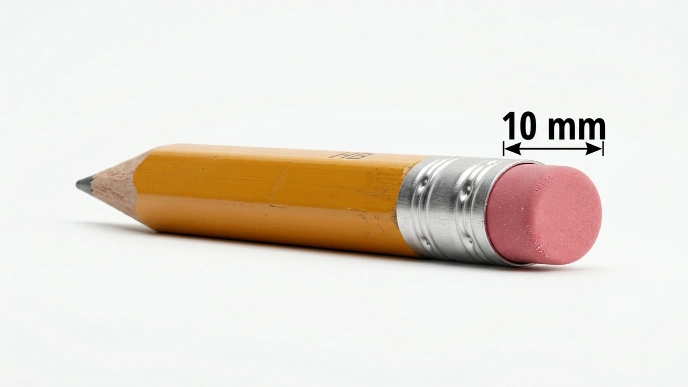
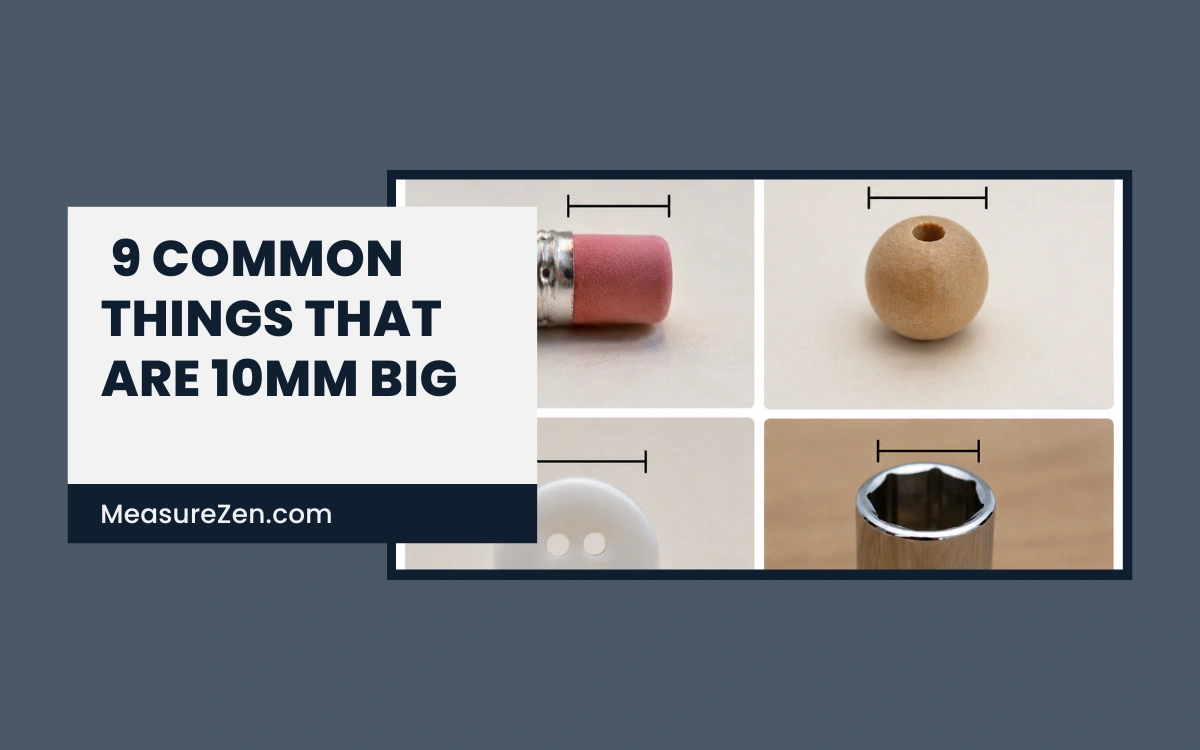
A standard pencil eraser varies slightly depending on the brand, but the width of many common erasers is close to 10 mm (1 cm). This makes it one of the easiest everyday references for understanding this dimension. Although some premium pencils use slightly larger erasers, many standard wooden pencils have an eraser that falls very close to this size, making it a reliable visual comparison.
You’ll see pencil erasers everywhere—in schools, offices, homes, and art studios. Because they’re so familiar, most people can picture their size without much effort. When you look at the flat end of a sharpened pencil, the eraser provides a simple way to estimate small measurements while sketching, writing, or working on creative projects.
If someone asks you to imagine this measurement, thinking about the width of a standard pencil eraser is one of the quickest and most accurate methods. It’s a familiar object that offers an easy mental reference without requiring a ruler.
2. Medium Craft Bead
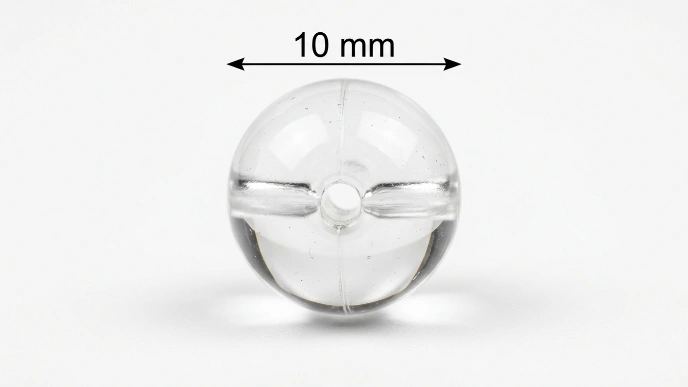
Medium-sized craft beads are commonly manufactured with a diameter of about 10 mm, making them popular for bracelets, necklaces, ornaments, and DIY decorations. Their rounded shape makes the dimension easy to recognize, especially for people involved in jewelry making or crafting.
These beads are available in plastic, glass, acrylic, wood, silicone, and gemstone materials. Because manufacturers often produce them in standardized sizes, a 10 mm bead looks nearly identical regardless of its material. This consistency makes it one of the most dependable real-world examples for visualizing a one-centimeter diameter.
Holding a medium craft bead between your fingers provides an excellent sense of scale. Its size is large enough to notice easily while remaining compact, helping you picture similar dimensions in hardware, accessories, or decorative items.
3. Small Shirt Button
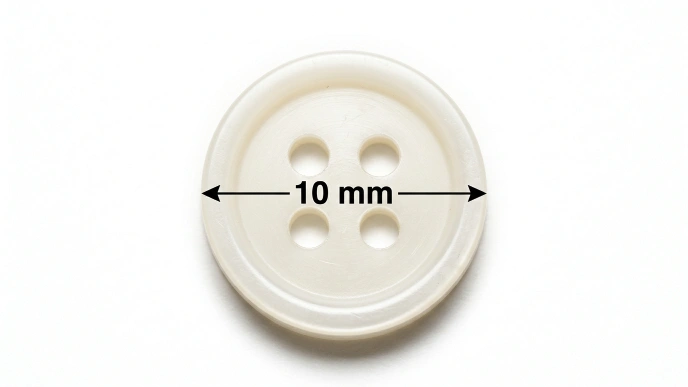
Many dress shirts, children’s clothing, and lightweight garments use buttons measuring approximately 10 mm across. While larger coats and jackets require bigger buttons, smaller shirts frequently use this diameter because it offers a neat appearance without adding unnecessary bulk.
You probably fasten and unfasten buttons every day without paying attention to their size. Looking closely at the button near the collar or cuffs of a shirt can provide an excellent visual estimate. Since clothing manufacturers use standardized button sizes, these buttons remain fairly consistent across many brands.
A small shirt button is one of the easiest household objects to remember when estimating this measurement. The next time you get dressed, simply glance at one of these buttons to build a stronger mental picture of what one centimeter actually looks like.
4. Socket Wrench Opening
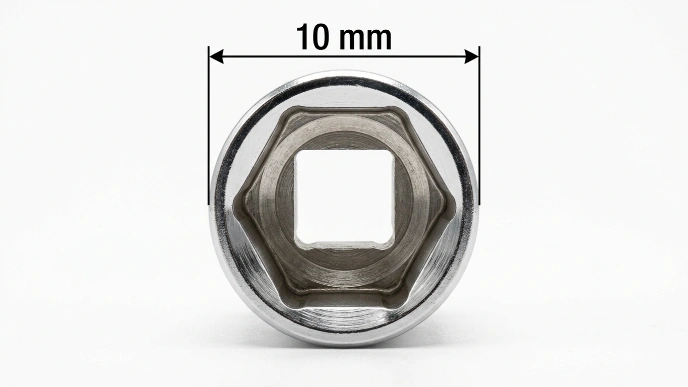
A 10 mm socket wrench opening is one of the most recognizable examples of this measurement, especially for anyone who works on bicycles, motorcycles, cars, or household repairs. The opening is designed to fit a hex bolt or nut that measures 10 millimeters across the flats. Because socket sizes are standardized, this provides one of the most precise real-world references available.
You’ll commonly find a 10 mm socket in nearly every mechanic’s toolbox. It is frequently used for automotive maintenance, furniture assembly, engine work, and various DIY projects around the home. Since this socket size is so common, many people become familiar with its dimensions after using it just a few times.
If you want to visualize this measurement accurately, imagine looking straight into the opening of a 10 mm socket. Its circular exterior surrounds a hexagonal opening that represents the exact width, making it an excellent mental reference for understanding this small dimension.
5. Earbud Tip Diameter
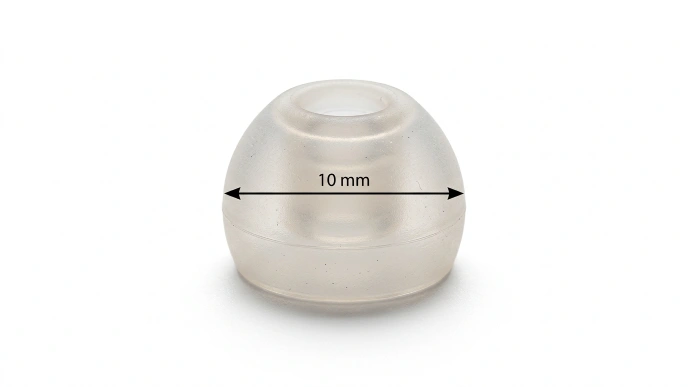
Many medium-sized silicone earbud tips have an outer diameter close to 10 mm, although the exact measurement varies slightly depending on the manufacturer and model. This size provides a comfortable fit for many users, which is why it is commonly included with wireless earbuds and in-ear headphones.
Earbud tips are made from soft silicone or memory foam and are designed to create a secure seal inside the ear canal. Because they’re used daily for listening to music, taking calls, or watching videos, most people are already familiar with their overall size. Their compact shape makes them a practical comparison for understanding small measurements.
When trying to picture this dimension, imagine the rounded outer edge of a medium earbud tip. Its diameter closely matches one centimeter, offering a convenient real-life example that many people already carry in their pocket or bag.
6. USB Cable Thickness
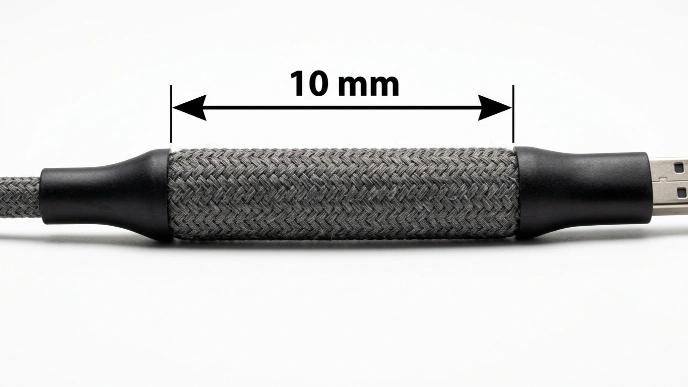
A single USB cable is usually much thinner than 10 mm, but a thicker braided USB cable or a small bundle of two or three standard charging cables often measures close to this diameter. This makes cable thickness a useful comparison when estimating small dimensions in everyday situations.
USB cables are found in nearly every home, office, and workplace. They’re used for charging smartphones, tablets, laptops, gaming controllers, cameras, and countless other electronic devices. Premium braided cables typically have extra insulation, making them noticeably thicker than standard charging cables and bringing them closer to this measurement.
If you wrap your fingers around a heavy-duty USB cable or a small group of charging cables, you’ll get a reasonable sense of this size. While it isn’t an exact reference like a socket opening, it provides a familiar everyday comparison that’s easy to visualize.
7. Watch Crown
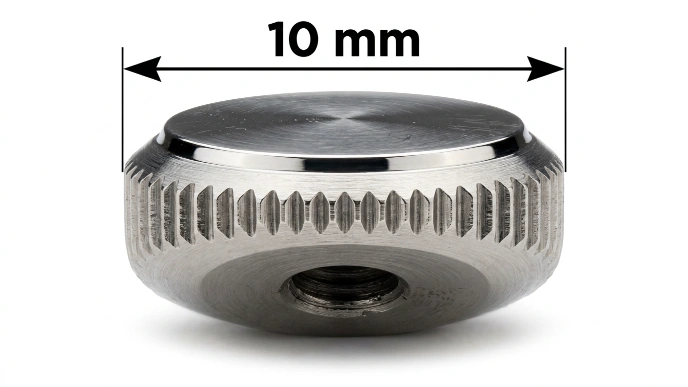
The watch crown is the small round knob located on the side of an analog wristwatch that is used to adjust the time and date. On larger sports, diving, and luxury watches, the crown often measures close to 10 mm in diameter, although sizes vary between manufacturers and watch styles.
Most people interact with the watch crown whenever they set the time or wind a mechanical watch. Its textured edge provides extra grip, making it easy to rotate with your fingers. Because it’s a visible and frequently handled component, it serves as a practical everyday reference for understanding this dimension.
If you own a larger wristwatch, take a close look at its side. The crown offers a convenient way to picture this measurement, especially since many premium watches use crowns that are very close to one centimeter across.
8. Ring Band Width
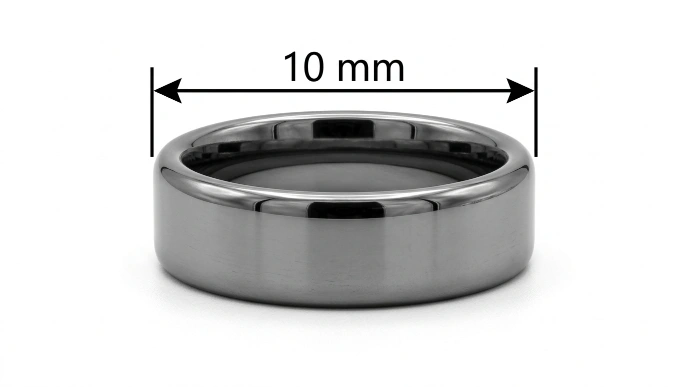
A 10 mm ring band is considered a wide band and is commonly found in statement rings, men’s wedding bands, fashion rings, and some handcrafted jewelry. Unlike slim rings that measure only 2–4 mm wide, a 10 mm band creates a much bolder and more noticeable appearance on the finger.
Wide ring bands are popular because they provide extra durability and a distinctive style. Jewelers often use this width for tungsten, titanium, stainless steel, and ceramic rings, while fashion designers choose it to create eye-catching accessories. The broader surface also allows for detailed engravings and decorative finishes.
Imagine looking straight across the width of a bold wedding band or statement ring. That visible distance is close to one centimeter, making it an excellent comparison for visualizing this measurement in a familiar setting.
9. Small Marble
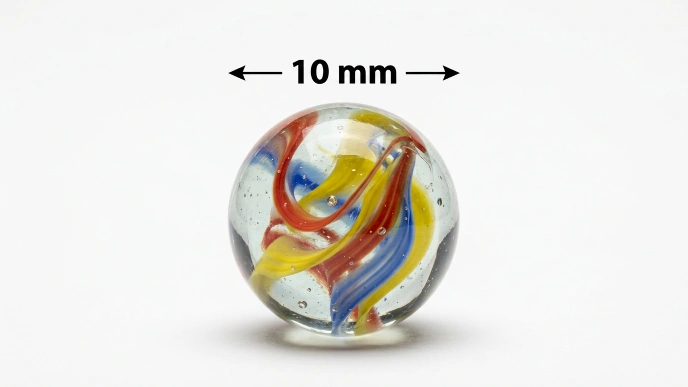
A small marble typically measures around 10 mm in diameter, making it one of the closest everyday objects to this measurement. Although marbles are produced in several standard sizes, the smaller versions are widely available and provide an accurate visual representation of one centimeter.
Marbles have been enjoyed for generations as toys, collectibles, and decorative items. They are usually made from glass, ceramic, or plastic and feature colorful swirls and patterns that make them easy to recognize. Because their size is standardized, they offer a consistent reference regardless of the material.
Holding a small marble between your thumb and index finger gives you an excellent sense of this dimension. Its perfectly round shape allows you to understand both the width and overall volume, making it one of the best real-world comparisons in this guide.
Everyday Tips for Estimating Small Measurements
Even without a ruler, you can make a surprisingly accurate estimate by comparing an object with familiar items you’ve seen many times. Building a mental library of common sizes makes it easier to judge dimensions while shopping, crafting, repairing equipment, or reading product specifications online.
Here are a few practical ways to estimate small measurements more confidently:
- Compare the size with a standard pencil eraser, which is close to one centimeter wide.
- Use a 10 mm socket wrench if you have a basic tool kit at home.
- Look at a small shirt button on a dress shirt or children’s clothing.
- Hold a 10 mm craft bead or small marble between your fingers for a quick visual reference.
- Check the watch crown on a larger sports or diving watch as another helpful comparison.
The more often you compare these everyday objects with an actual ruler, the more accurate your visual estimates will become. Over time, recognizing this dimension becomes almost automatic in daily life.
Read: How Big Is 11 Inches?
Read: How Long Is 14 Inches?
Read: How Long Is a Foot?
Read: How Long Is 2 Meters?
Read: What is 30 cm in Inches?
Read: How Long Is 5 Meters?
Read: How Long Is 3 Meters?
Read: How Big Is 20cm?
Frequently Asked Questions
Is 10mm the same as 1 cm?
Yes. One centimeter is exactly equal to 10 millimeters. These units are part of the metric system, so converting between them is straightforward by moving the decimal point one place.
How many inches is 10mm?
Ten millimeters equals 0.3937 inches, which is just under four-tenths of an inch. This makes it slightly smaller than half an inch and useful for comparing small hardware, jewelry, and craft materials.
What everyday object is about 10mm wide?
Several common objects are close to this size, including a standard pencil eraser, a small shirt button, a medium craft bead, a 10 mm socket opening, and a small marble. These familiar items make it easier to estimate How Big Is 10mm without measuring tools.
Can I estimate 10mm without a ruler?
Yes. While a ruler provides the most accurate measurement, comparing the size with familiar household objects such as a pencil eraser or shirt button can provide a close visual estimate for everyday situations.
What is 10mm commonly used for?
This measurement is frequently used in mechanical tools, automotive repairs, jewelry, electronics, crafts, hardware, and product manufacturing. Because it is a standard metric size, it appears in many industries and household items.
Conclusion
Understanding How Big Is 10mm becomes much easier when you compare it with familiar everyday objects instead of relying only on numbers. Whether you picture a pencil eraser, a small shirt button, a craft bead, or a 10 mm socket, these real-world examples provide an accurate sense of scale.
The next time you need to estimate a small measurement without a ruler, use these common references as a visual guide. With a little practice, you’ll quickly recognize one centimeter in everyday situations, making shopping, DIY projects, crafting, and product comparisons far more accurate.