
Quick Answer:
22 inches equals 55.88 cm, 558.8 mm, 1.833 feet, or 0.5588 meters. It is roughly the height of a carry-on suitcase or the width of a medium computer monitor.
If you are trying to picture 22 inches without pulling out a tape measure, familiar household objects can make the distance much easier to understand. It falls between one and two feet, making it a fairly common dimension for luggage, electronics, furniture, and kitchen items.
Knowing how long is 22 inches can also help when shopping online, checking whether something will fit in a particular space, or estimating dimensions when a measuring tool is not nearby. A number alone rarely creates a clear mental picture, but everyday comparisons do.
Below, you’ll find exact conversions, visual references, 15 recognizable objects, and practical ways to estimate this measurement without a ruler.
22 Inches Conversion Chart
Quick and accurate measurement conversions
| Unit | Converted Value |
|---|---|
| Feet | 1.833 ft |
| Centimeters | 55.88 cm |
| Millimeters | 558.8 mm |
| Meters | 0.5588 m |
How Long Is 22 Inches Visually?
Visually, 22 inches is a little less than two feet from end to end. Since one foot equals 12 inches, this length extends one full foot plus another 10 inches. If you imagine placing a 12-inch ruler down and then adding most of a second ruler, you will have a reasonably accurate picture of the distance.
Another useful reference is the height of compact carry-on luggage. Many smaller suitcases are approximately 20 to 22 inches tall, although dimensions vary by manufacturer and whether wheels and handles are included. Medium computer displays and larger backpacks can also have dimensions somewhere around this range, making them convenient visual references.
For an exact physical reference, mark a starting point and measure 55.88 centimeters from it. Seeing that span on a desk, wall, floor, or countertop usually makes the measurement much easier to remember.
How Big Is 22 Inches Compared to Everyday Objects?
This dimension is large enough to be noticeable but still small enough to appear frequently among household and personal items. Think about a compact suitcase standing upright, a wide backpack, a medium wall shelf, or certain computer monitors. Each can have at least one dimension close to 22 inches, although exact product specifications naturally differ.
The comparison becomes clearer when you use standardized objects. A US letter-size sheet is 11 inches long along its shorter? Actually, its long side is 11 inches, so two sheets placed long-edge to long-edge measure exactly 22 inches. That creates one of the simplest references because ordinary printer paper has standardized dimensions.
Here are several useful approximations:
| Object | Approximate Length | How It Compares |
|---|---|---|
| Two US letter sheets | 22 in | Exact when aligned by their 11-inch sides |
| Carry-on suitcase | 20–22 in | Often very close |
| Medium monitor | Around 20–22 in wide | Similar width on some models |
| Large backpack | 20–22 in tall | Often close |
| Bed pillow | Around 20–26 in long | Depends on pillow size |
Common Things That Are 22 Inches Long
| Object | Approximate Length / Size | How It Compares |
|---|---|---|
| Carry-On Suitcase | 20–22 inches tall | Very close |
| Computer Monitor | 20–22 inches wide | Close on some models |
| Guitar Neck | Around 22 inches | Approximate |
| Small Baseball Bat | 22 inches long | Exact on 22-inch models |
| Car Tire | Around 22 inches diameter | Close on smaller tires |
| Kitchen Counter | Around 22–25 inches deep | Slightly varies |
| Small TV | Around 20–22 inches wide | Close |
| Backpack | 20–22 inches tall | Very close |
| Drawer | Around 22 inches wide | Close |
| Floating Wall Shelf | 22 inches long | Exact on 22-inch models |
| Compact Microwave | 20–22 inches wide | Close |
| Bed Pillow | 20–26 inches | Similar reference |
| Large Cutting Board | 18–22 inches long | Very close |
| Medium Rolling Pin | 18–22 inches long | Close |
| Large Laptop Bag | 18–22 inches wide | Approximate |
Many products are manufactured in sizes that land close to this measurement, though very few categories have a universal 22-inch standard. Luggage, screens, bags, shelves, kitchen equipment, and sporting goods are particularly useful because their dimensions commonly fall within a comparable range.
The important point is to compare the correct dimension. A monitor advertised as “22 inches,” for example, usually refers to its diagonal screen measurement, not necessarily its overall width. Likewise, luggage dimensions may include wheels and handles, while a kitchen appliance may list exterior width separately from depth and height.
The 15 examples below therefore work as practical visual references rather than claims that every version of each object measures exactly the same.
1. Carry-On Suitcase Height
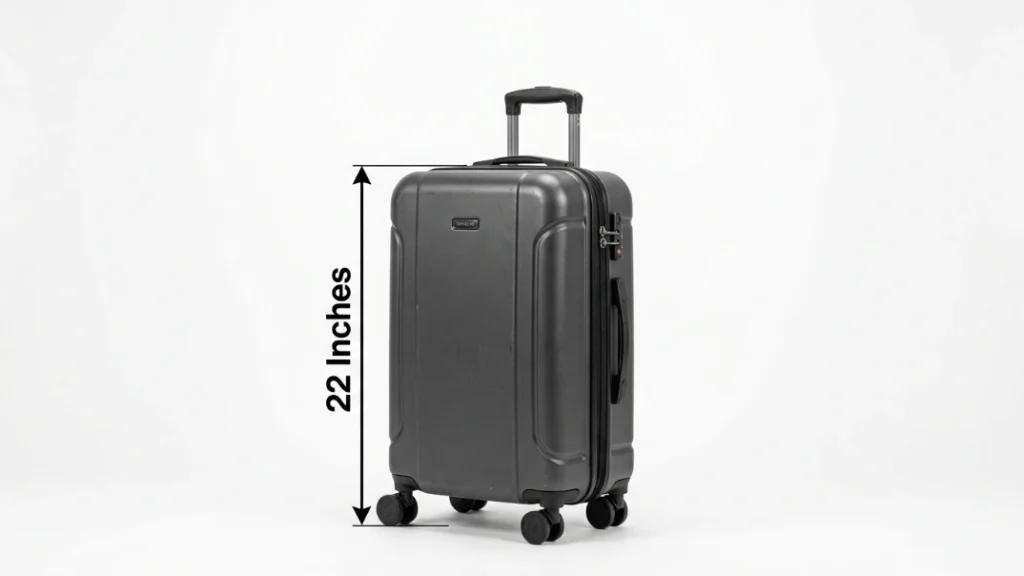
Compact carry-on suitcases commonly stand around 20 to 22 inches tall, or roughly 50.8 to 55.9 centimeters. Some airline-oriented luggage is specifically sold with an exterior height close to 22 inches, although wheels, handles, and manufacturer measurement methods can change the listed dimensions.
You will normally see this luggage used for short flights, weekend trips, and business travel. Its compact rectangular shape is designed to provide useful storage while remaining manageable enough to roll through airports and, where permitted, place in an overhead compartment.
If you have a medium carry-on suitcase at home, standing it upright provides an intuitive approximation. A suitcase measuring exactly 22 inches externally would represent the target height almost perfectly from floor to top.
2. Computer Monitor Width
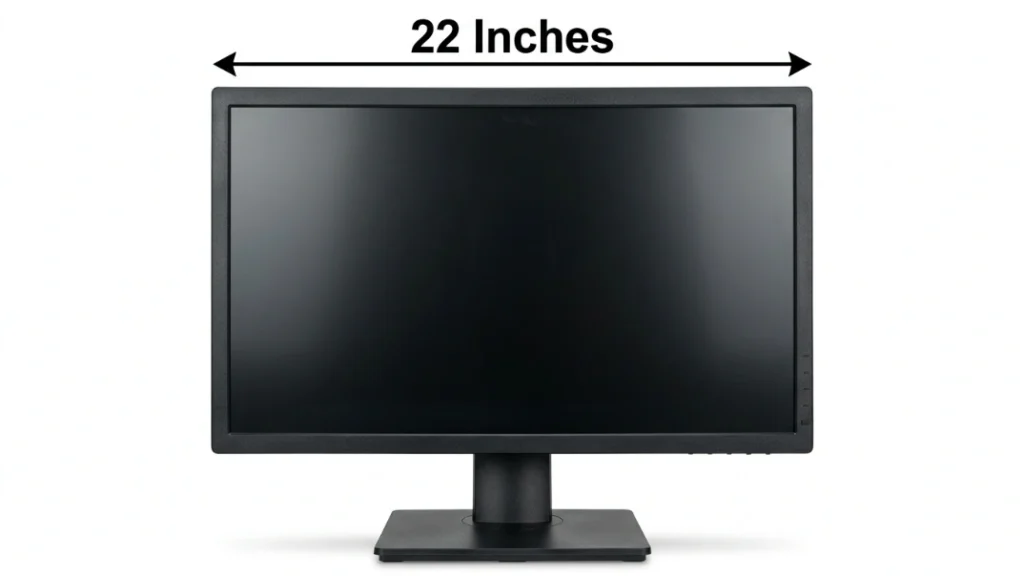
Some medium-sized computer monitors have an overall physical width around 20 to 22 inches, equivalent to approximately 50.8 to 55.9 centimeters. The precise width depends heavily on the screen’s aspect ratio and bezel thickness, so the advertised diagonal size should not be confused with its horizontal width.
Computer monitors are familiar fixtures on office desks, gaming setups, reception counters, and home workstations. Because they have straight horizontal edges, they are particularly easy to use when trying to visualize a distance across a flat surface.
A monitor whose casing is about 22 inches wide gives you a convenient horizontal reference. Measure from its far-left exterior edge to its far-right edge rather than relying solely on the advertised screen size.
3. Guitar Neck
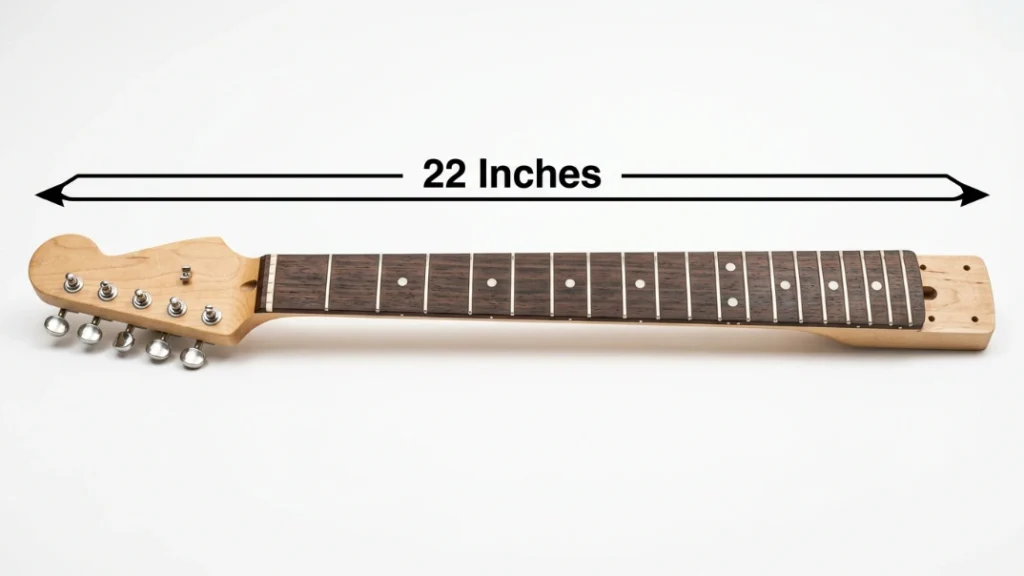
The usable neck and fingerboard area of a guitar can provide an approximate comparison, although guitar dimensions differ considerably by design. Depending on where the measurement starts and ends, a neck-related span can approach 22 inches, or 55.88 centimeters, particularly when considering longer neck and fretboard assemblies.
Guitarists interact with this part constantly because the neck supports the fretboard and allows notes and chords to be formed. Electric, acoustic, classical, and smaller travel guitars all use different scale lengths, neck joints, and proportions, so there is no universal 22-inch guitar neck.
For visualization, a guitar neck or similarly sized section of a compact stringed instrument can nevertheless give a useful sense of this distance. For precision, use the manufacturer’s dimensions rather than assuming every guitar matches it.
4. Small Baseball Bat
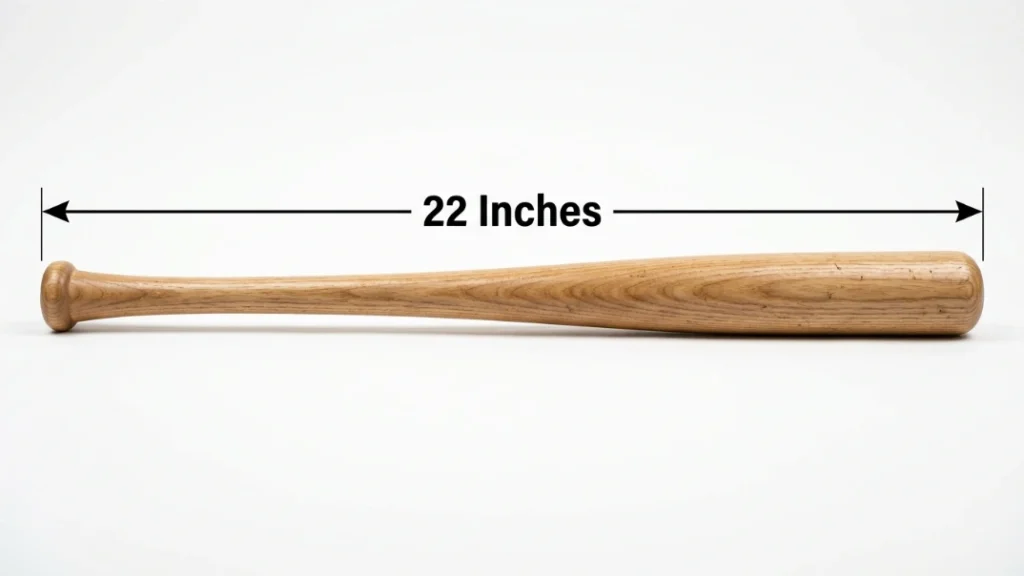
Small baseball and youth training bats are available in lengths around 22 inches, which equals 55.88 centimeters. This is considerably shorter than a typical adult baseball bat and is more likely to appear among children’s equipment, introductory training bats, novelty products, or certain specialized practice tools.
These shorter bats are easier for young children to control because their reduced length and weight make swinging more manageable. Sporting-goods stores typically offer youth bats in multiple sizes, allowing the equipment to be matched to a player’s age, height, and strength.
A 22-inch youth bat provides one of the clearest comparisons on this list because bats are measured directly from end to end. Lay one horizontally on a table, and its full length gives an immediate physical representation.
5. Car Tire Diameter
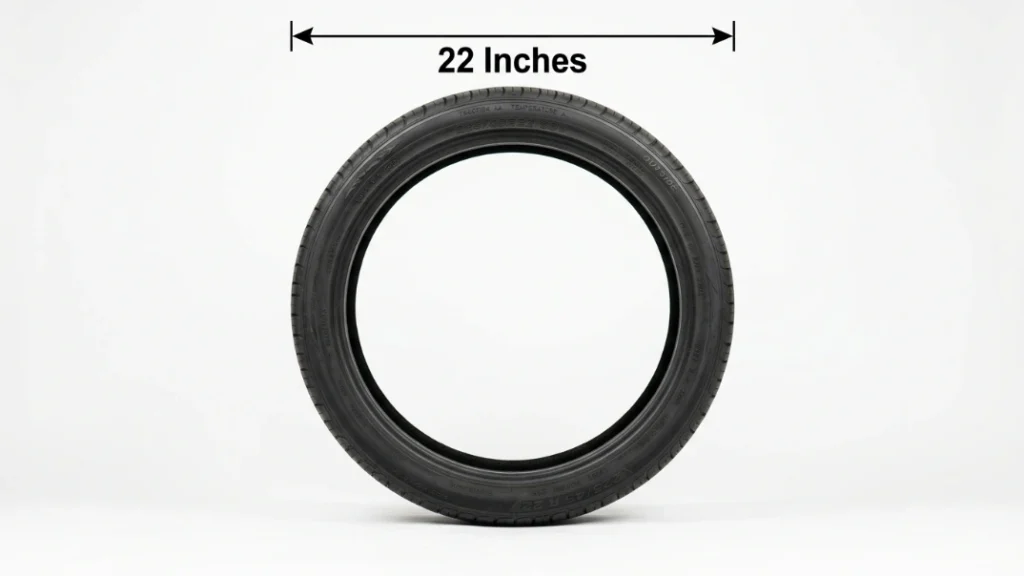
Some smaller passenger-vehicle tire-and-wheel assemblies can have an overall diameter close to 22 inches, although tire diameter varies significantly with wheel size, sidewall profile, and tire specification. A diameter of 22 inches corresponds to approximately 55.9 centimeters from one outer edge to the opposite edge through the center.
Tires of different dimensions appear on compact cars, trailers, utility vehicles, and specialized equipment. Importantly, a tire described by a wheel size such as 15 or 16 inches does not have the same overall diameter because the tire sidewall adds additional height around the wheel.
If you encounter a tire with an overall diameter around this figure, looking straight across its center gives a strong circular reference. Always check the tire’s calculated or manufacturer-listed outside diameter for an accurate comparison.
6. Kitchen Counter Depth
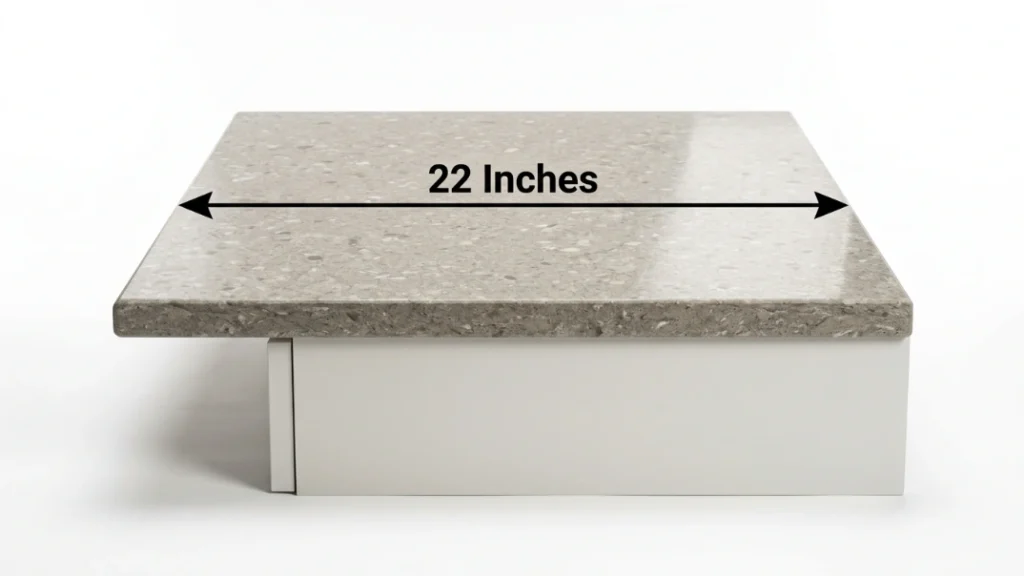
Kitchen countertops are commonly around 24 to 25 inches deep in many standard installations, so 22 inches is slightly shallower than a typical full-depth kitchen counter. However, compact counters, work surfaces, islands, and specialized cabinetry may have depths near 22 inches, or 55.88 centimeters.
Counter depth is measured from the front edge toward the wall or backsplash. This dimension determines how much working surface you have for food preparation, appliances, dishes, and storage arrangements beneath the countertop.
To visualize the target length, imagine a standard counter depth with roughly two or three inches removed. This comparison is particularly useful when planning small kitchens, shelves, desks, cabinets, or other furniture where depth affects available floor space.
7. Small TV Screen Width
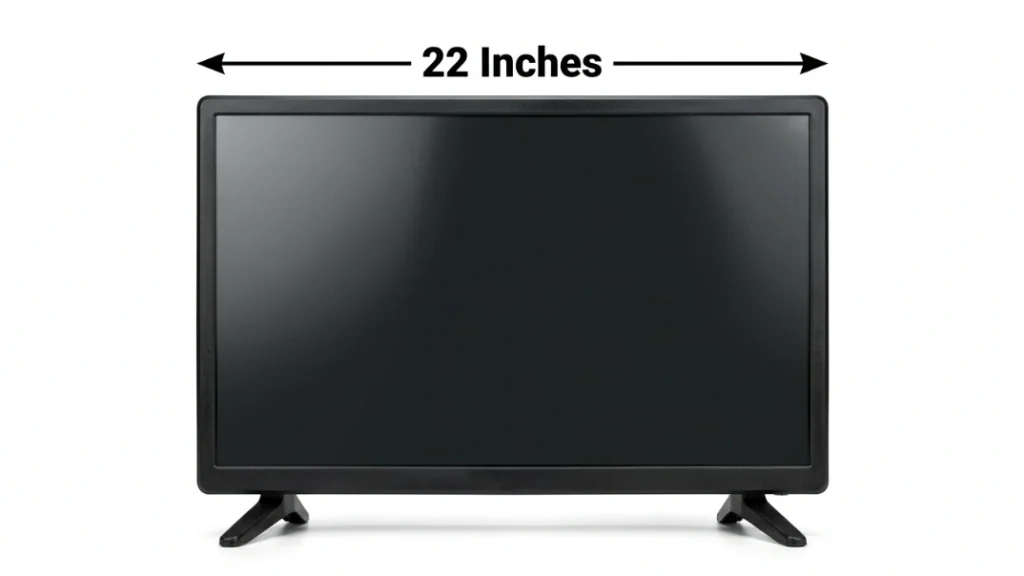
A small television can have an exterior width approaching 22 inches, depending on its diagonal screen size, aspect ratio, and bezel design. Modern widescreen televisions are generally wider than they are tall, and a compact model may occupy roughly 20 to 23 inches horizontally.
Small TVs are commonly used in bedrooms, kitchens, dorm rooms, RVs, guest rooms, and other areas where a large display would take up unnecessary space. Thin bezels on newer models mean the physical casing can be only slightly wider than the active display.
If a television measures approximately 22 inches across its casing, its left-to-right span becomes an easy reference. Remember that the advertised TV size is normally the diagonal screen measurement, not its physical width.
8. Backpack Height
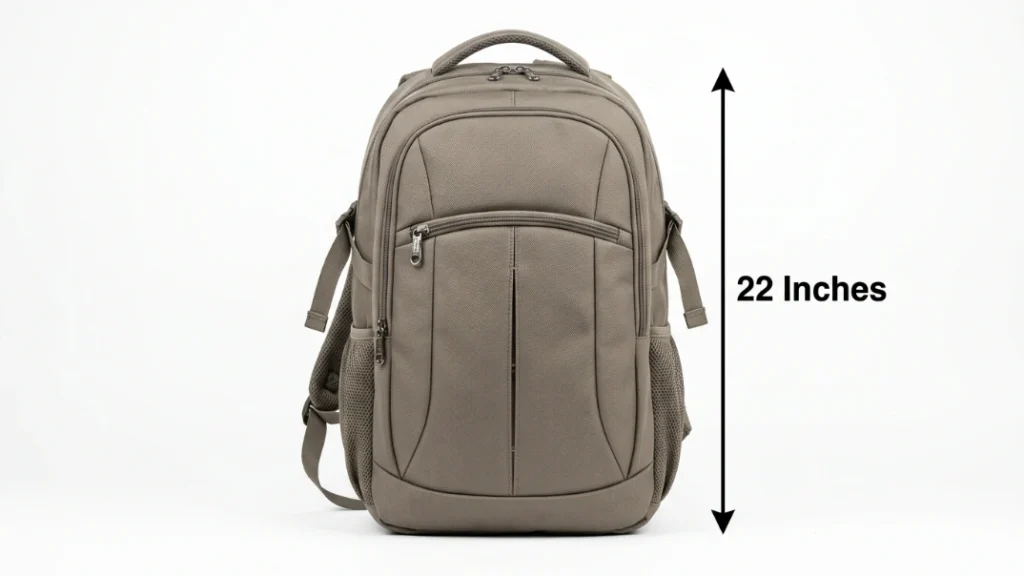
Large school, travel, and laptop backpacks frequently measure somewhere around 18 to 22 inches tall, with some models reaching approximately 22 inches from base to top. That means a larger backpack can represent roughly 55.9 centimeters vertically when standing upright.
Backpacks in this size range are common among students, commuters, hikers, and travelers who need room for laptops, books, clothing, or equipment. Their actual dimensions depend on capacity, padding, frame construction, and whether the bag is packed or empty.
Place a tall backpack upright against a wall and imagine the distance from its bottom panel to its highest fixed point. If its specifications list a 22-inch height, you have a straightforward household reference for the measurement.
9. Drawer Width
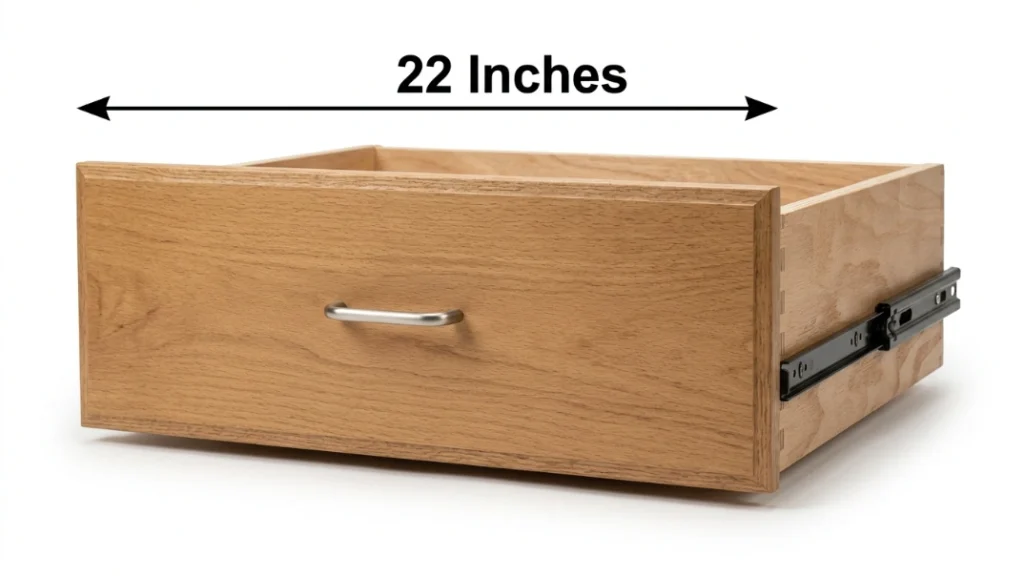
Furniture drawers are manufactured in many widths, and medium-to-large drawers can measure approximately 22 inches across. At exactly 22 inches, the width equals 55.88 centimeters, providing enough space for clothing, utensils, office supplies, tools, or other household belongings depending on the furniture.
You may find drawers around this width in dressers, kitchen cabinets, desks, bathroom vanities, workshops, and storage units. Keep in mind that manufacturers may distinguish between the exterior drawer-front width and the smaller usable interior width.
A drawer front measuring close to 22 inches offers a convenient horizontal comparison because its straight edges clearly define the distance. Measuring from one outer side of the drawer front to the other gives the most obvious visual reference.
10. Floating Wall Shelf
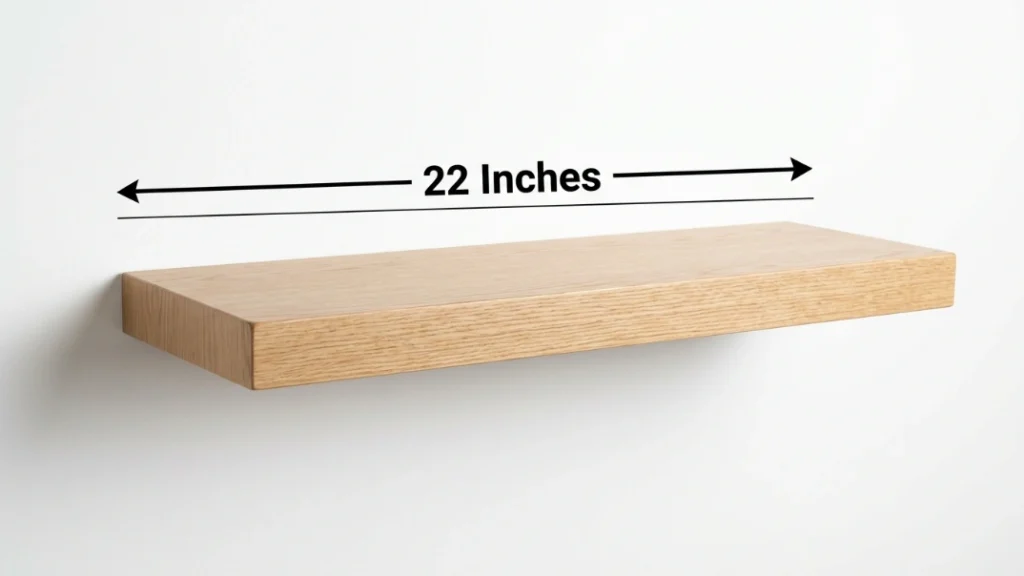
Floating shelves commonly come in standardized or rounded lengths such as 18, 20, 22, 24, or 36 inches, depending on the manufacturer. A 22-inch shelf therefore measures 55.88 centimeters from one end to the other and is compact enough for many small wall spaces.
These shelves are frequently installed in bedrooms, kitchens, bathrooms, offices, and living rooms. People use them to display books, photographs, small plants, décor, toiletries, spices, and lightweight storage containers without the visible brackets associated with traditional shelving.
A 22-inch floating shelf is an especially useful comparison because its straight horizontal form makes the full length easy to see. If you can picture a shelf slightly shorter than a standard two-foot shelf, you are very close.
11. Compact Microwave Oven
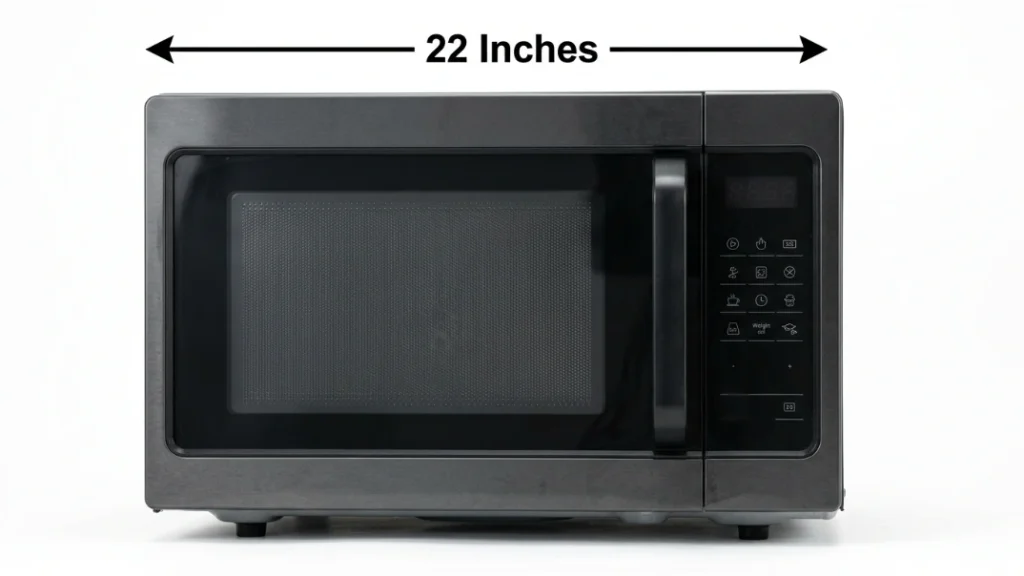
Compact microwave ovens vary considerably in exterior size, but some larger compact or mid-size units can approach 20 to 22 inches in width. A 22-inch exterior width corresponds to 55.88 centimeters, although capacity and internal cooking space will be smaller than the outside dimensions suggest.
Microwaves of this general size appear on kitchen counters, office break-room surfaces, dorm setups, and appliance shelves. Their box-shaped construction makes their dimensions easy to compare with available countertop or cabinet space.
Picture the horizontal distance across the front of a medium microwave. If the appliance is approximately 22 inches wide, that front edge provides a practical reference, though checking its specification sheet is necessary before using it as an exact measuring guide.
12. Standard Bed Pillow Length
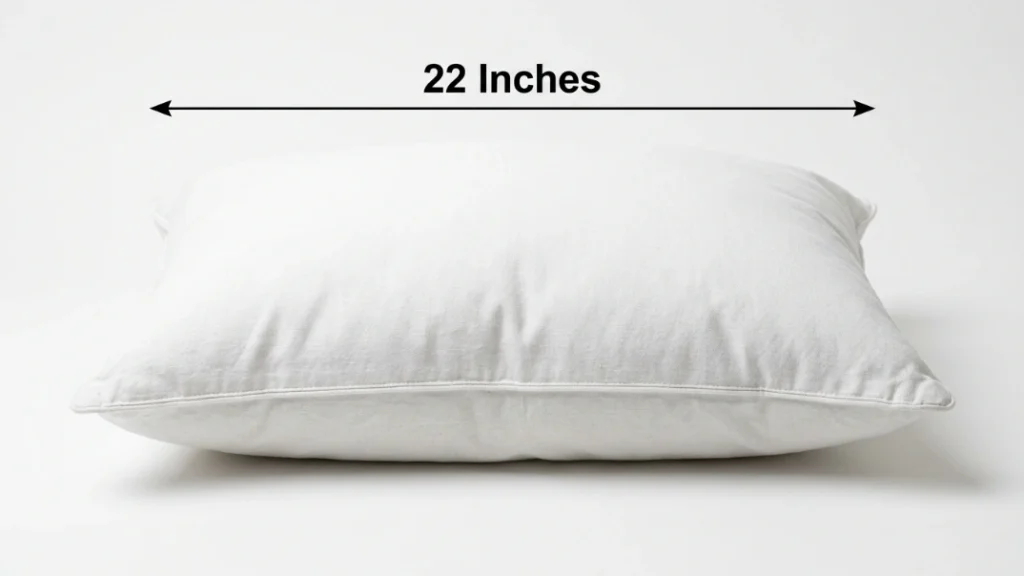
Bed pillows provide a familiar soft-object comparison, although pillow dimensions depend on the size category and manufacturer. A standard pillow is often around 20 inches wide and 26 inches long, meaning 22 inches falls between its shorter width and longer length rather than matching the typical length exactly.
Pillows are useful references because almost every home has one readily available. Standard, queen, king, decorative, and travel pillows all use different dimensions, and stuffing can make the apparent edge less precise than a rigid object.
To estimate the target dimension, imagine a standard pillow’s 20-inch width and add approximately two inches. This produces a simple visual approximation when you do not have a ruler or tape measure nearby.
13. Large Cutting Board Length
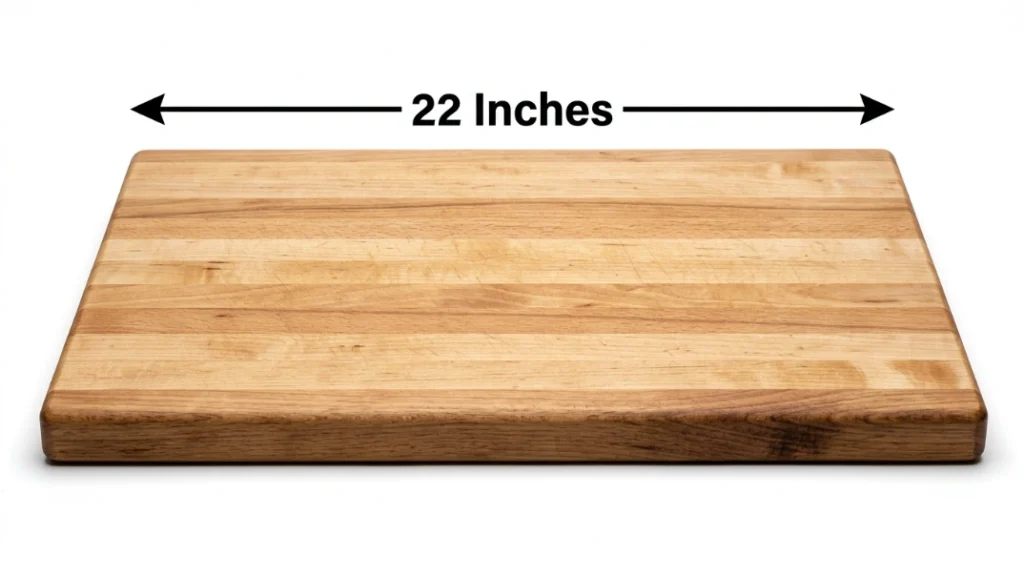
Large kitchen cutting boards are frequently available in lengths ranging from approximately 18 to 24 inches. A board measuring 22 inches long spans exactly 55.88 centimeters and provides a substantial preparation area for vegetables, meat, bread, fruit, and other ingredients.
Boards in this range are often found in larger kitchens or used by people who want more workspace than a compact chopping board provides. Wood, bamboo, plastic, composite, and professional-grade boards may all be produced in similar dimensions.
Because a cutting board is flat and usually rectangular, it offers an excellent visual reference. A 22-inch model laid horizontally on a countertop shows the distance clearly from one short edge to the other.
14. Medium Rolling Pin Length
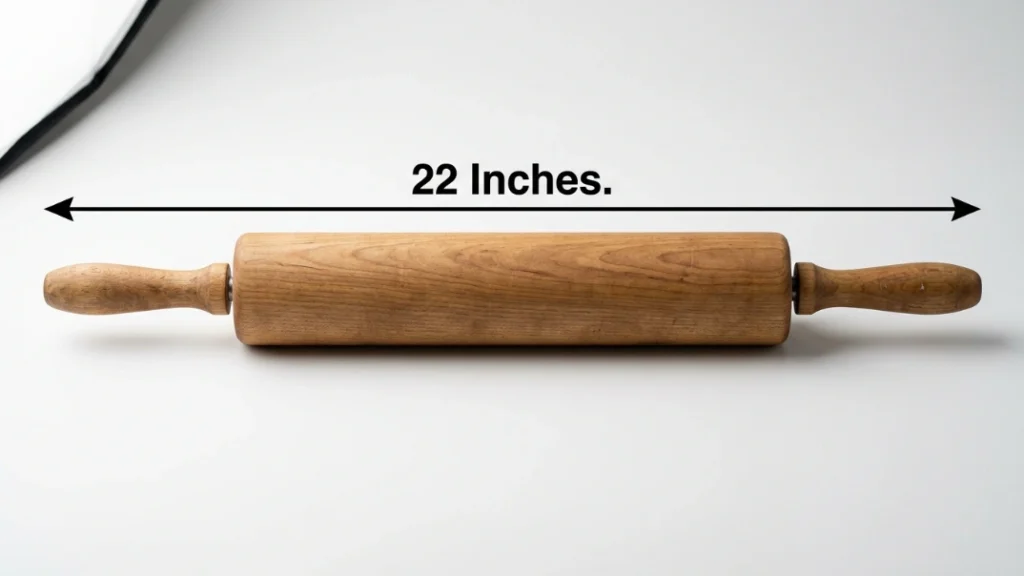
Rolling pins come in several designs and lengths. Larger traditional and French-style rolling pins may approach 20 to 22 inches from end to end, while many standard household versions are shorter. A full 22-inch span corresponds to 55.88 centimeters.
You will typically find rolling pins in kitchens and bakeries, where they are used to flatten pie crusts, cookie dough, pizza dough, pastry, and similar foods. Handles can add several inches to the total length of traditional rolling-pin designs.
A longer rolling pin therefore offers a convenient kitchen-based comparison. When using one as a reference, measure its complete end-to-end length rather than only the central rolling barrel, since those two dimensions can differ substantially.
15. Large Laptop Bag Width
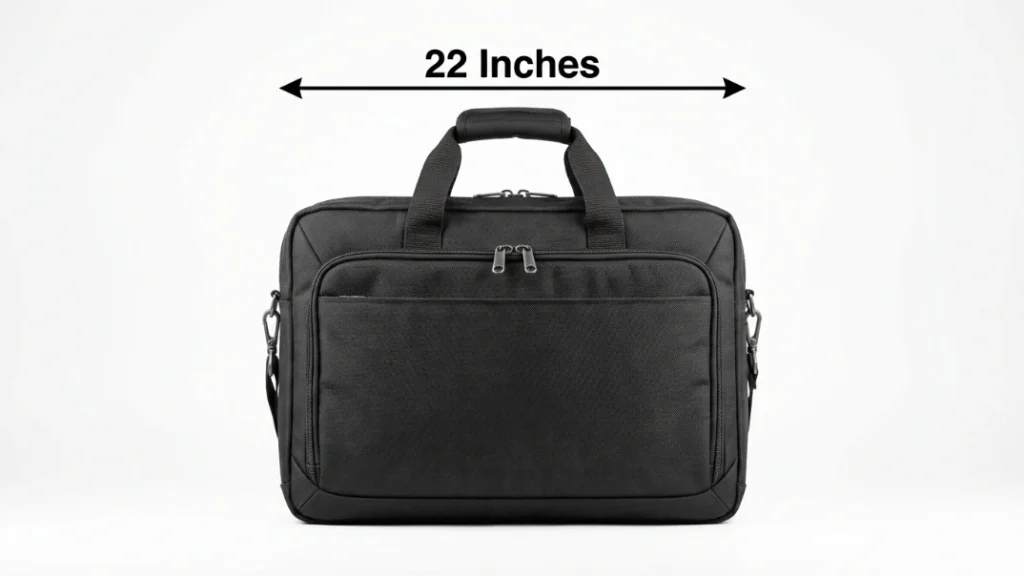
Large laptop bags and briefcase-style computer cases can measure approximately 18 to 22 inches wide, especially models designed for larger laptops plus chargers, documents, accessories, and other equipment. At the upper end of that range, the bag provides a horizontal span close to 55.88 centimeters.
These bags are commonly carried by commuters, students, business travelers, and professionals. Their padded rectangular construction makes the width fairly easy to judge, although soft sides and external pockets can slightly change the overall dimensions.
A particularly wide laptop or messenger bag can therefore help you picture this measurement. Place the bag flat and look across its longest horizontal edge; a 22-inch model gives you a convenient real-world representation.
Is 22 Inches Bigger Than 1 Foot?
Yes. One foot equals exactly 12 inches, so a 22-inch distance is 10 inches longer than one foot. Expressed another way, it equals approximately 1.83 feet. That makes it substantially larger than a standard 12-inch ruler or any object measuring exactly one foot.
A simple way to visualize the difference is to place one 12-inch ruler down. After reaching its end, you would still need another 10 inches to complete the full distance. Those additional 10 inches equal about 25.4 centimeters, so the difference is visually significant.
In percentage terms, 22 inches is about 83.3% longer than 12 inches. It is therefore better described as approaching two feet than as being close to just one foot.
Is 22 Inches Close to 2 Feet?
Yes. Two feet equals 24 inches, meaning 22 inches is only 2 inches shorter than two feet. In metric units, those missing two inches equal 5.08 centimeters. This makes a two-foot reference one of the easiest ways to estimate the length mentally.
Imagine two standard 12-inch rulers placed end to end. Together they span 24 inches. Remove two inches from one end, and the remaining distance represents 22 inches. You can apply the same idea to any object you already know is exactly two feet long.
Because the difference is relatively small, saying “just under two feet” is a useful casual description. For construction, fitting, or purchasing decisions, however, the full two-inch difference should not be ignored.
How Tall Is 22 Inches?
As a vertical measurement, 22 inches is approximately 1 foot 10 inches tall, or 55.88 centimeters. It reaches nearly two feet above the floor, making it comparable to the height of certain carry-on suitcases, small furniture pieces, large bags, and other compact household items.
Try measuring upward from floor level to 22 inches on a wall. The mark will sit noticeably below the two-foot point, which is 24 inches. This provides a more intuitive understanding than simply reading the numerical value, particularly when evaluating furniture or storage dimensions.
Whether the distance is described as height or length depends entirely on orientation. The numerical measurement remains unchanged: horizontally, vertically, or diagonally, the same span is still 55.88 centimeters.
What Is Usually Measured in 22 Inches?
Dimensions around this size frequently appear in product specifications for luggage, displays, furniture, bags, shelves, appliances, and sporting equipment. However, the number can represent height, width, depth, diameter, or diagonal size depending on what is being measured.
For example, a suitcase may be described by its height, while a shelf is normally described by length. A monitor or television advertised as 22 inches usually refers to its screen diagonal rather than its overall physical width. Tires introduce another distinction because wheel diameter and overall tire diameter are separate measurements.
Always check which dimension a product listing refers to. Two products carrying the same numerical measurement can look completely different if one specification represents height and another represents diagonal size.
How to Measure 22 Inches Without a Ruler
You can estimate this distance without a ruler by combining objects whose dimensions are already standardized. One of the simplest options is US letter paper, which measures 8.5 by 11 inches. Place two sheets with their 11-inch sides aligned end to end, and the combined length is exactly 22 inches.
You can also use known one-foot references and estimate the remaining 10 inches. Another method is to use four US dollar bills laid lengthwise: each bill is about 6.14 inches long, so four total about 24.56 inches. You would need to subtract roughly 2.56 inches, making this method less exact but still useful for rough visualization.
For practical estimation, these references work well:
- Two US letter sheets: 11 + 11 = exactly 22 inches
- One 12-inch ruler plus 10 inches: exact when measured correctly
- A two-foot span minus 2 inches: simple mental reference
- A known 20-inch object plus 2 inches: useful for approximate checks
These methods are appropriate for visualization and rough planning. For cutting materials, buying fitted furniture, construction work, or checking luggage limits, use an actual measuring tape.
22 Inches in Different Units
Converting inches into metric and imperial units makes this measurement easier to use internationally. Since one inch equals exactly 2.54 centimeters, multiplying 22 by 2.54 gives 55.88 centimeters. The same distance is 558.8 millimeters or 0.5588 meters.
For feet, divide the number of inches by 12. The result is approximately 1.833 feet. In conventional feet-and-inches notation, however, it is more naturally written as 1 foot 10 inches because 12 inches form the first foot and 10 remain.
| Conversion | Value |
|---|---|
| 22 inches to feet | 1.8333 ft |
| 22 inches to feet and inches | 1 ft 10 in |
| 22 inches to centimeters | 55.88 cm |
| 22 inches to millimeters | 558.8 mm |
| 22 inches to meters | 0.5588 m |
These conversions are exact except where decimal feet have been rounded for readability.
Why Understanding 22 Inches Matters
Being able to picture measurements is useful when product dimensions are presented online without a physical reference. A specification might tell you that a suitcase, shelf, monitor, bag, or appliance has a 22-inch dimension, but that number becomes much more meaningful when you can mentally compare it with something familiar.
This skill is particularly useful when shopping for furniture, electronics, storage equipment, luggage, and home-improvement products. Misunderstanding width, depth, height, or diagonal dimensions can result in buying an item that does not fit its intended location.
Knowing that the distance is 1 foot 10 inches, or just two inches short of two feet, gives you an immediate mental benchmark. For exact fit, however, visualization should always be followed by physical measurement.
Easy Ways to Visualize This Length More Accurately
The most reliable visual comparisons use objects with standardized dimensions rather than items whose sizes vary widely between manufacturers. Printer paper is especially useful because US letter paper has fixed dimensions, allowing two 11-inch sides to create the required distance exactly.
When estimating dimensions in everyday situations, keep these principles in mind:
- Use two 11-inch US letter sheets for an exact reference.
- Think of two feet minus two inches for a fast mental estimate.
- Compare against objects with straight edges whenever possible.
- Check whether a product dimension means height, width, depth, diameter, or diagonal.
- Use a tape measure whenever fit or clearance needs to be precise.
These habits make how long is 22 inches easier to understand in practical terms. Visual comparisons are excellent for building a mental picture, but standardized measuring tools remain the better choice whenever a small difference could affect the result.
Read: What Is 5’3 in Inches?
Read: What Is 5’0 in Inches?
Read: What Is 5’2 in Inches?
Read: How Long Is 17 Inches?
Read: How Big Is 9cm?
Read: How Long Is 18 Inches?
Read: How Long Is 4 cm?
Frequently Asked Questions
Is 22 inches the same as 2 feet?
No. Two feet equals 24 inches, so this measurement is exactly 2 inches, or 5.08 centimeters, shorter than two feet.
How many centimeters are in 22 inches?
There are exactly 55.88 centimeters in 22 inches. This is calculated using the exact conversion of 1 inch = 2.54 centimeters.
How many feet and inches is 22 inches?
It equals 1 foot 10 inches. One foot accounts for the first 12 inches, leaving another 10 inches.
What common object is exactly 22 inches long?
Two US letter-size sheets placed end to end along their 11-inch sides create exactly 22 inches. Manufactured products such as shelves and youth bats may also be sold in this exact length.
Can I estimate this measurement without a tape measure?
Yes. Place two sheets of US letter paper end to end using their 11-inch sides. Their combined length provides an exact reference, assuming the sheets are standard letter size and correctly aligned.
Conclusion
So, how long is 22 inches? It equals 55.88 centimeters, 558.8 millimeters, 1.833 feet, or 1 foot 10 inches. In everyday terms, it is just two inches short of two feet and can be compared with certain carry-on suitcases, backpacks, shelves, bags, and other medium-sized household objects.
For the easiest visualization, remember the paper method: two standard US letter sheets placed end to end along their 11-inch sides give you exactly the required distance. When accuracy affects fit, purchasing, or installation, confirm the dimension with a ruler or measuring tape.