Quick Answer
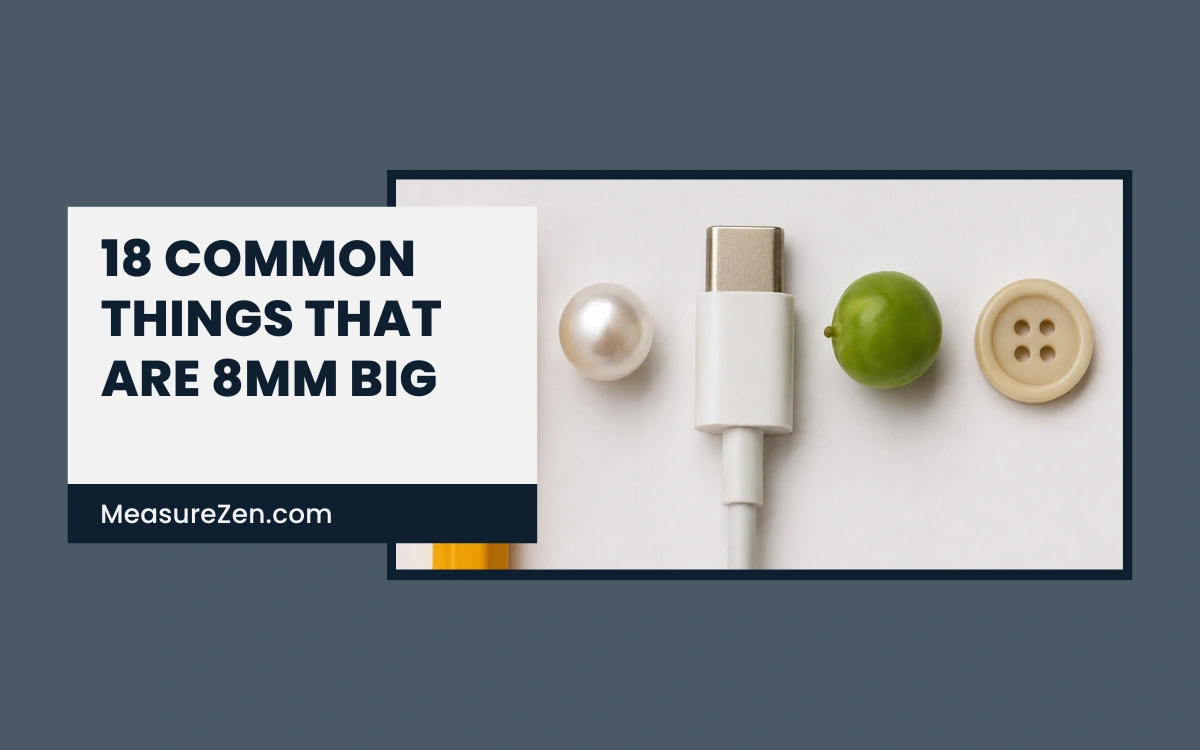
8mm is equal to 0.8 centimeters, 0.31 inches, 0.008 meters, or 0.026 feet. This small measurement is about the diameter of a green pea or a standard pearl bead, making it easy to picture in everyday life.
Small measurements can be surprisingly difficult to imagine without a ruler. While numbers like 8 millimeters may seem straightforward, many people prefer comparing them to familiar everyday objects to understand their actual size. That’s often much easier than relying on numbers alone.
Whether you’re buying jewelry, selecting screws, working on DIY projects, shopping online, or checking product specifications, knowing the approximate size of a small object can help you make better decisions. Visual comparisons are especially useful when a measuring tool isn’t available.
In this guide, you’ll learn how big is 8mm through accurate conversions, helpful illustrations, and 18 common objects that closely match this measurement. By the end, you’ll have a much clearer understanding of what this size looks like in real life.
8mm Conversion Chart
Quick and accurate measurement conversions.
| Unit | Converted Value |
|---|---|
| Feet | 0.026 ft |
| Centimeters | 0.8 cm |
| Millimeters | 8 mm |
| Meters | 0.008 m |
| Inches | 0.315 in |
How Big Is 8mm?
An 8mm measurement is very small, measuring just under one-third of an inch. Although it may sound tiny on paper, it appears frequently in everyday products, including jewelry, electronics, fasteners, craft supplies, kitchen items, and hardware. Because it falls within a range commonly used for manufactured products, many people encounter this dimension without realizing it.
Understanding this size becomes much easier when you compare it with familiar objects instead of trying to picture millimeters mentally. A green pea, a cultured pearl, or the metal tip of certain USB connectors all provide useful reference points. These comparisons allow you to estimate dimensions quickly without reaching for a ruler.
To better understand this measurement, remember these simple references:
- A green pea is typically around this diameter, making it one of the easiest natural comparisons.
- An 8mm cultured pearl is a standard jewelry size often used in necklaces and earrings.
- Many shirt buttons measure close to this width, depending on the design.
- Some screw heads used in household projects are approximately this size.
- USB connector tips often include metal sections that are close to this measurement.
- Small snap fasteners used on clothing can also provide a good visual reference.
18 Common Things That Are About 8mm Big
The following objects provide practical reference points for visualizing this measurement. While exact dimensions vary slightly by manufacturer or variety, each example is close enough to help estimate the size accurately.
| Object | Approximate Size | How It Compares |
|---|---|---|
| Pencil Eraser Width | 8 mm | Nearly identical |
| Small Pearl Bead | 8 mm | Exact jewelry size |
| USB Cable Tip Width | 8 mm | Very close |
| Green Pea Diameter | 8 mm | Close match |
| Standard Button Thickness | 8 mm | Similar |
| Small Screw Head | 8 mm | Comparable |
| Earbud Silicone Tip | 8 mm | Similar |
| Marker Cap Thickness | 8 mm | Close |
| Jewelry Ring Band Width | 8 mm | Exact wide band |
| Blueberry Diameter | 8 mm | Similar |
| Adult Pinky Fingernail Width | 8 mm | Approximate |
| Large Chickpea | 8 mm | Very close |
| USB Type-C Plug Metal Shroud | 8 mm | Nearly identical |
| Small Shirt Button | 8 mm | Similar |
| Heavy-Duty Jacket Zipper (Size #8) | 8 mm | Comparable |
| Common Snap Fastener | 8 mm | Close |
| Cultured Pearl (8mm) | 8 mm | Exact |
| Masonry Wall Plug Diameter | 8 mm | Exact standard size |
What Does 8mm Look Like?
An 8mm measurement is small but easy to recognize once you compare it with familiar objects. Measuring 0.8 cm (0.31 inches), it’s about the size of a green pea, a small pearl bead, or a shirt button. These everyday items make it much easier to visualize than relying on the measurement alone.
You’ll often find this size in jewelry, electronic connectors, clothing accessories, and small hardware. Using these common objects as references helps you estimate similar dimensions accurately, even without a ruler.
1. Pencil Eraser Width
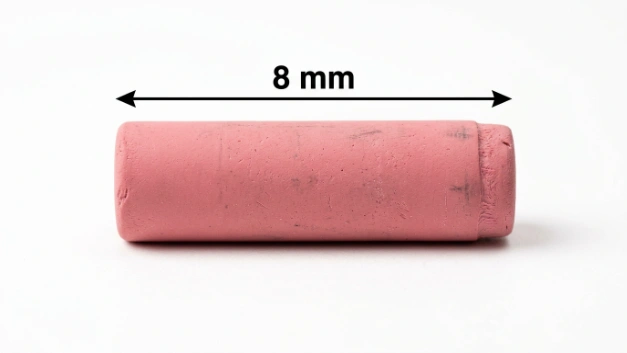
A standard wooden pencil eraser is typically about 8mm (0.8 cm) wide, although the exact size may vary slightly by brand. Its round shape and consistent dimensions make it one of the easiest everyday objects to compare with this measurement.
Most people use pencils at school, home, or the office, making this a familiar reference. Since pencil erasers are found almost everywhere, they’re a practical way to picture a small measurement without any measuring tools.
If you imagine looking at the circular end of a pencil eraser, you’re seeing a size that’s very close to 8mm, making it one of the most accurate real-world comparisons.
2. Small Pearl Bead
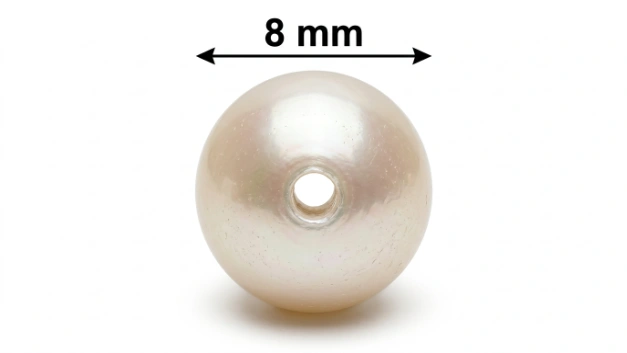
A small cultured pearl commonly measures 8mm (0.8 cm) in diameter. This is one of the most popular pearl sizes used in necklaces, bracelets, and earrings because it offers a balanced, elegant appearance.
Pearl sizes are measured in millimeters, so jewelers frequently use 8mm as a standard option. Whether worn in a necklace or a pair of stud earrings, this size is easy to recognize and widely available.
Since an 8mm pearl is manufactured to an exact diameter, it serves as one of the most reliable objects for visualizing this measurement.
3. USB Cable Tip Width
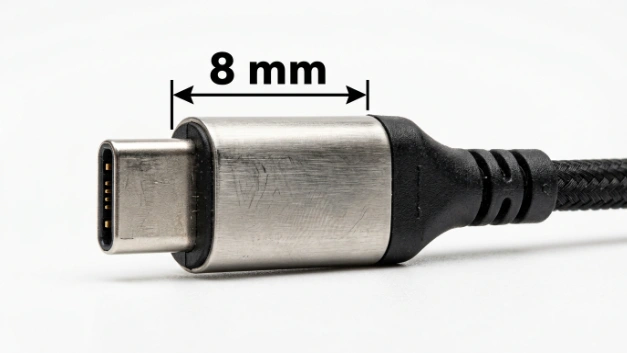
The metal tip or connector housing of some USB cables measures close to 8mm across. While the exact dimensions depend on the connector type, many common USB designs fall within this range.
USB cables are used daily for charging smartphones, tablets, laptops, and other electronic devices. Because they’re familiar to most people, they provide a convenient real-world size reference.
Looking at the width of a USB connector makes it easier to estimate this measurement without needing a ruler.
4. Green Pea Diameter
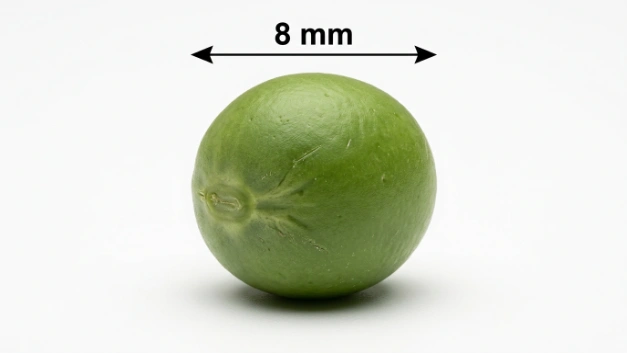
A medium-sized green pea is typically around 8mm in diameter, making it one of the best natural examples of this measurement.
Green peas are common in kitchens and grocery stores, and their nearly round shape makes them ideal for visual size comparisons. Although some peas are slightly larger or smaller, most are very close to this dimension.
If you picture a single fresh green pea resting in your hand, you’re visualizing a size that closely matches 8mm.
5. Standard Button Thickness
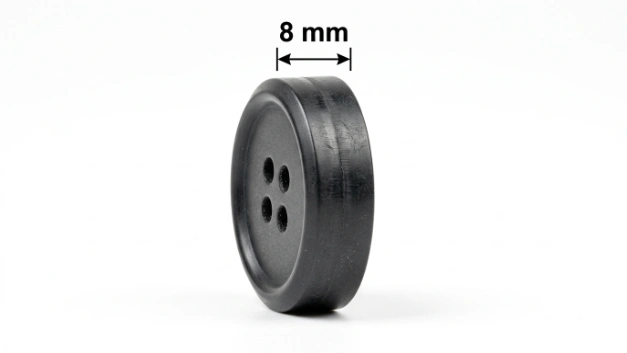
Many small clothing buttons measure about 8mm across or in thickness, depending on their style and design. Buttons used on shirts, children’s clothing, and lightweight garments often fall within this size range.
These buttons are manufactured in standard sizes, making them easy to compare with other small objects. Since they’re found on everyday clothing, they’re a familiar reference for most people.
Visualizing one of these small buttons can help you quickly understand how large this measurement really is.
6. Small Screw Head
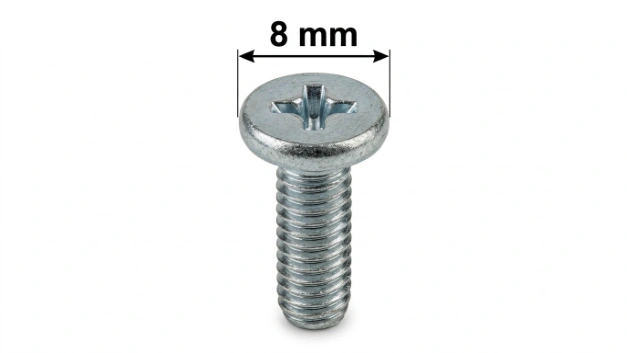
The head of many small household screws is approximately 8mm in diameter. This size is commonly found in furniture assembly, cabinetry, and light DIY projects.
Small screws are widely used in homes, offices, and electronic devices. Because they are easy to find in most toolboxes, they provide a practical comparison for estimating small dimensions.
When you look at the top of a typical small screw, you’re seeing a diameter that is often very close to 8mm, making it a useful everyday reference.
7. Earbud Silicone Tip

Many medium-sized earbud silicone tips measure around 8mm in diameter. This size helps create a comfortable fit while providing a good seal inside the ear for improved sound quality.
You’ll find silicone ear tips on wireless earbuds and in-ear headphones from many popular brands. Replacement tip sets are also commonly labeled by their diameter in millimeters.
If you’ve ever removed an earbud tip, its circular opening is a helpful way to visualize what an 8mm measurement looks like.
8. Marker Cap Thickness
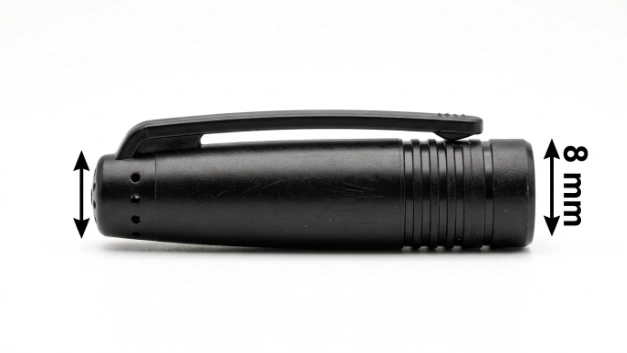
The thickness of many standard marker caps is close to 8mm, although the exact size depends on the marker type and manufacturer.
Markers are common in classrooms, offices, and homes, making them another familiar object for estimating small dimensions. Their cylindrical shape also makes width comparisons simple.
Looking at the side of a marker cap provides a practical reference that’s very close to this measurement.
9. Jewelry Ring Band Width

A wide jewelry ring band often measures 8mm across. This width is popular for men’s wedding bands and modern fashion rings because it offers a bold yet comfortable appearance.
Jewelers measure ring band widths in millimeters, with 8mm being one of the standard sizes available in many collections. The width affects both the style and how the ring feels when worn.
If you’ve seen a wide wedding band, you’ve likely seen an example of this measurement in everyday life.
10. Blueberry Diameter
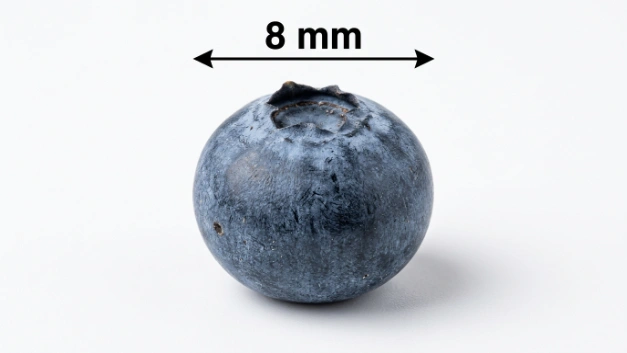
A medium blueberry is typically around 8mm in diameter, although larger cultivated varieties can be slightly bigger.
Blueberries are widely available in grocery stores and are one of the easiest fruits to use as a visual comparison. Their round shape makes it simple to judge small measurements.
Imagining a single blueberry is an effective way to picture an object that is about 8mm wide.
11. Adult Pinky Fingernail Width
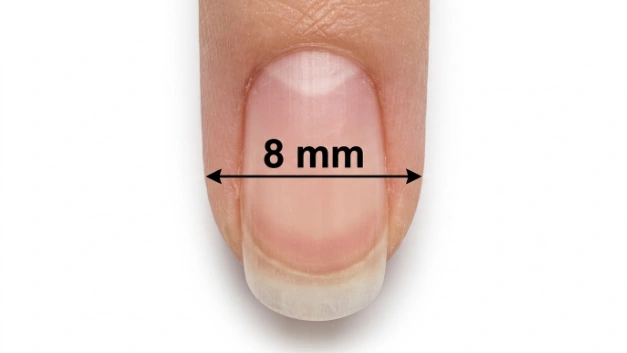
The width of an average adult pinky fingernail is often close to 8mm, though it naturally varies from person to person.
Because your hands are always available, your little fingernail can serve as a convenient reference whenever you need to estimate a small measurement.
Comparing an object with the width of your pinky fingernail gives you a quick and practical way to judge whether it’s close to 8mm.
12. Large Chickpea
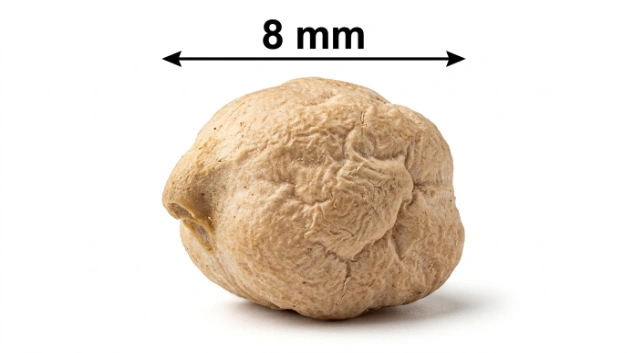
A large dried chickpea usually measures about 8mm across. While sizes vary slightly depending on the variety, many chickpeas are very close to this dimension.
Chickpeas are commonly used in cooking and are easy to recognize because of their rounded, slightly irregular shape. They offer a natural comparison that many people have seen.
Holding a single large chickpea in your hand provides a simple and accurate way to visualize an 8mm measurement.
13. USB Type-C Plug Metal Shroud
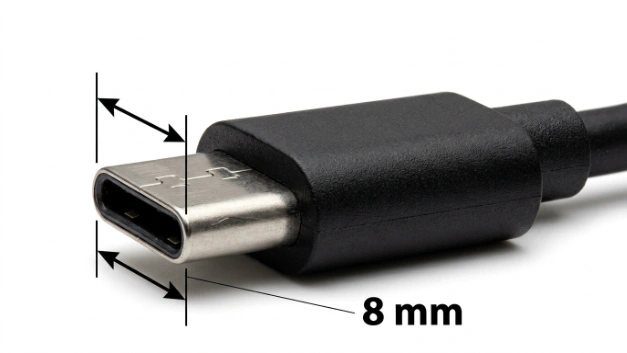
The metal shroud on a USB Type-C plug is approximately 8mm wide. This compact connector is designed for modern smartphones, tablets, laptops, and many other electronic devices.
USB Type-C cables are now one of the most commonly used charging and data transfer accessories. Since most people handle them every day, they make an excellent real-world size reference.
Looking at the metal end of a USB Type-C connector gives you a very accurate idea of what an 8mm measurement looks like.
14. Small Shirt Button
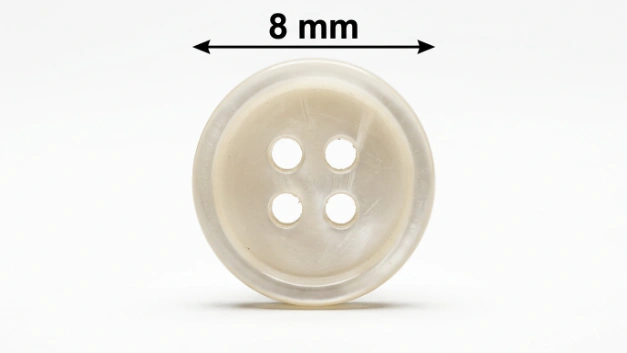
Many small shirt buttons measure around 8mm in diameter. These buttons are commonly used on dress shirts, children’s clothing, and lightweight garments.
Because clothing manufacturers produce buttons in standardized sizes, many fall close to this measurement. Their round shape also makes them easy to compare with other small objects.
If you picture one of the smaller buttons on a shirt, you’re visualizing an object that’s about 8mm wide.
15. Heavy-Duty Jacket Zipper (Size #8)
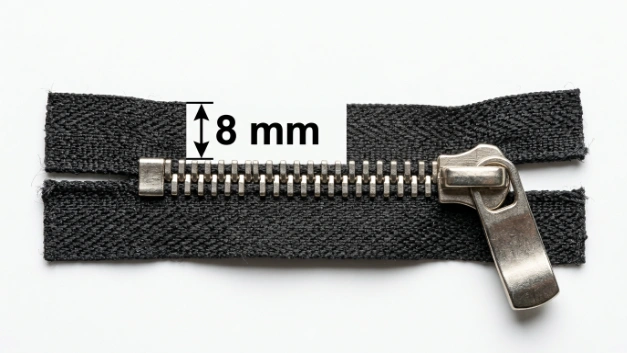
A Size #8 zipper gets its name from the approximate width of its zipper chain, which is close to 8mm. These zippers are commonly used on jackets, backpacks, luggage, and outdoor gear.
Heavy-duty zippers are built for strength and durability, making them larger than those found on lightweight clothing. Their size is easy to notice and provides a useful comparison.
Looking at the zipper teeth on a heavy jacket or travel bag is a practical way to understand this measurement.
16. Common Snap Fastener
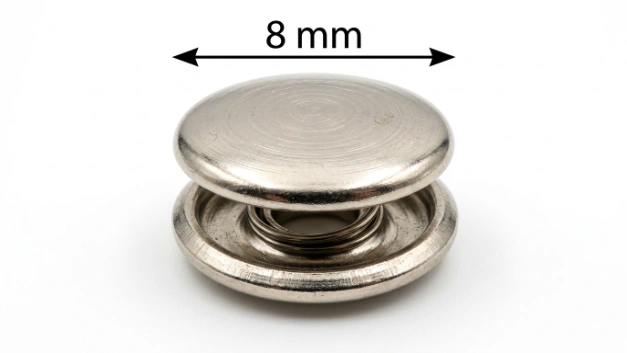
Many metal snap fasteners used on jackets, bags, wallets, and baby clothing have a diameter of about 8mm. Their compact, circular design makes them easy to compare with other small objects.
Snap fasteners are widely used because they provide a secure closure while remaining simple to open and close. They are available in several standard sizes, including 8mm.
If you’ve pressed together a small metal snap button, you’ve likely handled an object that closely matches this measurement.
17. Cultured Pearl (8mm)
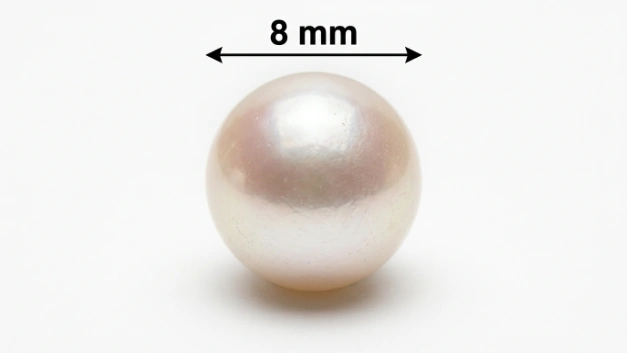
An 8mm cultured pearl is considered a classic size for fine jewelry. It is large enough to stand out while still maintaining an elegant and balanced appearance.
These pearls are commonly featured in necklaces, bracelets, pendants, and stud earrings. Because pearl sizes are measured precisely in millimeters, an 8mm pearl provides an exact reference.
Among all everyday objects, a cultured pearl is one of the most accurate ways to visualize this measurement.
18. Masonry Wall Plug Diameter
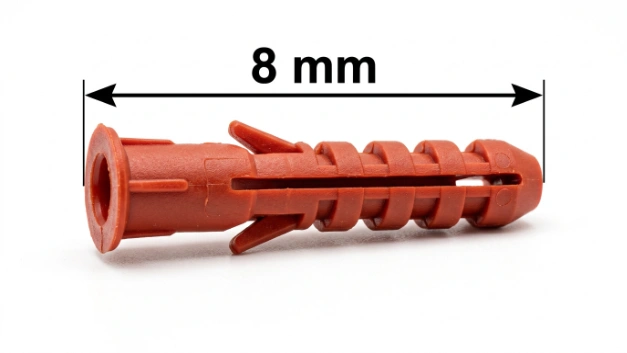
A standard 8mm masonry wall plug is designed to fit an 8mm drill hole in concrete, brick, or masonry walls. It is commonly used when installing shelves, curtain rods, mirrors, and other fixtures.
These wall plugs are available at virtually every hardware store and are a standard size for many household fastening jobs. Their diameter is manufactured with precision for a secure fit.
If you’ve ever used wall anchors during a DIY project, an 8mm wall plug provides a precise real-world example of this measurement.
How to Estimate 8mm Without a Ruler
Estimating a small measurement without a ruler is easier when you compare it with familiar everyday objects. After seeing several common examples, you can make a fairly accurate guess by using items that are already around you.
- Compare it with a green pea, which is usually about 8mm in diameter.
- Use an 8mm pearl bead if you have jewelry or craft supplies nearby.
- Look at a small shirt button, as many are close to this size.
- Check a USB Type-C connector, whose metal tip is approximately 8mm wide.
- Use a large chickpea as a quick natural reference.
- Compare it with an 8mm wall plug commonly used in home improvement projects.
By remembering just two or three of these objects, you can estimate this measurement surprisingly well even when a measuring tool isn’t available.
How Big Is 8mm Visually?
Although 8mm is a small measurement, it’s large enough to be clearly visible when placed next to everyday objects. At 0.8 centimeters (0.31 inches), it is commonly seen in jewelry, hardware, electronics, clothing accessories, and craft supplies.
A simple way to picture this size is to imagine the diameter of a green pea or a cultured pearl. These objects provide a realistic sense of scale and are much easier to remember than the measurement itself.
Once you associate this dimension with familiar items, estimating similar sizes becomes quicker and more accurate in daily life.
8mm Compared to Other Common Measurements
Understanding how this size compares with other metric measurements makes it easier to judge objects at a glance.
| Measurement | Comparison |
|---|---|
| 5mm | Noticeably smaller than 8mm |
| 6mm | Slightly smaller and commonly used for beads |
| 8mm | Equal to 0.8 cm or 0.31 inches |
| 10mm | Slightly larger than 8mm |
| 12mm | About one and a half times larger |
| 15mm | Nearly twice the size of 8mm |
As you move up or down by just a few millimeters, the difference becomes much more noticeable than many people expect. Comparing nearby measurements side by side is one of the easiest ways to develop a better sense of scale.
Everyday Tips for Visualizing Small Measurements
Learning to estimate small sizes becomes easier when you regularly compare them with familiar objects instead of memorizing numbers.
- Keep a few common reference objects in mind, such as a green pea, pearl bead, or shirt button.
- Compare similar items side by side whenever possible to improve your visual judgment.
- Use product specifications when shopping online to understand actual dimensions.
- Remember that 8mm equals 0.8 centimeters, making metric conversions much simpler.
- Carry a small ruler or measuring tape for projects that require greater accuracy.
With regular practice, you’ll quickly recognize small measurements without needing to measure them every time.
Read: How Long Is 6 Inches?
Read: How Long Is 4 Inches?
Read: How Long Is 2 Inches?
Read: How Big Is 3mm?
Read: How Big Is 5mm?
Frequently Asked Questions
Is 8mm the same as 1 centimeter?
No. One centimeter equals 10 millimeters, so 8mm is slightly smaller. It measures 0.8 centimeters, or 80% of a full centimeter.
How many inches is 8mm?
Eight millimeters is approximately 0.315 inches, which is just under one-third of an inch.
What everyday object is closest to this size?
A medium green pea, an 8mm cultured pearl, and the width of some small shirt buttons are among the closest everyday comparisons.
Is 8mm considered large or small?
It is considered a small measurement. However, it is still large enough to be easily seen and is commonly used for jewelry, hardware, electronics, and craft supplies.
Why is 8mm a common measurement?
How Big Is 8mm is a common question because this size appears in many everyday products, including pearls, wall plugs, USB connectors, screws, buttons, and other small accessories.
Conclusion
Understanding How Big Is 8mm becomes much easier when you compare it with familiar everyday objects instead of relying only on numbers. Measuring 0.8 centimeters (0.31 inches), this small dimension appears in everything from pearl beads and shirt buttons to USB connectors and wall plugs.
The next time you need to estimate a small measurement, think of a green pea, an 8mm pearl, or a USB Type-C connector. These simple visual references make it easier to judge size accurately, even when you don’t have a ruler nearby.