Quick Answer
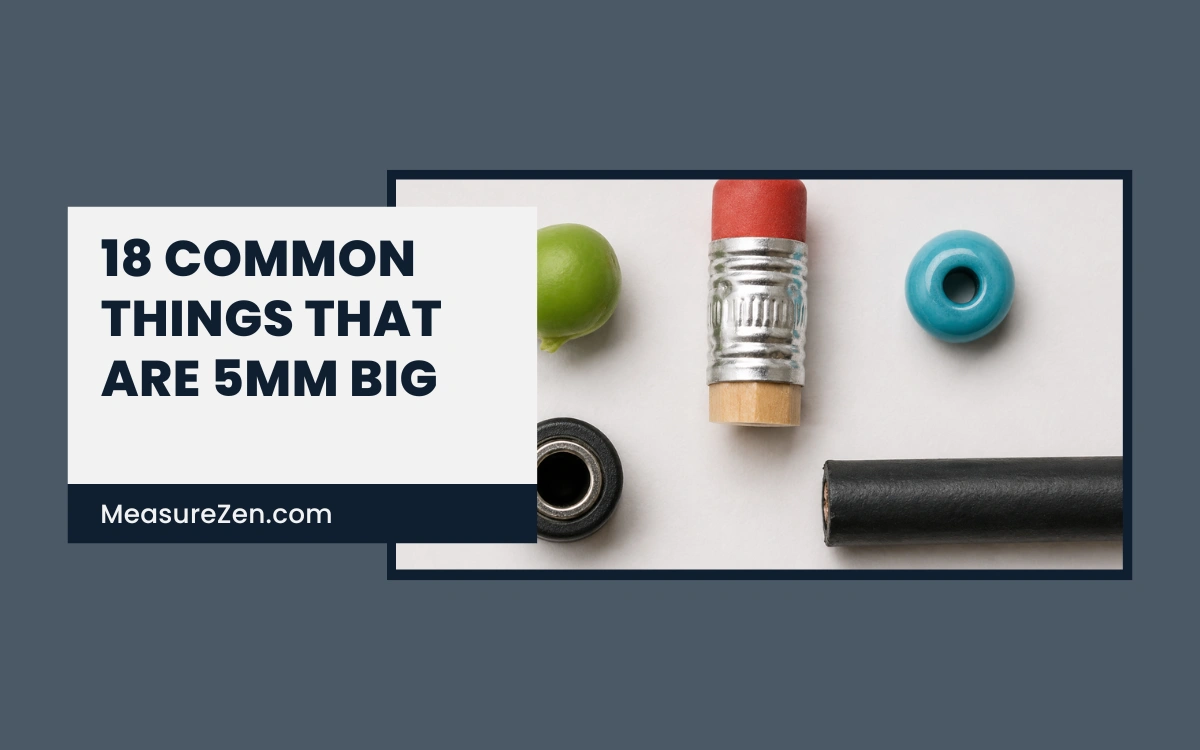
5mm is equal to 0.5 cm, 0.1969 inches, 0.005 meters, or 0.0164 feet. It is similar to the diameter of a standard green pea or the width of a small craft bead.
Small measurements can be surprisingly difficult to picture without a ruler. Whether you’re shopping online, working on a DIY project, comparing jewelry sizes, or checking product dimensions, having a clear mental image makes the measurement much easier to understand.
Many everyday objects are close to this size, making them useful reference points. Instead of relying only on numbers, comparing familiar items provides a much more practical way to estimate dimensions in daily life.
In this guide, you’ll learn How Big Is 5mm through accurate conversions, ruler comparisons, and 18 common objects that closely match this measurement. By the end, you’ll have several easy ways to recognize this size at a glance.
5mm Conversion Chart
Quick and accurate measurement conversions
| Unit | Converted Value |
|---|---|
| Feet | 0.0164 ft |
| Centimeters | 0.5 cm |
| Millimeters | 5 mm |
| Meters | 0.005 m |
| Inches | 0.1969 in |
How Big Is 5mm?
Five millimeters is a very small measurement, equal to half of a centimeter or just under one-fifth of an inch. Although it sounds tiny on paper, this dimension appears frequently in everyday products, including jewelry, electronics, hardware, craft supplies, and household items. Learning to recognize this size helps when reading product specifications or estimating measurements without specialized tools.
Many people underestimate how small this dimension really is. Looking at familiar objects provides a much better sense of scale than simply reading a number. A green pea, a pencil eraser, or a thick cable can all serve as practical visual references that make the measurement much easier to imagine in real life.
Instead of memorizing the conversion, focus on recognizable objects you see every day. Once you associate this measurement with common items, estimating similar sizes becomes much faster and more accurate.
Quick Visual Comparisons
- A standard green pea measures roughly this diameter, making it one of the easiest kitchen references.
- A small craft bead is often manufactured in this size for jewelry and DIY projects.
- A standard 5mm LED lens closely matches the measurement used in many electronics.
- A watch crown on many wristwatches measures close to this width.
- A thick charging cable is often around this diameter, providing another useful comparison.
- Five stacked credit cards are very close to this thickness, creating an easy household reference.
What Does 5mm Look Like?
Because this dimension is less than half the width of an average fingertip, it can be difficult to visualize without comparing it to something familiar. Fortunately, dozens of common household items closely match this size, making estimation much easier during shopping, crafting, or home repairs.
This measurement is frequently found in small mechanical parts, hardware, jewelry, electronics, sewing supplies, and hobby materials. Once you recognize several of these objects, you’ll naturally develop a better sense of scale even without measuring tools.
Instead of relying on guesswork, use recognizable items around your home. These comparisons are much easier to remember than numerical conversions and work well in everyday situations.
| Object | Approximate Size | How It Compares |
|---|---|---|
| Green Pea | 5mm | Very close match |
| Pencil Eraser Width | 5mm | Nearly identical |
| Small Craft Bead | 5mm | Exact craft reference |
| LED Lens | 5mm | Manufactured size |
| Watch Crown | 5mm | Similar diameter |
| Thick Cable | 5mm | Close comparison |
| Small Marble | 5-6mm | Slightly larger |
18 Common Things That Are About 5mm Big
| Object | Approximate Size | How It Compares |
|---|---|---|
| Green Pea Diameter | 5 mm | Almost an exact match |
| Pencil Eraser Width | 5 mm | Very close in diameter |
| Small Craft Bead | 5 mm | Common jewelry bead size |
| Headphone Jack Opening | 5 mm | Similar opening diameter |
| Tiny Button Width | 5 mm | Small shirt or craft button |
| Thick Cable Width | 5 mm | Comparable outer cable diameter |
| Small Marble Size | 5 mm | Small decorative marble |
| Watch Crown Width | 5 mm | Similar to many wristwatch crowns |
| Coarse Gravel Piece | 5 mm | Average large gravel fragment |
| Standard 5mm LED Lens | 5 mm | Manufactured to this exact size |
| Wedding Ring Band Width | 5 mm | Common ring band width |
| Uncooked Short-Grain White Rice (Length) | 5 mm | Approximately this long |
| Large Black Peppercorn | 5 mm | Similar overall diameter |
| Standard Mini Dice | 5 mm | Small gaming or craft dice |
| 5mm Metric Hex Key (Allen Wrench) | 5 mm | Measures exactly across the flats |
| M5 Threaded Bolt Shank | 5 mm | Standard bolt diameter |
| 5mm Twist Drill Bit | 5 mm | Exact drill bit diameter |
| Thickness of Five Credit Cards Stacked | ≈5 mm | Close combined thickness |
1. Green Pea Diameter
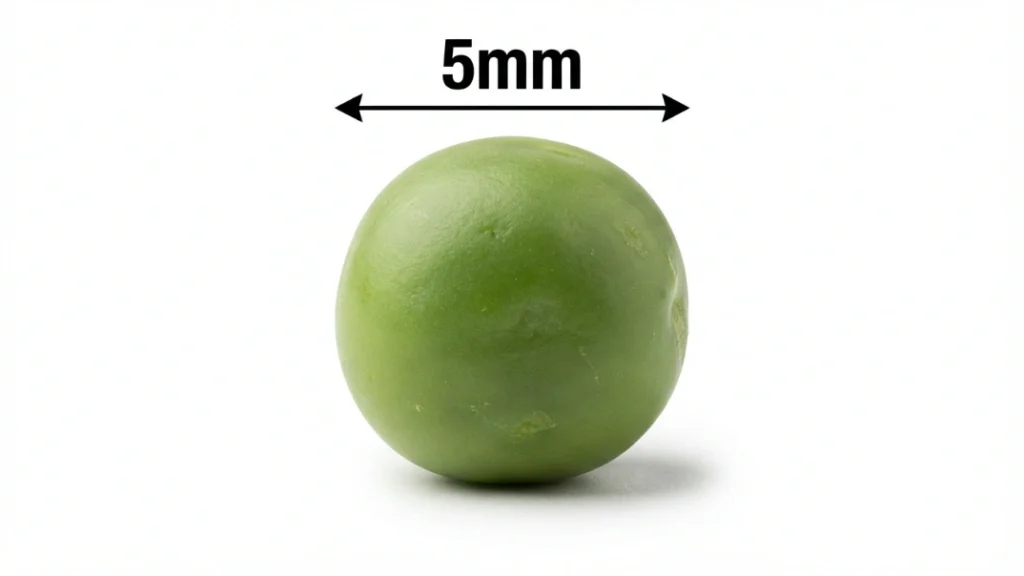
A standard green pea typically measures about 5mm (0.5 cm or 0.20 inches) in diameter, although the exact size can vary slightly depending on the variety and maturity of the pea. Because many peas fall very close to this measurement, they are one of the most accurate everyday references for visualizing such a small dimension.
Green peas are commonly found in frozen vegetable mixes, canned foods, and fresh produce sections. Since almost everyone has seen or handled them, they provide a familiar object that is easy to compare with other small items. Their nearly spherical shape also makes their diameter simple to judge by eye.
If you’re trying to estimate 5mm without a ruler, placing a single green pea next to another object offers a quick and reliable size reference. It is one of the easiest household examples for understanding how small this measurement really is.
2. Pencil Eraser Width
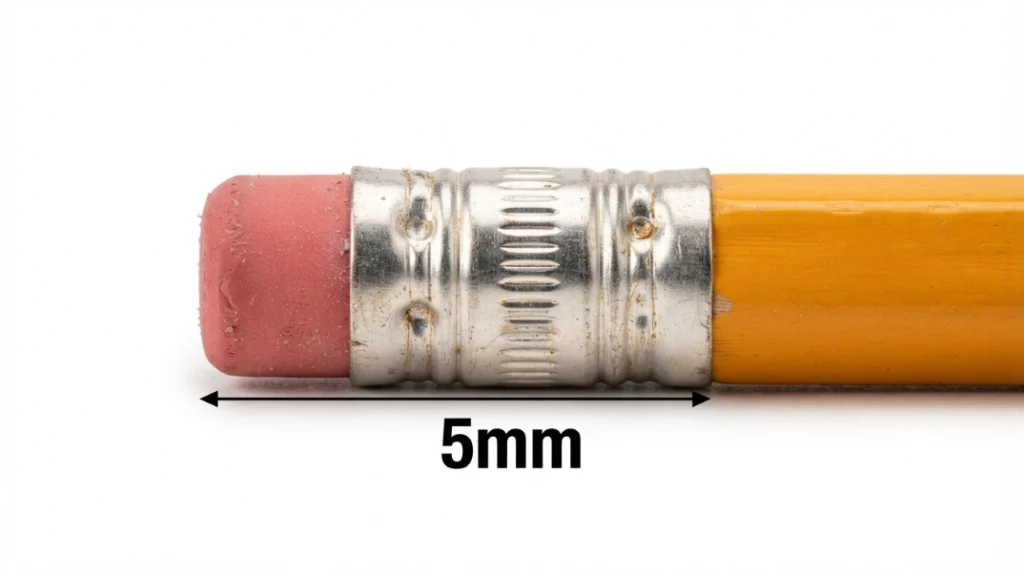
A standard pencil eraser is usually about 5mm (0.5 cm or 0.20 inches) wide, especially on many mechanical pencils and slim wooden pencils. While larger erasers exist, the width of a typical small eraser is very close to this measurement, making it an excellent everyday size reference.
People use pencil erasers daily at school, in offices, and for drawing or sketching. Because they’re so common, they provide a familiar object that almost anyone can visualize without needing a measuring tool. Their consistent size also makes them more reliable than many other household comparisons.
When you need to picture 5mm, imagine the width of a small pencil eraser. It’s a practical comparison that helps you estimate tiny dimensions quickly, whether you’re shopping online, working on crafts, or comparing product specifications.
3. Small Craft Bead
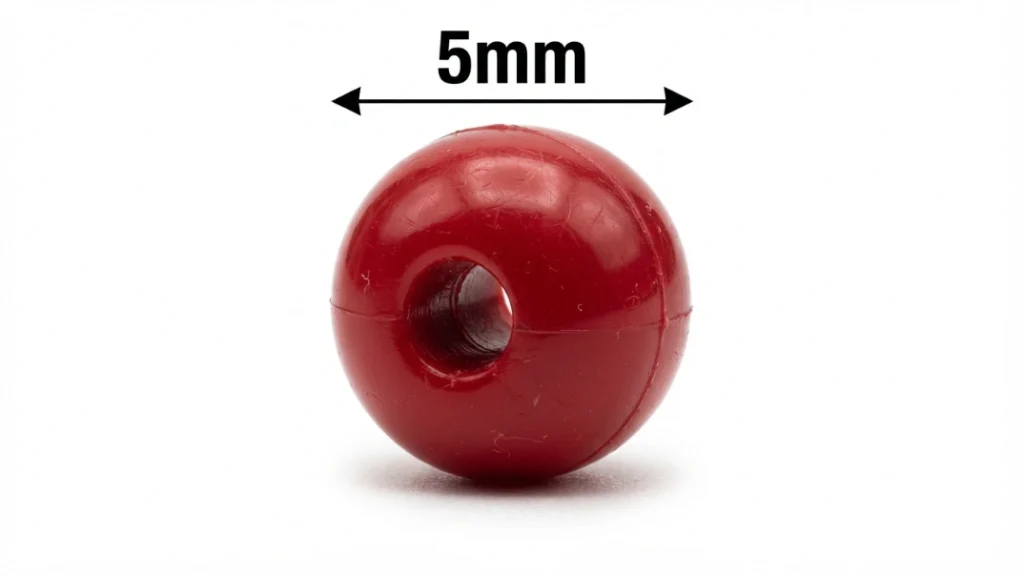
A small craft bead commonly measures about 5mm (0.5 cm or 0.20 inches) in diameter. These beads are widely used in jewelry making, bracelets, necklaces, and decorative DIY projects. Although beads come in many sizes, the 5mm version is one of the most popular because it creates a balanced, lightweight design.
You can find these beads in craft stores, sewing kits, and hobby supplies. They are available in materials such as glass, plastic, acrylic, wood, and metal. Their uniform size makes them easy to identify and useful for comparing other small objects.
If you want to estimate 5mm without a ruler, picture a standard 5mm craft bead. Its consistent diameter makes it one of the most accurate everyday references for understanding this small measurement.
4. Headphone Jack Opening
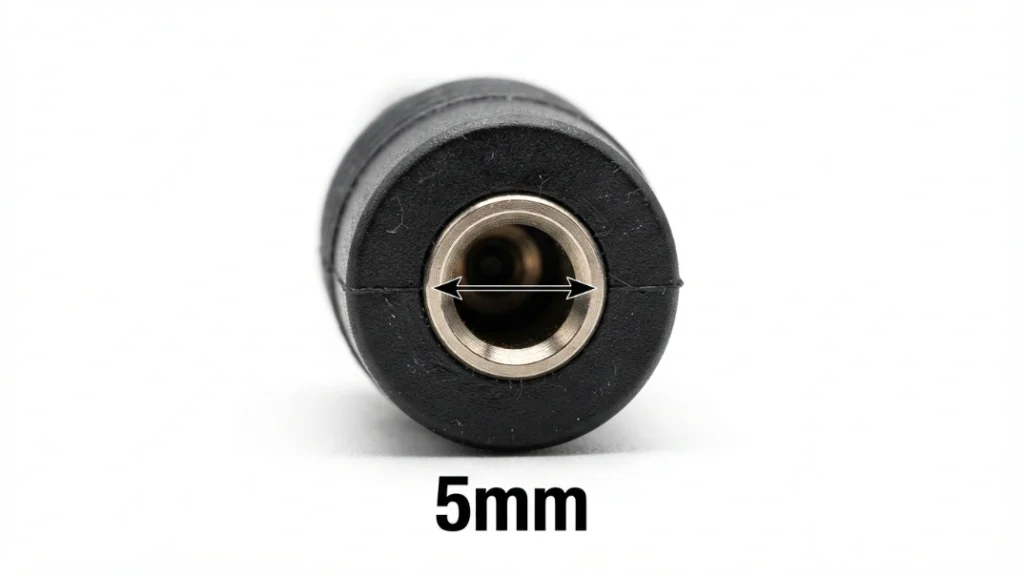
A standard headphone jack opening is about 5mm (0.5 cm or 0.20 inches) across on many audio devices. While the familiar headphone plug is 3.5mm in diameter, the outer opening and surrounding port on some devices measures close to 5mm, making it a useful visual reference.
You’ll commonly see this opening on older smartphones, laptops, desktop computers, speakers, and audio equipment. Because it appears on devices many people use every day, it’s an easy object to recognize without needing a ruler.
When estimating 5mm, imagine the size of a headphone jack opening rather than the metal plug itself. Its small circular shape provides a practical comparison for understanding this measurement.
5. Tiny Button Width
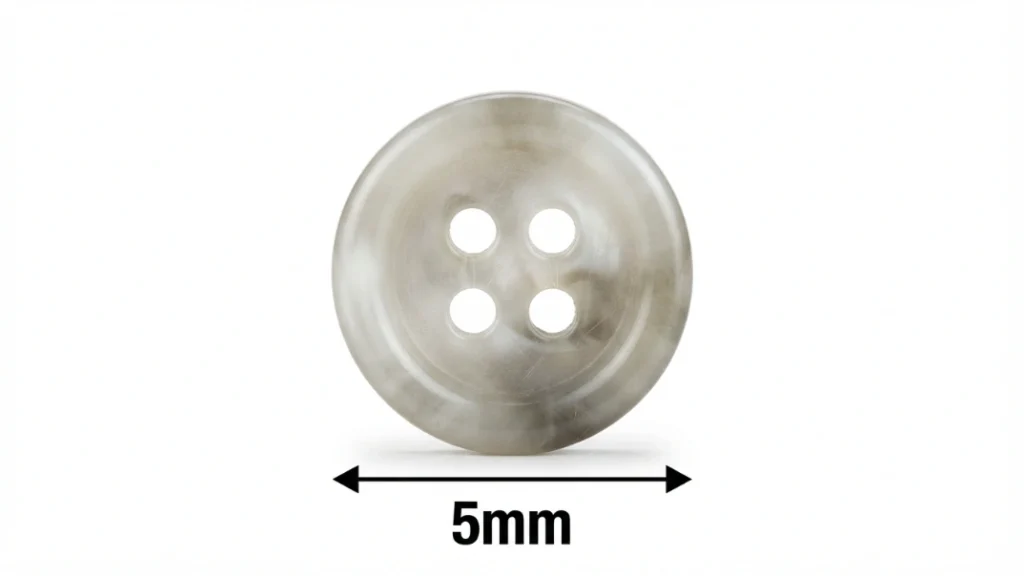
A tiny shirt or craft button often measures about 5mm (0.5 cm or 0.20 inches) across. Buttons of this size are commonly used on baby clothing, doll outfits, sewing projects, and decorative accessories where only a small fastening is needed.
These miniature buttons are available in plastic, wood, resin, and metal and can be found in sewing kits or craft stores. Their compact, circular shape makes them easy to compare with other small items.
If you’re trying to picture 5mm, imagine the width of a tiny sewing button. It’s a familiar object that offers a simple and accurate way to visualize this measurement.
6. Thick Cable Width

Many charging cables and electronic power cords have an outer diameter of around 5mm (0.5 cm or 0.20 inches). The exact size depends on the cable type, but thicker USB and power cables are often close to this measurement.
You’ll find cables of this thickness behind televisions, computer monitors, gaming consoles, routers, and household appliances. Since they’re used daily, they provide an easy real-world comparison.
Looking at the thickness of a sturdy charging cable is a convenient way to estimate 5mm. It helps you judge similar widths without needing measuring tools.
7. Small Marble Size
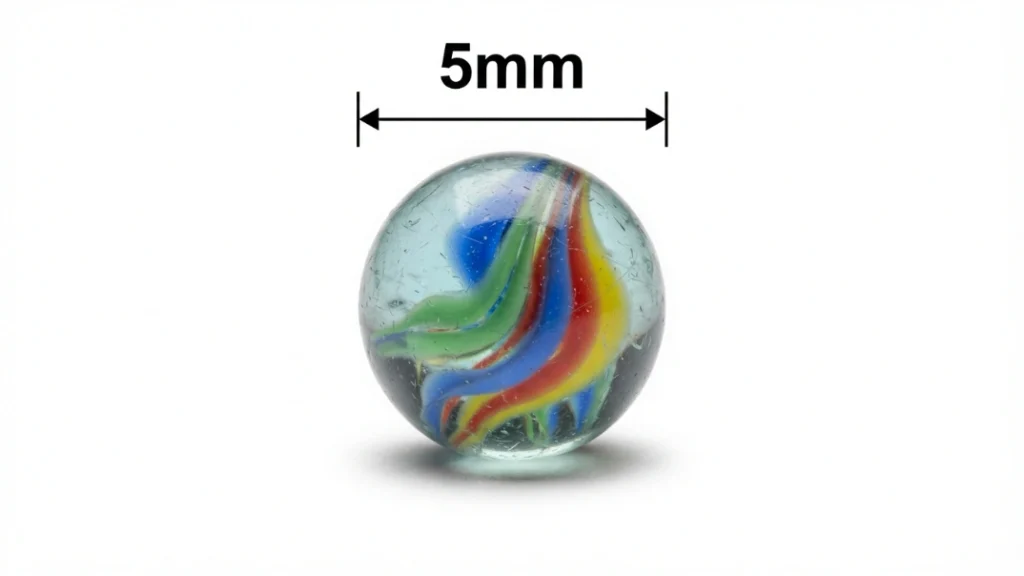
A small decorative marble can measure approximately 5mm in diameter, although marbles are produced in many different sizes. Miniature glass marbles used for crafts and decorations are often close to this dimension.
These tiny marbles are commonly found in craft projects, aquarium decorations, vase fillers, and educational kits. Their perfectly round shape makes their diameter easy to recognize.
If you need a quick visual reference for 5mm, imagine one of these miniature marbles. Its uniform size provides a reliable comparison for understanding this small measurement.
8. Watch Crown Width
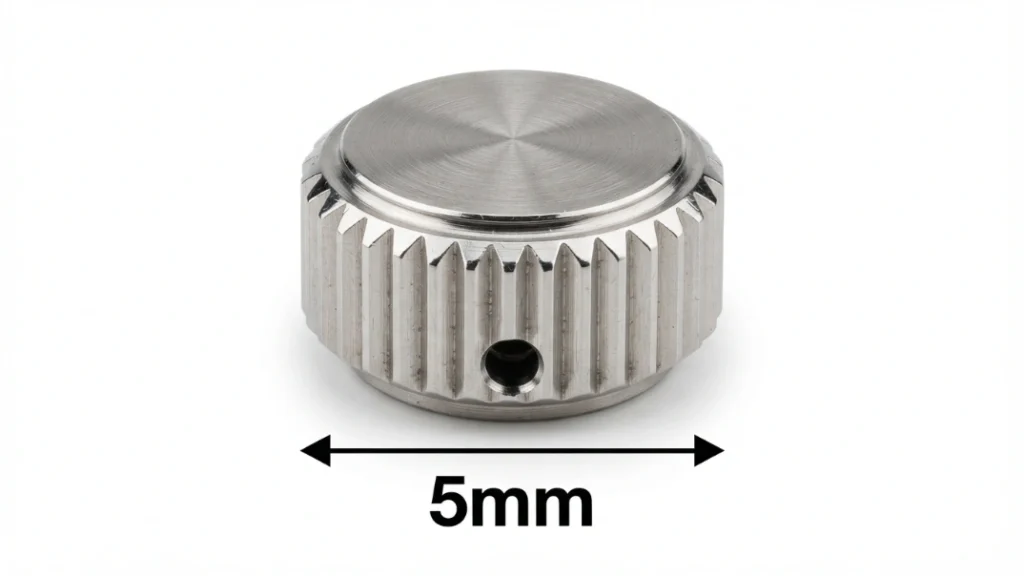
The crown on many wristwatches measures around 5mm across, depending on the watch style and brand. This small ridged knob is used to adjust the time and date and is designed to be easy to grip without making the watch bulky.
Watch crowns are found on analog watches, dive watches, dress watches, and many smartwatches with physical controls. Although sizes vary, 5mm is a common diameter for medium-sized watch crowns.
Visualizing the width of a typical watch crown is an effective way to understand 5mm. Since it’s a precision-made component, it offers a consistent real-world reference.
9. Coarse Gravel Piece
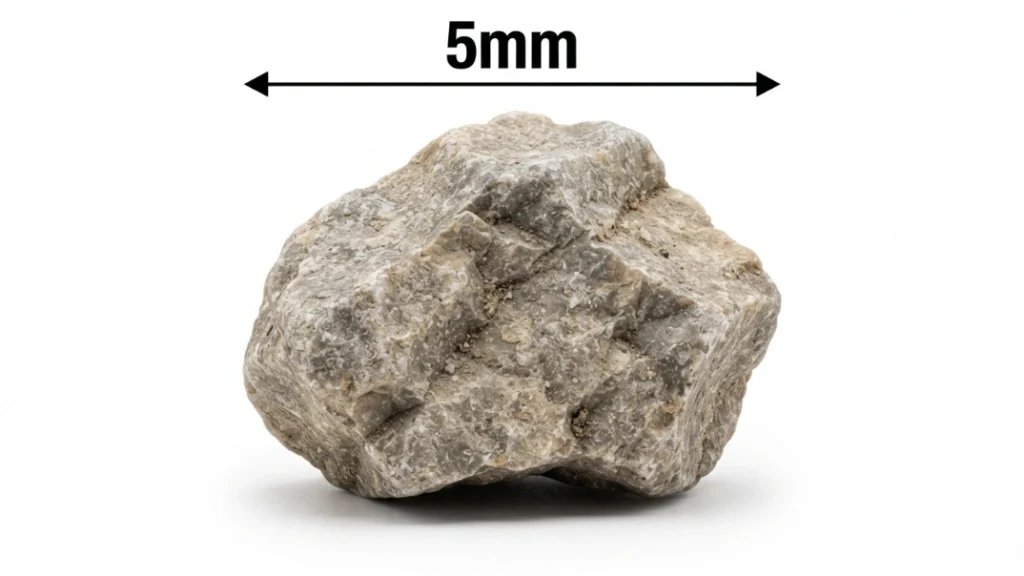
A coarse piece of gravel often measures about 5mm (0.5 cm or 0.20 inches) across. Gravel is available in many grades, but small landscaping gravel and decorative stone frequently include pieces close to this size.
You’ll commonly find this type of gravel in garden paths, flower beds, driveways, and landscaping projects. Because each stone is naturally shaped, individual pieces vary slightly, but many fall near the 5mm range.
If you’re outdoors and need to estimate 5mm, a single coarse gravel stone can serve as a convenient visual reference. It provides a realistic comparison for this small measurement.
10. Standard 5mm LED Lens
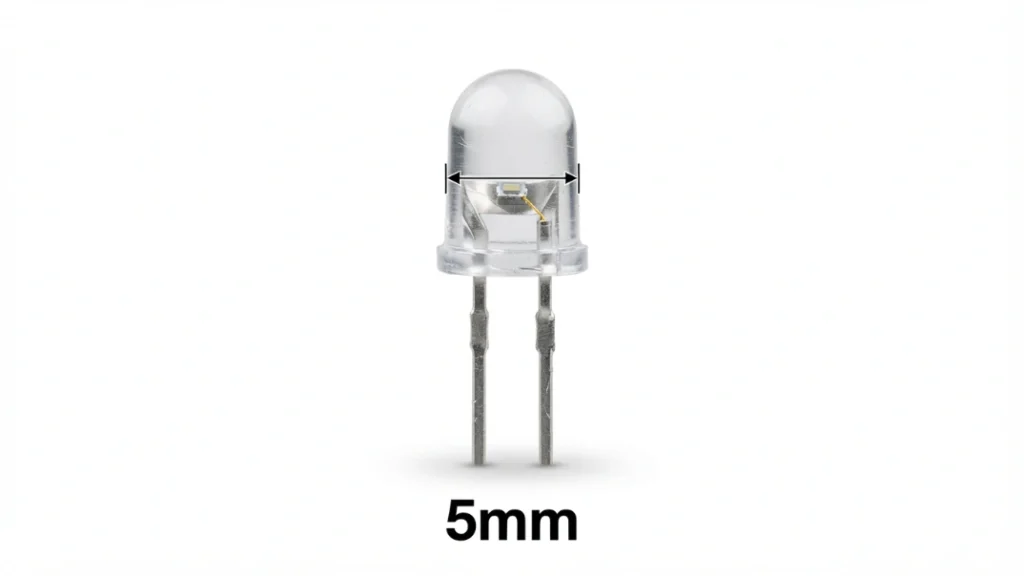
A standard LED used in electronics typically features a 5mm diameter lens, making it one of the most precise examples of this measurement. Manufacturers produce these LEDs to consistent specifications, so their size is highly reliable.
These LEDs are commonly found in DIY electronics, Arduino projects, indicator lights, toys, remote controls, and small appliances. Their rounded plastic lens is instantly recognizable to anyone who has worked with electronic components.
Because it is manufactured to an exact size, a standard 5mm LED is one of the best objects for visualizing 5mm accurately.
11. Wedding Ring Band Width
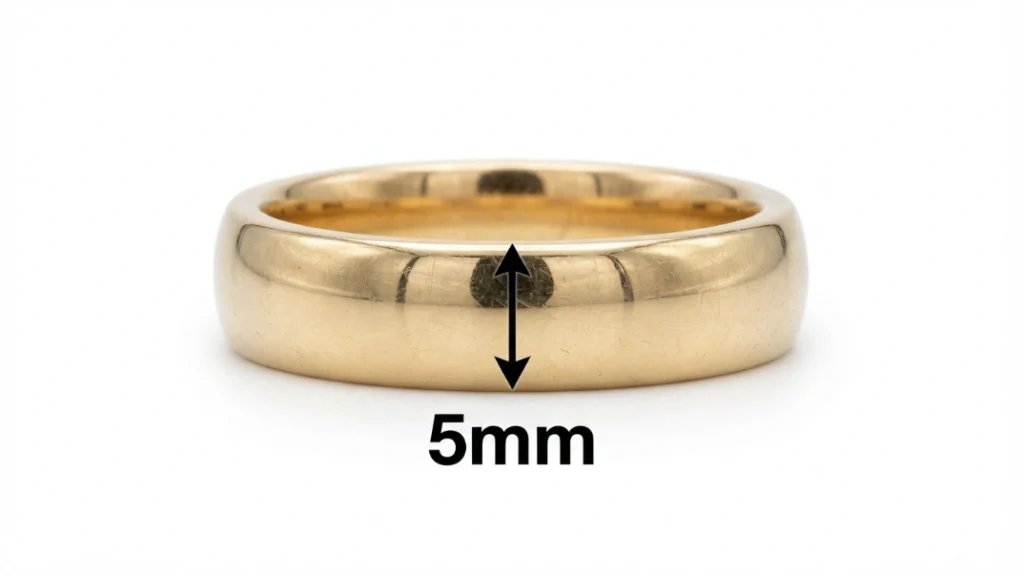
Many wedding bands are approximately 5mm wide, especially styles designed for everyday wear. This width offers a balanced appearance that is neither too thin nor too bulky, making it a popular choice for both men and women.
You’ll see 5mm bands in gold, platinum, titanium, tungsten, and stainless steel. Jewelers frequently recommend this width because it provides a comfortable fit while remaining durable and stylish.
If you’re familiar with a medium-width wedding ring, its band offers a helpful way to picture 5mm without using a measuring tool.
12. Uncooked Short-Grain White Rice
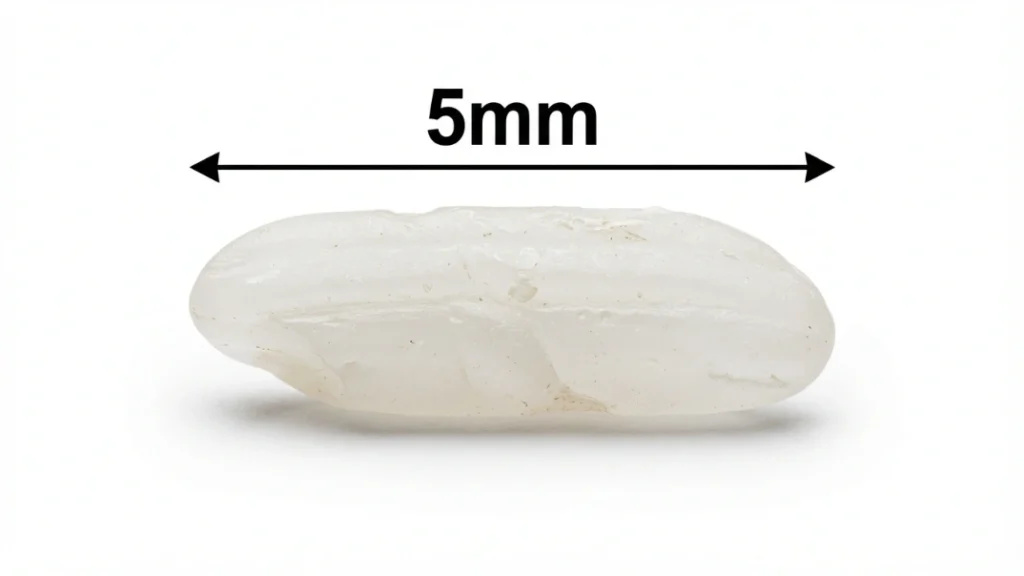
An uncooked grain of short-grain white rice is usually about 5mm long, although slight variations occur depending on the rice variety. Its compact shape makes it one of the easiest kitchen items to use for size comparison.
Short-grain rice is commonly used in sushi, risotto, rice pudding, and many Asian dishes. Since it’s a staple ingredient in many homes, it’s an accessible reference that most people can quickly recognize.
Imagine the length of a single uncooked short-grain rice grain when estimating 5mm. It’s a simple and practical household comparison.
13. Large Black Peppercorn
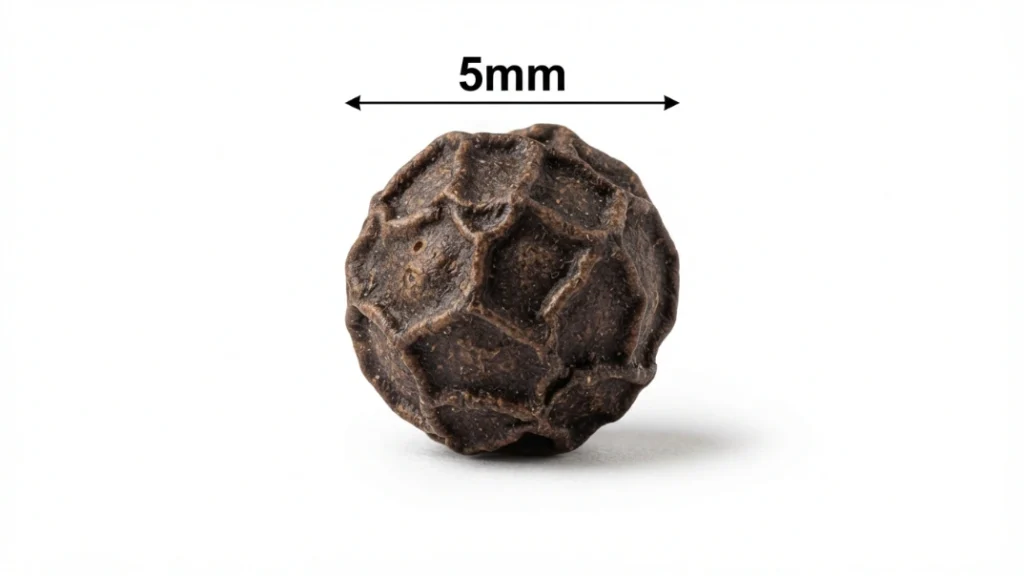
A large black peppercorn typically measures around 5mm in diameter. While peppercorn sizes vary naturally, many whole peppercorns used in grinders and spice jars are close to this measurement.
You’ll find whole black peppercorns in kitchens, restaurants, spice racks, and grocery stores. Their nearly round shape makes them easy to compare with other small objects.
If you need to visualize 5mm, think of a large whole black peppercorn. It’s a familiar kitchen item that provides a surprisingly accurate size reference.
14. Standard Mini Dice
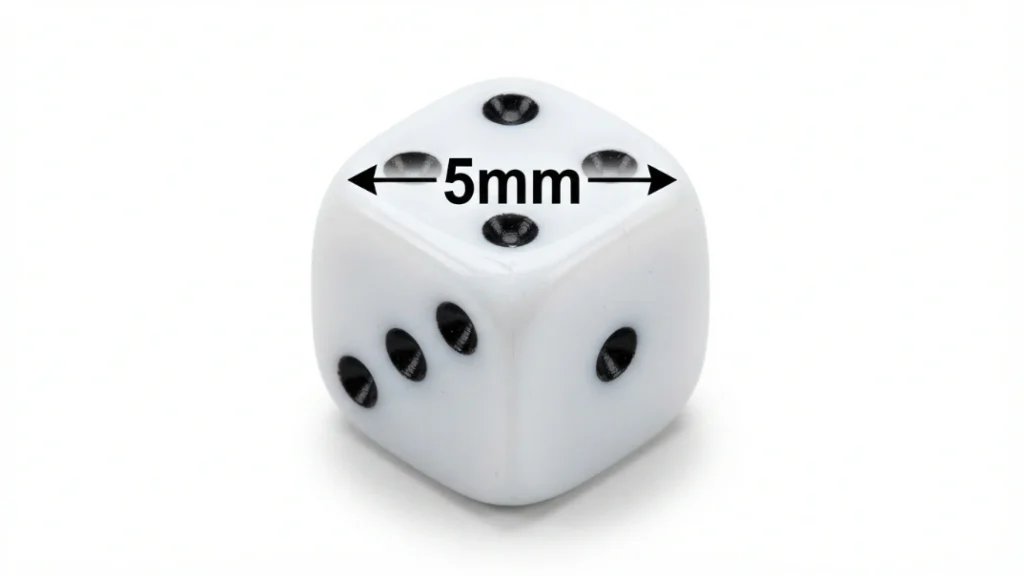
A standard mini die used for travel games, tabletop games, and educational activities often measures about 5mm on each side. Although larger dice are more common, miniature versions are widely available and manufactured to consistent dimensions.
These tiny dice are found in board game accessories, pocket-sized travel games, role-playing game sets, and classroom math activities. Despite their small size, they feature clearly printed pips and sharp edges.
When estimating 5mm, imagine the width of a miniature game die. Its uniform shape and precise manufacturing make it an excellent visual comparison.
15. 5mm Metric Hex Key (Allen Wrench)

A 5mm metric hex key, also known as an Allen wrench, is designed with a 5mm hexagonal tip that measures exactly 5 millimeters across the flats. Because it is manufactured to precise engineering standards, it represents one of the most accurate examples of this measurement.
This tool is commonly used to assemble furniture, tighten bicycle components, install machinery, and repair automotive parts. Many flat-pack furniture kits and bicycle maintenance sets include a 5mm Allen key because it fits a wide range of metric fasteners.
If you need an exact reference for 5mm, the tip of a 5mm Allen wrench is one of the most reliable objects available. Unlike natural objects, its dimensions are standardized during manufacturing.
16. M5 Threaded Bolt Shank

An M5 threaded bolt has a shank diameter of 5mm (0.5 cm or 0.20 inches). The “M5” designation follows the metric standard, indicating that the threaded portion of the bolt measures approximately 5 millimeters across.
M5 bolts are widely used in bicycles, furniture, electronics, machinery, automotive components, and household repairs. Their standardized size allows them to fit matching M5 nuts and threaded holes with precision.
If you’re working with hardware or DIY projects, the diameter of an M5 bolt provides an excellent way to visualize 5mm. Since every genuine M5 bolt follows the same standard, it serves as a dependable real-world comparison.
17. 5mm Twist Drill Bit

A 5mm twist drill bit has a cutting diameter of exactly 5 millimeters, making it another highly accurate reference for this measurement. Manufacturers produce these drill bits to strict tolerances so they create holes with consistent dimensions.
You’ll commonly find 5mm drill bits in home workshops, construction sites, metalworking shops, and woodworking projects. They are used for drilling into wood, plastic, aluminum, and mild steel depending on the bit material.
Because its cutting edge is manufactured to an exact diameter, a 5mm drill bit is one of the easiest tools to use when visualizing this measurement without estimating.
18. Thickness of Five Credit Cards Stacked

A single credit card is approximately 0.76mm thick. When five standard credit cards are stacked together, the total thickness is about 3.8mm, while six to seven cards are closer to 5mm. Since card thickness can vary slightly by manufacturer, a small stack provides a practical approximation.
Most people carry bank cards, ID cards, or membership cards every day, making them an accessible household reference. Their consistent manufacturing standards help create a reliable visual estimate without specialized tools.
If you don’t have a ruler nearby, stack several credit or debit cards together and compare their combined thickness. It’s a quick way to picture a dimension that is very close to 5mm.
How to Estimate 5mm Without a Ruler
You don’t always need a ruler to judge a small measurement accurately. By comparing it with familiar household items, you can make a close estimate in just a few seconds. While these methods won’t replace precise measuring tools, they work well for everyday tasks like crafts, shopping, DIY projects, and checking product dimensions.
Many of the objects discussed above are manufactured to consistent sizes, making them dependable visual references. Once you become familiar with a few of them, recognizing this measurement becomes much easier in daily life.
Here are some simple ways to estimate it without a ruler:
- Compare it to a green pea. A standard green pea is about 5mm in diameter and is one of the easiest household references.
- Use a 5mm LED. The plastic lens of a standard LED measures exactly 5mm across.
- Look at an M5 bolt. The threaded shank of an M5 bolt is manufactured to a precise 5mm diameter.
- Check a 5mm Allen wrench. The hexagonal tip provides an exact engineering reference.
- Picture a small craft bead. Many jewelry beads are produced in the 5mm size.
- Compare it with a watch crown. Many wristwatch crowns are close to this width.
With a few familiar comparisons in mind, you’ll rarely need a ruler to recognize a measurement that’s around 5mm.
How Big Is 5mm on a Ruler?
On a metric ruler, 5mm is the distance between the 0 mark and the fifth small tick mark. Since each small division represents 1 millimeter, counting five marks gives you exactly 5mm. It is also equal to 0.5 centimeters, placing it halfway between the 0 cm and 1 cm markings.
Most metric rulers display millimeters with evenly spaced lines, making this measurement easy to locate. Because it sits halfway to the 1-centimeter mark, you can identify it quickly even without reading the numbers. This is especially useful for schoolwork, crafts, sewing, and small repair projects.
If you’re using a ruler that shows both inches and centimeters, remember that 5mm is slightly less than one-quarter of an inch. Knowing where it appears on a ruler makes estimating similar measurements much easier.
5mm Compared to Other Common Measurements
Comparing 5mm with other familiar metric and imperial measurements helps put its size into perspective. Although it is a small dimension, understanding how it relates to centimeters and inches makes it easier to estimate when reading product specifications or measuring everyday objects.
The table below shows how 5mm compares with several commonly used measurements.
| Measurement | Equivalent | Comparison |
|---|---|---|
| 1 mm | One-fifth of 5mm | Much smaller |
| 2 mm | 40% of 5mm | Less than half as large |
| 5 mm | 0.5 cm | Reference measurement |
| 10 mm | 1 cm | Twice as large |
| 20 mm | 2 cm | Four times as large |
| 25.4 mm | 1 inch | About five times larger |
| 50 mm | 5 cm | Ten times larger |
Quick Tips for Visualizing Small Measurements
Understanding small dimensions becomes much easier when you associate them with familiar objects instead of memorizing numbers. Using real-world comparisons helps improve estimation skills for shopping, crafts, home improvement, and everyday tasks.
- Think of a green pea for a quick kitchen reference.
- Remember a 5mm LED for an exact manufactured example.
- Compare it with a small craft bead used in jewelry making.
- Use the tip of a 5mm Allen wrench when working with tools.
- Check an M5 bolt if you have hardware available.
With these simple references, identifying How Big Is 5mm becomes much easier even when a ruler isn’t nearby.
Read: How Big Is 3mm?
Read: How Long Is 2 Inches?
Read: How Long Is 4 Inches?
Read: How Long Is 5 Inches?
Read: How Long Is 6 Inches?
Read: How Long Is 10 Inches?
Frequently Asked Questions
Is 5mm the same as half a centimeter?
Yes. Since 10 millimeters equal 1 centimeter, 5 millimeters is exactly 0.5 centimeters, or half a centimeter.
Is 5mm considered small?
Yes. It is a very small measurement commonly found in jewelry, electronics, hardware, craft supplies, and many household items.
What everyday object is closest to this size?
A standard green pea, a 5mm LED lens, or a small craft bead are among the closest everyday objects to this measurement.
Can I estimate this measurement without a ruler?
Yes. Comparing it with familiar objects like a green pea, an M5 bolt, or a 5mm Allen wrench provides a reasonably accurate estimate when a ruler isn’t available.
How Big Is 5mm compared to an inch?
How Big Is 5mm is approximately 0.1969 inches, which is just under one-fifth of an inch.
Conclusion
Understanding How Big Is 5mm becomes much easier when you compare it with familiar objects instead of relying only on numbers. Everyday items such as a green pea, a 5mm LED, a craft bead, or an M5 bolt provide accurate visual references that help you recognize this small measurement quickly.
Whether you’re measuring hardware, choosing jewelry, shopping online, or working on a DIY project, these comparisons make estimating sizes more practical. By remembering just a few of these examples, you’ll be able to identify 5mm confidently even when you don’t have a ruler close at hand.