Quick Answer:
10cm equals 3.94 inches, 100 millimeters, or 0.1 meter. It is roughly the width of a toilet paper roll or the length of a small bar of soap.
Trying to picture 10 centimeters without a ruler can be surprisingly difficult. It is a fairly small measurement, yet it appears constantly in product dimensions, crafts, schoolwork, household items, packaging, and DIY projects.
If you are wondering how big is 10cm, think of a length just under 4 inches. Several objects you probably handle every day come close to this dimension, making them useful visual references when measuring tools are unavailable.
Below, you will find exact conversions, practical estimation methods, and 12 common objects that can help you understand what this size actually looks like in the real world.
10cm Conversion Chart
Quick and accurate measurement conversions
| Unit | Converted Value |
|---|---|
| Inches | 3.94 in |
| Feet | 0.328 ft |
| Centimeters | 10 cm |
| Millimeters | 100 mm |
| Meters | 0.1 m |
| Yards | 0.109 yd |
Exactly How Big Is 10cm?
Ten centimeters is a relatively short length. In the imperial system, it equals approximately 3.94 inches, meaning it falls only about 0.06 inches short of 4 inches. In metric terms, the same distance equals exactly 100 millimeters or one-tenth of a meter. That makes 10 centimeters particularly easy to calculate within the metric system.
For a practical visual reference, imagine a line about the length of your palm, depending on hand size, or the width of a typical toilet paper roll. A standard playing card is slightly shorter at around 8.9 centimeters, while many soap bars, compact mirrors, coasters, and other handheld items fall near the 10-centimeter range.
The important point is that everyday products are not manufactured to one universal dimension. An object measuring 9.5 or 10.5 centimeters can still provide a useful approximation when you only need to visualize the size rather than take a precision measurement.
Ways to Estimate 10cm Without a Ruler
You can estimate this length without measuring equipment by using familiar objects whose dimensions are reasonably consistent. A standard playing card, for example, is approximately 8.9 centimeters long. Add a little over 1 centimeter beyond its edge, and you have a useful approximation of the target distance.
Your hands can also provide a rough reference. Adult palm widths and finger dimensions differ considerably, so they should never replace a ruler for precision work. However, if you already know the approximate width of your own palm or length of one finger, your hand can become a convenient personal measuring reference.
Another simple method is to use objects such as coasters, small candles, toilet paper rolls, or compact mirrors. Some versions measure close to 10 centimeters across. For casual estimates, these references are usually sufficient, but construction, tailoring, engineering, and other precision tasks should always be checked with an actual measuring tool.
Common Things That Are 10cm Big
| Object | Approximate Size | How It Compares |
|---|---|---|
| Playing Card | 8.9 cm long | Slightly shorter |
| Toilet Paper Roll | 9.5–11 cm wide | Very close |
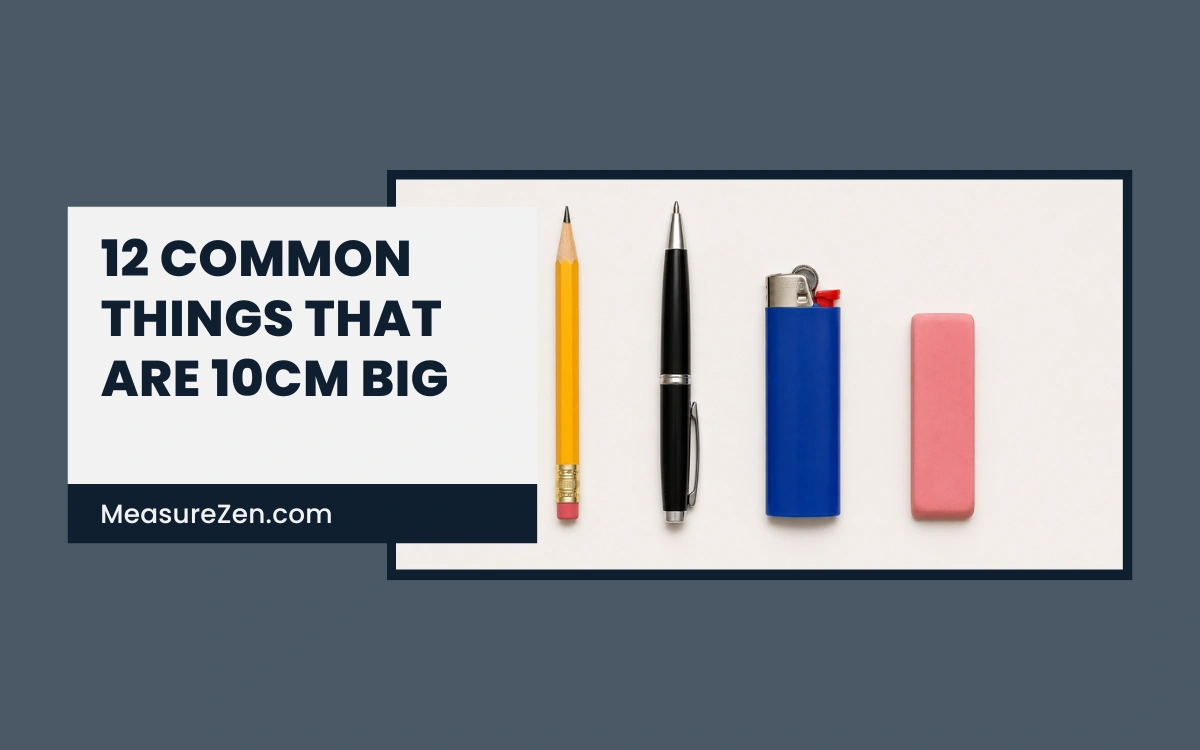
| Standard Pen Barrel | About 10–12 cm | Close |
| Popsicle Stick | About 11.4 cm long | Slightly longer |
| Bar of Soap | About 9–11 cm long | Very close |
| Paring Knife Blade | About 8–10 cm | Close |
| Softball | About 9.7 cm diameter | Very close |
| Men’s Wallet | About 10–12 cm long | Close |
| Makeup Brush Handle | About 10–15 cm | Some are close |
| Drink Coaster | About 9–10 cm wide | Very close |
| Compact Mirror | About 7–10 cm wide | Some are close |
| Small Candle | About 8–10 cm tall/wide | Some are close |
These dimensions are approximate because product sizes differ. Still, several examples—especially a softball, coaster, toilet paper roll, and certain bars of soap—provide a practical mental picture of a 10-centimeter dimension.
1. Playing Card Length

A standard poker-size playing card measures approximately 8.9 centimeters long and 6.35 centimeters wide. Its length is therefore about 1.1 centimeters shorter than the target measurement. Although it is not an exact match, its standardized dimensions make it one of the more dependable household references for estimating a short distance.
Playing cards are commonly found in homes, classrooms, game rooms, and travel bags. Because most standard poker cards use nearly identical dimensions, you do not have to worry about large variations between ordinary decks. Specialty, tarot, or oversized cards, however, can have significantly different measurements.
To estimate 10 centimeters, place a standard playing card lengthwise and imagine adding approximately 11 millimeters beyond one end. That small additional section brings the total very close to 10 centimeters, providing a quick visual reference when you do not have a ruler nearby.
2. Toilet Paper Roll Width

A typical toilet paper roll is often around 9.5 to 11 centimeters wide, although exact dimensions depend on the brand and product design. This makes the roll’s width one of the closest household comparisons for a 10-centimeter measurement. Some rolls may effectively match it, while others differ by several millimeters.
Toilet paper rolls are particularly useful because they are familiar and easy to find. The measurement being compared here is the distance from one flat side of the roll to the other along the cardboard tube, not the circular diameter of the entire roll, which is usually larger and changes as paper is used.
If your roll measures close to 10 centimeters wide, you can use that dimension as a convenient reference for estimating other objects. It works especially well when picturing the width of a small package, container, decorative item, or other compact household object.
3. Standard Pen Barrel Length

Pens vary substantially in total length, with many complete pens measuring roughly 14 to 15 centimeters from end to end. However, the main barrel or usable body section of some compact and standard designs can fall around the 10 to 12-centimeter range, depending on how the pen, cap, grip, and tip are constructed.
Pens are available almost everywhere, including offices, classrooms, kitchens, reception areas, and bags. This makes them convenient visual references, but they are less standardized than playing cards. Retractable pens, capped pens, mini pens, and promotional models can all have noticeably different dimensions.
A pen should therefore be used for rough visualization rather than precise measurement. If you know the barrel section of your particular pen is about 10 centimeters, it becomes an easy reusable reference. Otherwise, compare it with a ruler once before relying on it for future estimates.
4. Popsicle Stick Length

A common wooden craft or popsicle stick is approximately 11.4 centimeters long, equivalent to about 4.5 inches. This makes it roughly 1.4 centimeters longer than 10 centimeters. Smaller craft sticks may be closer to the target, while jumbo sticks can be considerably larger in both length and width.
These sticks are commonly used for frozen treats, children’s craft projects, model building, classroom activities, and DIY decorations. Their simple rectangular shape makes them especially easy to use as visual measuring references because the length can be compared directly against another straight object.
If you have a standard 11.4-centimeter craft stick, imagine removing roughly 1.4 centimeters from one end. The remaining section would represent approximately 10 centimeters. It is not an exact ready-made reference, but the difference is small enough to make visualization straightforward.
5. Standard Bar of Soap Length

Many standard rectangular bars of soap measure somewhere around 9 to 11 centimeters in length, although dimensions vary by brand, weight, shape, and intended use. A soap bar measuring close to 10 centimeters provides an excellent handheld representation of this size because both its shape and dimensions are easy to visualize.
Soap bars are found in bathrooms, kitchens, hotels, gyms, and travel kits. Some are compact and oval-shaped, while larger bath bars can exceed 10 centimeters. Hotel soaps are generally much smaller, so they are not suitable references unless their dimensions are already known.
When you picture an ordinary full-size soap bar resting in your palm, you are visualizing something close to this length. This comparison is particularly helpful for estimating small product dimensions, storage spaces, packages, toiletries, and other objects that are similar in scale.
6. Kitchen Paring Knife Blade Length
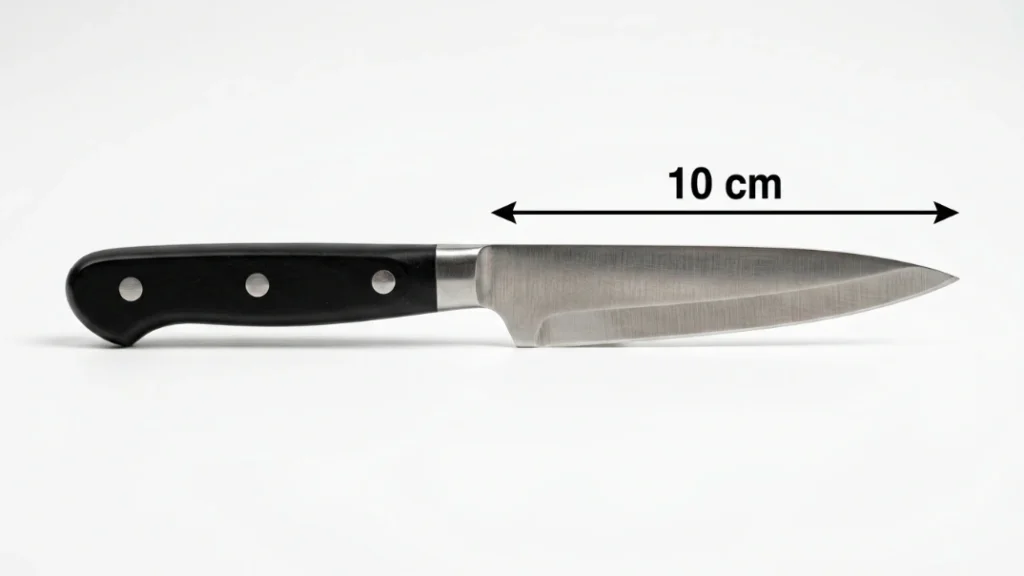
A kitchen paring knife commonly has a blade measuring approximately 8 to 10 centimeters, or around 3 to 4 inches. A four-inch paring blade measures approximately 10.16 centimeters, making it exceptionally close to 10 centimeters. The handle is not included when using this comparison.
Paring knives are designed for detailed kitchen tasks such as peeling fruit, trimming vegetables, removing seeds, and making small precision cuts. Their short blades distinguish them from chef’s knives, bread knives, and utility knives, which are normally much longer.
If you have a paring knife with a four-inch blade, the blade itself provides an almost direct visual comparison. Since 10 centimeters equals approximately 3.94 inches, the difference between the two is only around 1.6 millimeters, which is barely noticeable for casual visualization.
7. Softball Diameter
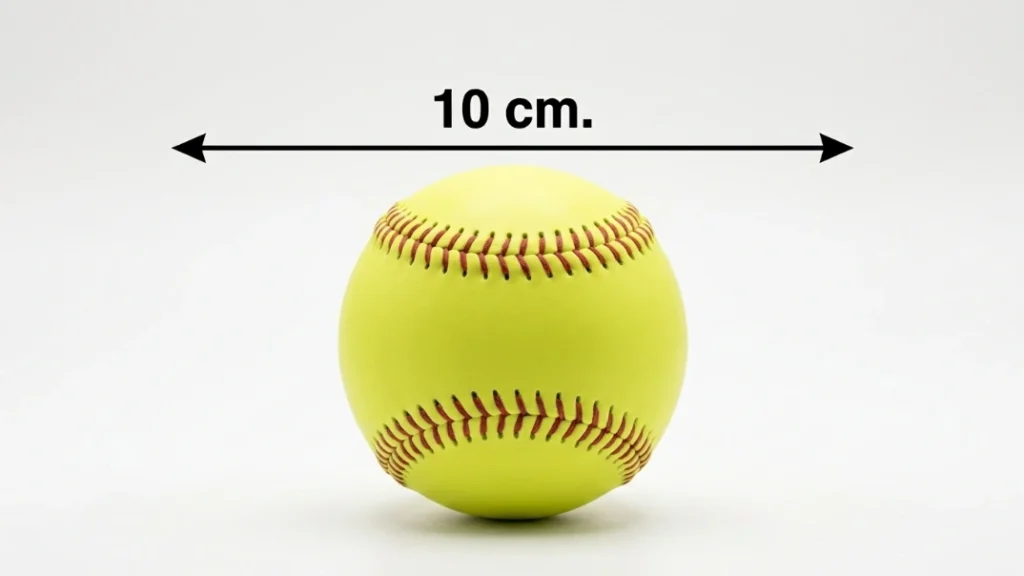
A regulation-size softball can have a circumference of approximately 12 inches, depending on the type of game. Using the circumference-to-diameter relationship, a 12-inch-circumference softball has a diameter of roughly 9.7 centimeters. That places its width remarkably close to the 10-centimeter mark.
Softballs are familiar pieces of sports equipment used in schools, parks, leagues, and recreational games. They are significantly larger than baseballs, which makes the distinction important. A standard baseball has a diameter closer to 7.3 centimeters and therefore provides a noticeably smaller reference.
Imagine drawing a straight line through the center of a standard 12-inch softball from one side to the other. That distance is just under 10 centimeters. This makes a softball one of the most visually useful round-object comparisons for understanding the measurement.
8. Men’s Wallet Length

Many folded men’s wallets measure roughly 10 to 12 centimeters across, although exact dimensions depend on the wallet style. Compact bifold wallets may sit close to 10 centimeters, while longer bifolds, travel wallets, and checkbook-style designs can exceed this measurement by a noticeable amount.
Wallets are familiar personal items, making them convenient references when estimating compact dimensions. Most traditional bifold models are designed to fit comfortably inside a trouser or jacket pocket, so their overall size remains relatively small even though manufacturers use different proportions and materials.
A compact wallet measuring approximately 10 centimeters along one side gives you a direct sense of the target length. If yours is slightly larger, picture a small section removed from the end. Checking your own wallet once with a ruler can turn it into a useful future reference.
9. Standard Makeup Brush Handle Length
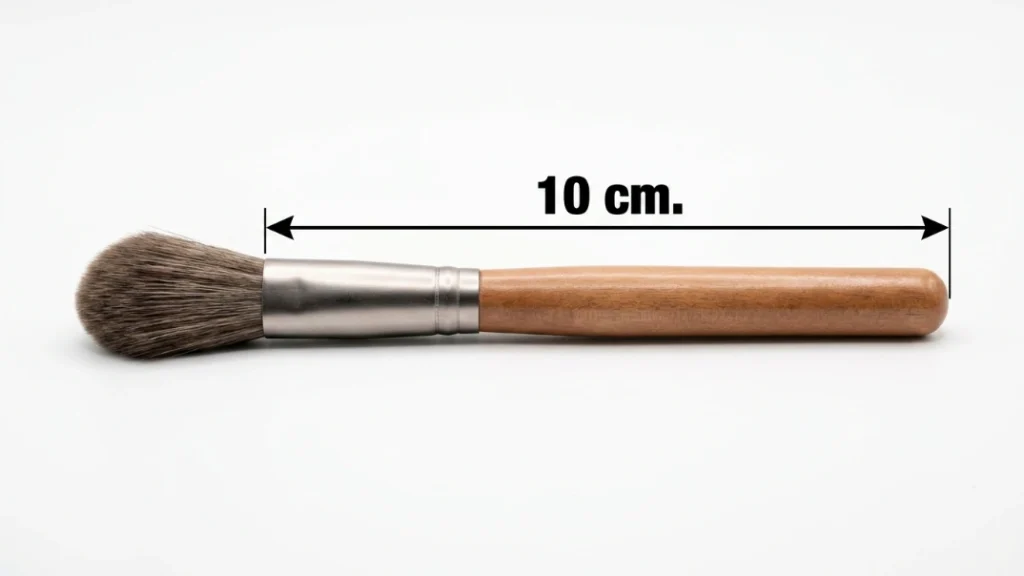
Makeup brushes come in many sizes, with complete brushes commonly measuring from around 10 to 20 centimeters depending on their purpose. Compact or travel brushes may have handles around the 10-centimeter range, while full-size foundation, powder, and blending brushes are often considerably longer.
These brushes are frequently stored in cosmetic bags, bathroom organizers, dressing tables, and travel kits. Their narrow, straight handles make length comparisons relatively easy. However, because there is no universal makeup-brush size, it is important not to assume that every brush provides the same reference.
A compact brush with a 10-centimeter handle offers a convenient way to picture this measurement. If you regularly carry a travel-size cosmetic brush, measure its handle once. When it falls close to 10 centimeters, you have a portable reference that can be used for future rough estimates.
10. Drink Coaster

Many drink coasters measure approximately 9 to 10 centimeters across, particularly square and circular designs intended for mugs, glasses, and small cups. Four-inch coasters are also common; at 10.16 centimeters, they are almost exactly the same width as the target measurement.
Coasters are used on dining tables, coffee tables, desks, bars, and restaurant surfaces to protect furniture from condensation, heat, stains, and scratches. They are manufactured from materials including cork, wood, silicone, ceramic, stone, cardboard, and leather.
A four-inch coaster is an especially useful visual comparison because 4 inches equals 10.16 centimeters. The difference is only 1.6 millimeters. Looking straight across such a coaster therefore gives you a very accurate mental picture of what approximately 10 centimeters looks like.
11. Compact Mirror
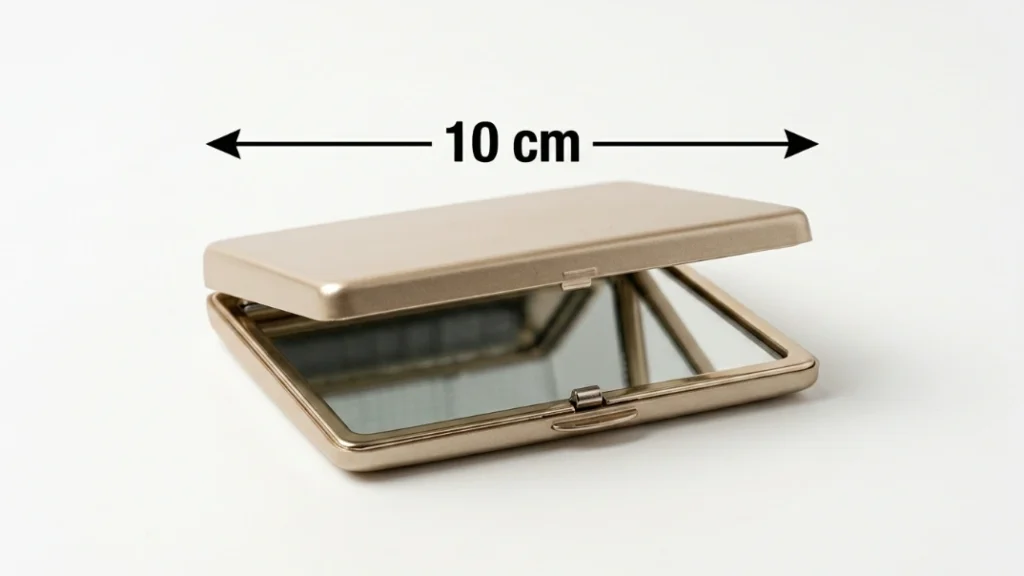
Compact mirrors vary widely, but many small models measure approximately 7 to 10 centimeters across. Larger cosmetic compacts may approach or slightly exceed 10 centimeters, while pocket-size versions can be considerably smaller. Round, square, and rectangular designs also produce different dimensions.
These mirrors are designed for handbags, makeup kits, dressing tables, and travel cases. Their compact size allows them to remain portable while still providing enough reflective area for makeup checks and grooming. Folding models may also have different dimensions when opened and closed.
If you own a compact mirror that is about 10 centimeters wide, its diameter or side length can serve as a convenient visual guide. Because compact sizes are not standardized, checking the product once with a ruler is recommended before using it as a repeated measuring reference.
12. Small Candle

Small decorative and container candles can measure around 8 to 10 centimeters in height or diameter, depending on their style. Short pillar candles and certain jar candles may come particularly close to a 10-centimeter dimension, although tea lights and large pillar candles differ substantially.
Candles appear in homes, restaurants, event decorations, spas, hotels, and gift sets. Their dimensions are usually listed by height and diameter, which makes it important to identify which measurement you are comparing. A candle could be 10 centimeters tall while being only 7 centimeters wide.
A small pillar candle around 10 centimeters tall provides a simple vertical representation of the measurement. It can help you visualize the height of similarly sized objects such as small containers, decorations, plant pots, jars, or desktop accessories without immediately reaching for a measuring tape.
How to Picture 10cm Without a Ruler
One of the easiest ways to picture this distance is to remember that it is just under 4 inches. If you are comfortable working with inches, imagine a standard four-inch span and reduce it by only a tiny amount. Four inches equals 10.16 centimeters, so the visual difference is minimal.
Another useful strategy is to memorize one familiar object that you already own. A four-inch drink coaster, 10-centimeter soap bar, or similarly sized household item can become your personal reference. This is more reliable than assuming every product in a category has identical dimensions.
For quick visualization, remember these approximate relationships:
- 10cm = 100 millimeters
- 10cm = 3.94 inches
- 10cm = 0.1 meter
- 10cm = about the width of some toilet paper rolls
- 10cm = almost the diameter of a 12-inch-circumference softball
- 10cm = almost the width of a 4-inch coaster
These comparisons work well for casual estimation. When measurements affect fit, construction, cutting, purchasing decisions, or safety, however, use a ruler or measuring tape instead of relying solely on visual references.
10cm Compared to Similar Sizes
Comparing nearby measurements can make 10 centimeters easier to understand. It sits between 9 and 11 centimeters and is almost identical to 4 inches. Because the difference between 10 centimeters and 4 inches is only 0.16 centimeters, the two measurements look nearly the same without precision tools.
The difference becomes more noticeable when compared with measurements such as 5 centimeters or 15 centimeters. Five centimeters is exactly half as long, while 20 centimeters is exactly twice as long. These simple metric relationships are useful when estimating dimensions visually.
| Measurement | Inches | Compared With 10cm |
|---|---|---|
| 5 cm | 1.97 in | Half as long |
| 8 cm | 3.15 in | 2 cm shorter |
| 9 cm | 3.54 in | 1 cm shorter |
| 10 cm | 3.94 in | Exact reference |
| 11 cm | 4.33 in | 1 cm longer |
| 12 cm | 4.72 in | 2 cm longer |
| 15 cm | 5.91 in | 50% longer |
| 20 cm | 7.87 in | Twice as long |
Thinking in these proportions is especially useful when working with metric dimensions. Once you can confidently visualize 10 centimeters, estimating 5, 20, or even 30 centimeters becomes considerably easier because they are simple multiples or fractions of the same reference.
When Is a 10cm Estimate Accurate Enough?
An approximate measurement is often sufficient when you only need to visualize an object’s general size, compare two products, arrange decorations, estimate available desk space, or understand dimensions listed online. Being a few millimeters off usually makes little practical difference in these situations.
Approximation becomes less appropriate when accuracy directly affects the result. Use a proper ruler, tape measure, or other measuring instrument when cutting materials, checking product fit, completing technical work, or following dimensions that require precision.
A good rule is simple: use everyday objects to visualize a measurement and proper tools to verify it. That gives you the convenience of quick estimation without treating naturally variable household objects as precision measuring devices.
Read: What Is 5’3 in Inches?
Read: What Is 5’0 in Inches?
Read: What Is 5’2 in Inches?
Read: How Long Is 17 Inches?
Read: How Big Is 9cm?
Read: How Long Is 18 Inches?
Read: How Long Is 4 cm?
Frequently Asked Questions
Is 10cm the same as 4 inches?
Not exactly. Ten centimeters equals approximately 3.94 inches, while 4 inches equals 10.16 centimeters. The difference is only 1.6 millimeters, so they appear almost identical in everyday visual comparisons.
How many millimeters are in 10 centimeters?
There are exactly 100 millimeters in 10 centimeters. One centimeter contains 10 millimeters, so multiplying 10 centimeters by 10 gives 100 millimeters.
Is 10cm half of 20cm?
Yes. Ten centimeters is exactly half of 20 centimeters. Likewise, two 10-centimeter lengths placed end to end equal 20 centimeters.
What common object is closest to 10cm?
A four-inch drink coaster, certain toilet paper rolls, some soap bars, and the diameter of a 12-inch-circumference softball are useful references. Exact product dimensions can differ.
Can I measure 10cm without a ruler?
You can estimate it using a familiar object with a known dimension. For better accuracy, use an object you have previously measured rather than assuming every product of the same type has identical dimensions.
Conclusion
Understanding how big is 10cm becomes much easier once you connect the number with familiar objects. Ten centimeters equals 100 millimeters, 0.1 meter, or approximately 3.94 inches, placing it extremely close to the familiar four-inch mark.
For everyday visualization, think of a four-inch coaster, the width of certain toilet paper rolls, a small soap bar, or roughly the diameter of a standard softball. These comparisons are excellent for developing a mental picture, while a ruler or tape measure remains the better choice whenever exact dimensions matter.