Quick Answer
2mm is equal to 0.2 cm, 0.0787 inches, 0.002 meters, or 0.00656 feet. It is about the width of a sesame seed or the diameter of a small jewelry bead, making it easier to picture in everyday life.
People often search for very small measurements because numbers alone are difficult to imagine. Whether you’re working on a craft project, buying jewelry, measuring hardware, or comparing tiny objects, seeing familiar examples makes a measurement much easier to understand than simply reading a number.
Although it may seem insignificant, this tiny size appears in many everyday items. From seeds and pencil tips to watch components and paper thickness, small measurements play an important role in manufacturing, engineering, DIY projects, and daily life. Visual comparisons provide a practical way to estimate dimensions when a ruler is unavailable.
In this guide, you’ll learn How Big Is 2mm through accurate conversions, detailed comparisons, and fifteen common objects that closely match this size. You’ll also discover simple ways to estimate this measurement without special tools.
2mm Conversion Chart
Quick and accurate measurement conversions
| Unit | Converted Value |
|---|---|
| Feet | 0.00656 ft |
| Centimeters | 0.2 cm |
| Millimeters | 2 mm |
| Meters | 0.002 m |
How Big Is 2mm?
A measurement of 2mm (2 millimeters) is equal to 0.2 centimeters, 0.0787 inches, or 0.002 meters. Although it is very small, this size appears in many everyday objects, from jewelry beads and craft materials to tiny screws and electronic components. Because it is only one-fifth of a centimeter, it can be difficult to judge by sight without something familiar to compare it to.
One of the easiest ways to understand this tiny measurement is through real-world examples. A sesame seed, a 2mm jewelry bead, the thickness of twenty sheets of printer paper, or the edge thickness of a U.S. nickel are all close in size. These comparisons make it much easier to visualize the measurement without needing a ruler.
Understanding this size is useful for DIY projects, crafts, engineering, electronics, sewing, and online shopping, where product dimensions are often listed in millimeters. Once you become familiar with a few common objects of this size, estimating similar measurements in everyday life becomes much more accurate.
What Does 2mm Look Like?
Without a ruler, a measurement this small can seem almost invisible. It is much thinner than a pencil eraser and far smaller than the width of your fingertip. Instead of trying to imagine numbers, most people find it easier to compare it with everyday objects they see regularly.
In practical situations, this dimension appears in jewelry making, model building, electronics, sewing, leather crafting, and many precision tools. Small beads, wires, screws, and craft materials frequently use this measurement because it provides strength while remaining compact.
After looking at several real-world examples, you’ll quickly develop a better sense of scale. The comparisons below make it much easier to recognize similar sizes in everyday life.
Everyday visual comparisons include:
- A sesame seed, which is commonly around 2–3mm long depending on the variety.
- Mechanical pencil lead sleeves, which are manufactured with very small diameters close to this measurement.
- A tiny watch gear component, often only a couple of millimeters across.
- Heavy-duty kitchen cotton twine, available in 2mm thickness for cooking and crafts.
- Leather cords used for bracelets, commonly sold in a 2mm diameter.
- Twenty sheets of standard printer paper, stacked together, produce nearly the same thickness.
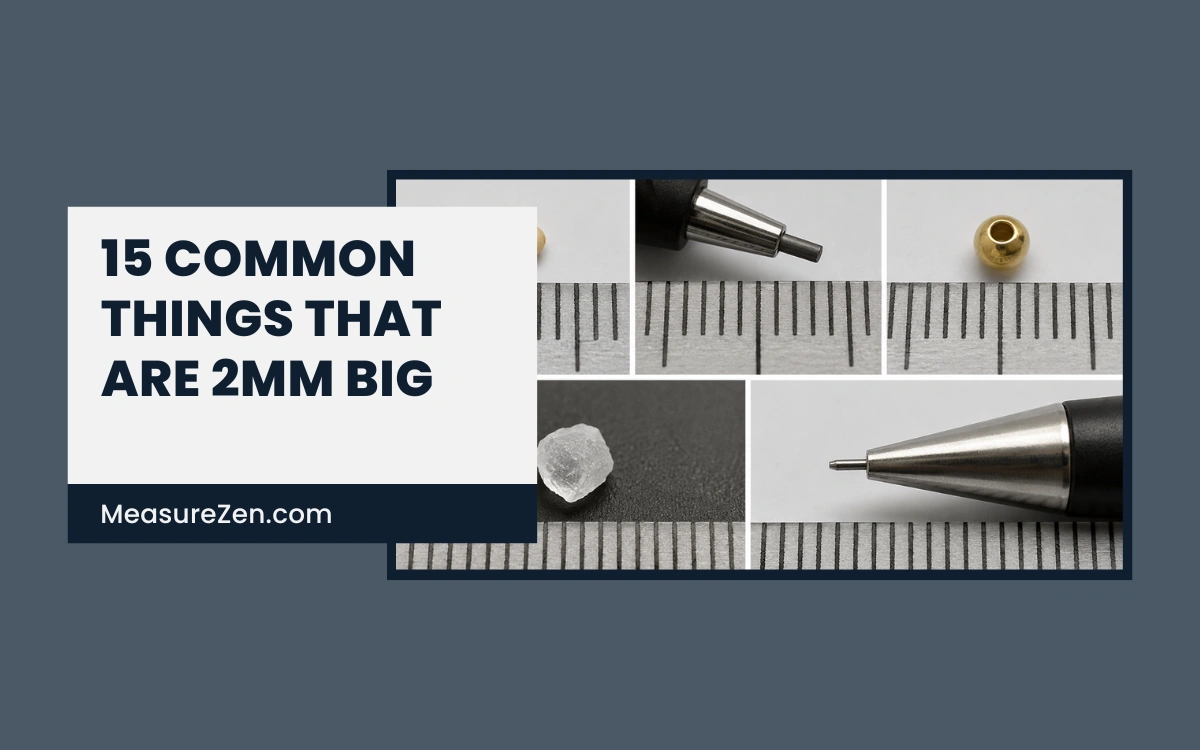
15 Common Things That Are About 2mm Big
| Object | Approximate Size | How It Compares |
|---|---|---|
| Sesame Seed | 2–3 mm | Very close in length |
| Pencil Lead Width | 2 mm | Nearly identical |
| Small Jewelry Bead | 2 mm | Exact comparison |
| Grain of Rock Salt | About 2 mm | Similar diameter |
| Mechanical Pencil Tip | Around 2 mm | Similar width |
| Tiny Screw Head | About 2 mm | Comparable size |
| Mustard Seed | 2–2.5 mm | Nearly the same |
| Earphone Wire Thickness | About 2 mm | Similar thickness |
| Thin Craft Foam Sheet | 2 mm | Exact thickness |
| Small Watch Gear Part | Around 2 mm | Similar diameter |
| Average Raindrop | Around 2 mm | Similar width |
| Edge Thickness of a U.S. Nickel | About 1.95 mm | Nearly identical |
| 20 Sheets of Printer Paper | About 2 mm | Close thickness |
| Leather Craft Cord | 2 mm | Exact diameter |
| Heavy-Duty Kitchen Cotton Twine | About 2 mm | Similar thickness |
1. Sesame Seed
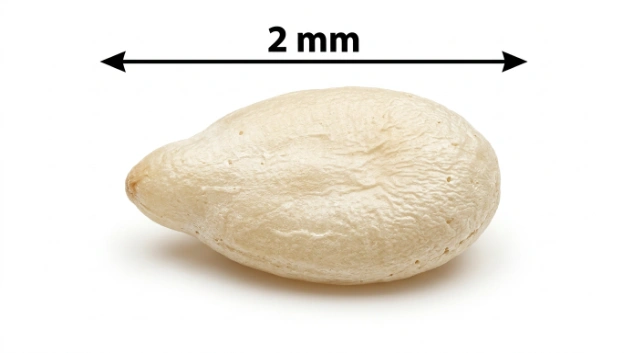
A sesame seed typically measures between 2 and 3 millimeters in length, making it one of the closest natural comparisons. Although the exact size varies slightly by variety, many sesame seeds are very close to 2mm. Their small oval shape and consistent size make them an excellent reference for visualizing tiny measurements.
You see sesame seeds on hamburger buns, sandwich rolls, bread, crackers, sushi, and many baked goods. Because they’re found in most kitchens and grocery stores, they’re one of the easiest everyday items to use when estimating very small dimensions without a ruler.
If you place a single sesame seed on your fingertip or a flat surface, you’ll have a reliable visual reference for this measurement. Since it’s a familiar object that most people recognize instantly, it’s one of the best ways to understand what 2mm looks like in real life.
2. Pencil Lead Width
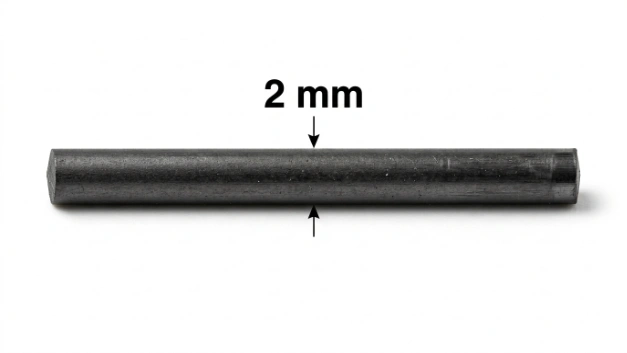
A 2mm mechanical pencil lead has a diameter that almost exactly matches this measurement. Unlike the common 0.5mm or 0.7mm leads used for everyday writing, 2mm graphite leads are thicker, stronger, and designed for sketching, drafting, and technical drawing.
These leads are commonly found in artist pencils, engineering tools, and drafting equipment. Their extra thickness helps prevent breakage and allows users to sharpen the tip into different shapes for various drawing techniques.
Holding a 2mm lead holder or looking closely at the graphite provides one of the most accurate real-world examples of this measurement. Because it is manufactured to a precise diameter, it serves as an excellent visual reference.
3. Small Jewelry Bead
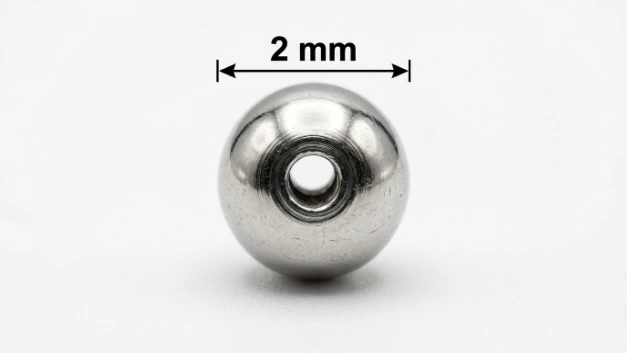
Many jewelry beads are manufactured with a 2mm diameter, making them one of the most accurate everyday objects for comparison. These tiny beads are available in materials such as glass, crystal, sterling silver, acrylic, gemstones, and stainless steel.
They are widely used in bracelets, necklaces, earrings, and other handcrafted accessories where delicate details are important. Despite their tiny size, these beads add texture and sparkle without making jewelry appear bulky.
Since these beads are produced using standardized measurements, they provide a dependable way to picture this size. If you’ve ever handled fine jewelry-making supplies, you’ve likely seen beads that closely match this measurement.
4. Grain of Rock Salt
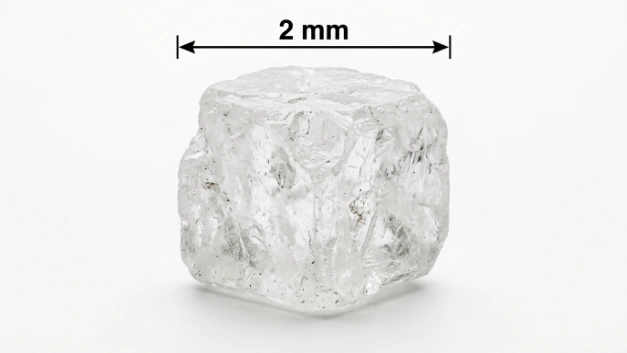
A coarse grain of rock salt is often around 2mm across, although the exact size depends on how the salt is processed. Its irregular crystal shape may vary slightly, but many individual grains fall very close to this measurement.
You’ll commonly find coarse rock salt in spice grinders, gourmet seasoning blends, pretzel toppings, and cooking ingredients. The larger crystal size helps it dissolve more slowly and adds texture to food.
Looking at a single grain of coarse rock salt is a practical way to estimate this measurement. Because these crystals are easy to find in most kitchens, they make an excellent everyday comparison.
5. Mechanical Pencil Tip
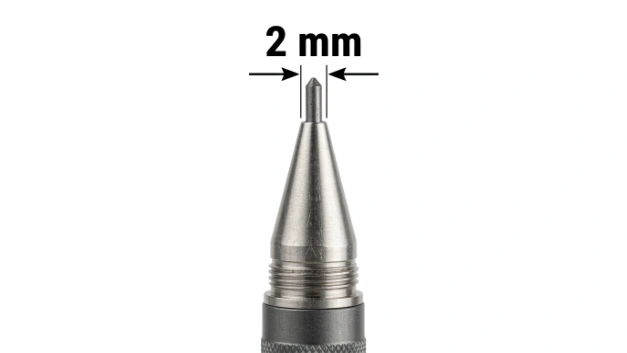
The exposed metal tip of many mechanical pencils measures around 2mm in diameter. While the internal lead may be thinner, the protective metal sleeve is designed to provide stability and accurate control while writing or drawing.
Mechanical pencils are commonly used in classrooms, offices, design studios, and engineering workplaces. Their narrow metal tips allow users to draw detailed lines while protecting the lead from snapping.
Examining the pencil’s front tip gives you another useful way to visualize this tiny dimension. Since mechanical pencils are familiar to most people, they’re an easy and practical size reference.
6. Tiny Screw Head
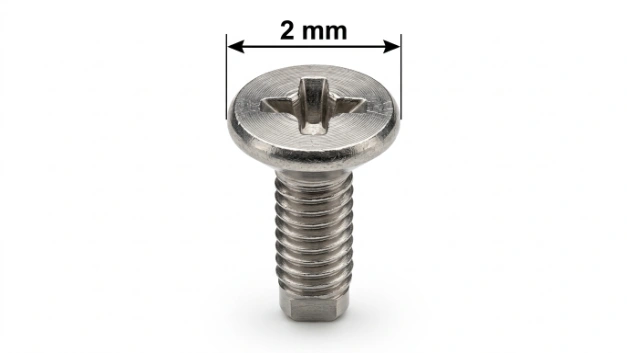
Many miniature screws used in electronics, eyeglasses, watches, and smartphones have heads measuring approximately 2mm in diameter. These precision screws are designed to secure delicate components without taking up unnecessary space.
You’ll encounter these tiny fasteners when repairing laptops, replacing phone parts, assembling watches, or working with compact electronic devices. Because they are manufactured with tight tolerances, their dimensions remain very consistent.
If you’ve ever used a precision screwdriver set, you’ve probably handled screws close to this size. Their tiny heads provide a realistic and accurate comparison for understanding just how small this measurement is.
7. Mustard Seed
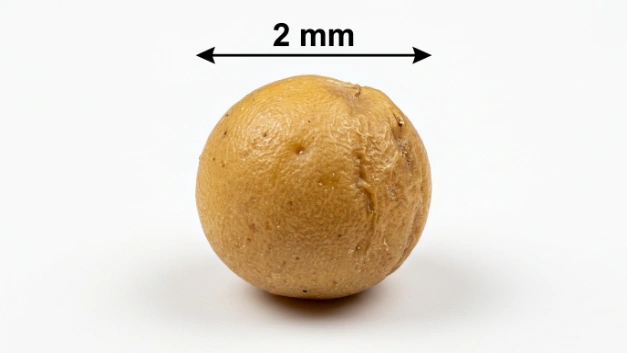
A mustard seed usually measures between 2 and 2.5 millimeters in diameter, depending on the variety. Yellow, brown, and black mustard seeds differ slightly in size, but many are very close to this measurement, making them a useful natural comparison.
These tiny seeds are commonly used in cooking, pickling, spice blends, and traditional recipes around the world. You’ll often find them whole in jars of spices or mixed into curries, sauces, and marinades.
Because mustard seeds are small, round, and easy to recognize, they provide a convenient way to picture this size without needing a ruler or measuring tool.
8. Earphone Wire Thickness
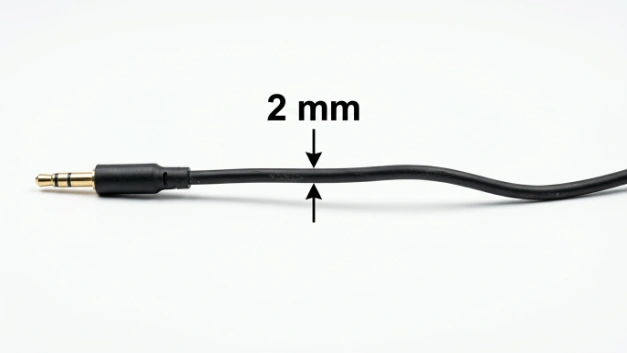
Many wired earphones and earbuds use cables that are approximately 2mm thick, although the exact diameter varies by manufacturer. The protective outer coating gives the wire a slim yet durable profile for everyday use.
You can see this thickness on standard wired headphones, gaming earphones, and audio cables. It offers enough flexibility for comfortable use while protecting the delicate wires inside from damage.
Looking at the cable of a typical pair of earphones is an easy way to estimate this measurement. Since most people have used wired earbuds at some point, it’s a familiar size reference.
9. Thin Craft Foam Sheet
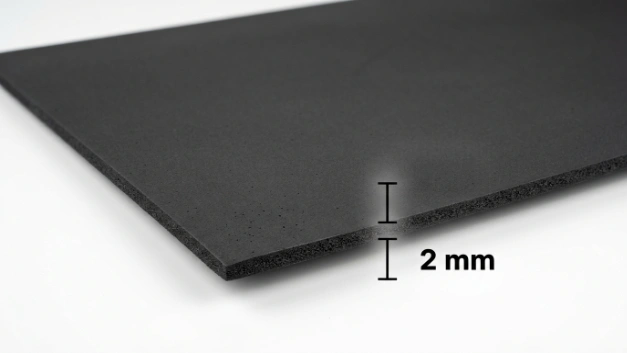
Thin craft foam sheets are commonly manufactured in 2mm thickness, making them a standard material for school projects, DIY crafts, cosplay, and decorative artwork. They are lightweight, flexible, and easy to cut with scissors or craft knives.
These foam sheets are widely available in craft stores and come in many colors and sizes. Their uniform thickness makes them popular for creating signs, models, ornaments, and handmade decorations.
Holding the edge of a 2mm foam sheet provides an excellent visual reference. Because the material is produced to an exact thickness, it accurately represents this small measurement.
10. Small Watch Gear Part
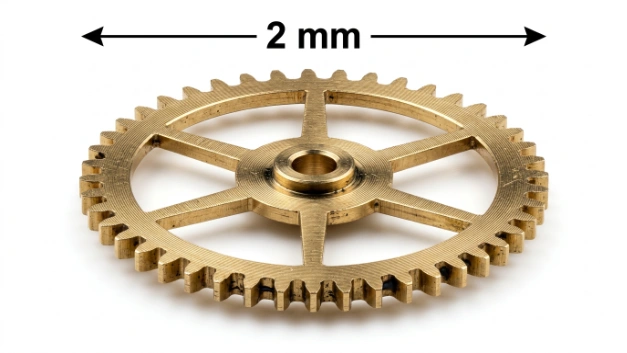
Many small gears inside mechanical watches measure around 2mm in diameter. These precision-engineered components work together to transfer motion between different parts of the watch mechanism.
Watchmakers handle these tiny gears during repairs and assembly using specialized tools because the components are too small to manipulate by hand. Even slight differences in size can affect the watch’s accuracy.
Seeing one of these miniature gears under magnification highlights just how tiny this measurement is. It serves as an excellent example of how millimeter-level precision is used in fine engineering.
11. Average Raindrop
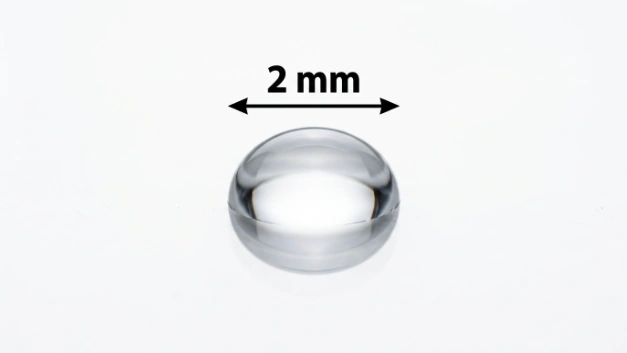
A typical raindrop often measures about 2mm in diameter, although its size changes depending on rainfall intensity and weather conditions. Light rain usually produces smaller drops, while heavier rain creates larger ones.
Raindrops form when tiny water droplets in clouds combine and become heavy enough to fall to the ground. Their size affects how quickly they fall and how they interact with the air.
Imagining a single raindrop resting on a smooth leaf or window helps you visualize this measurement naturally. It’s a simple comparison that connects a precise dimension with something almost everyone has seen.
12. Edge Thickness of a U.S. Nickel
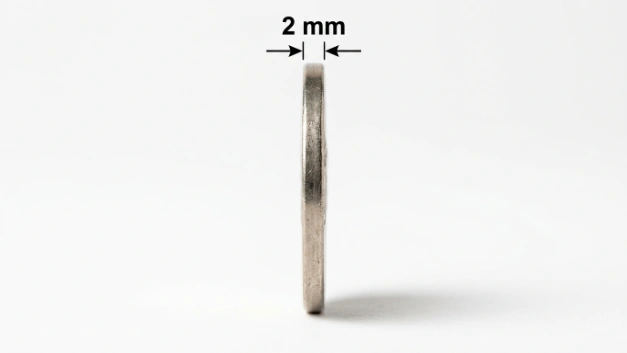
The edge of a standard U.S. nickel is approximately 1.95mm thick, which is extremely close to 2mm. This makes it one of the most accurate everyday objects for comparing such a small measurement.
Nickels are commonly used in the United States and are easy to recognize because of their smooth edge and solid metal construction. Their thickness is standardized by the U.S. Mint, making them a reliable reference.
If you look at a nickel standing on its edge, you’re seeing almost the exact thickness of 2mm. It’s a practical comparison that helps visualize this tiny dimension without any measuring tools.
13. Thickness of 20 Sheets of Printer Paper
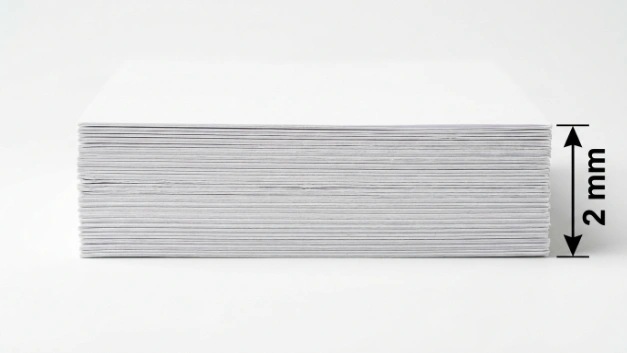
A stack of 20 sheets of standard printer paper is approximately 2mm thick. Since one sheet is about 0.1mm thick, stacking twenty sheets creates a measurement that closely matches this size.
Printer paper is found in homes, schools, and offices, making it one of the most accessible comparison objects. It’s also a useful reference because paper thickness remains fairly consistent across most standard copy paper.
If you stack twenty sheets together and view them from the side, you’ll have an accurate idea of what 2mm looks like. This simple method is useful when a ruler isn’t available.
14. Leather Craft Cord (2mm)
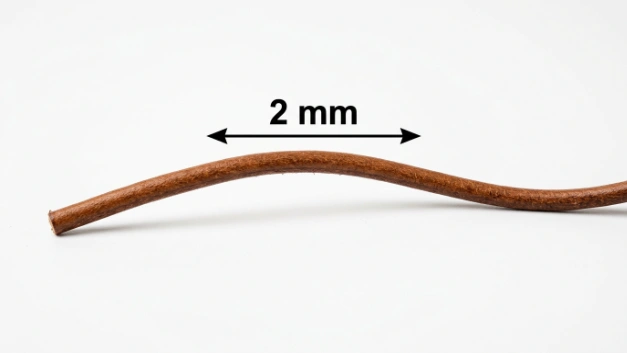
Many leather crafting cords are manufactured with a 2mm diameter, making them an exact real-world example of this measurement. These cords are available in round and flat styles and come in various colors for different craft projects.
Leather cords are widely used to make bracelets, necklaces, keychains, lanyards, and decorative accessories. Their consistent thickness makes them popular among hobbyists and professional leatherworkers alike.
Because these cords are produced to precise specifications, they offer one of the most dependable ways to visualize 2mm. Holding one between your fingers gives a clear sense of this small diameter.
15. Heavy-Duty Kitchen Cotton Twine
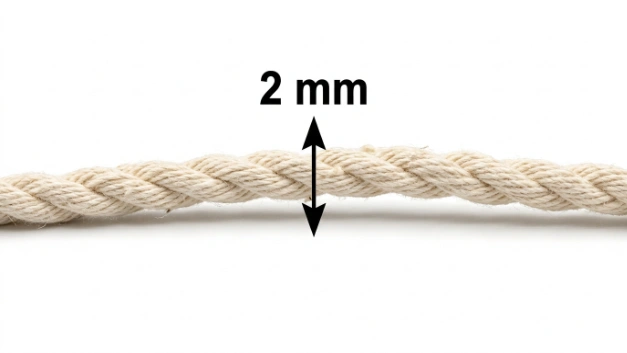
Heavy-duty kitchen cotton twine often measures around 2mm thick, depending on the brand and intended use. This strong food-safe twine is designed to withstand cooking temperatures while securely holding meat, poultry, and roasts.
You’ll commonly find this type of twine in kitchens, butcher shops, and cooking supply stores. It’s also used in gardening, gift wrapping, and craft projects because of its strength and flexibility.
Looking at the thickness of heavy-duty cotton twine provides another practical way to estimate 2mm. Since it has a uniform diameter, it serves as a reliable everyday comparison for this tiny measurement.
How to Estimate 2mm Without a Ruler
Estimating such a tiny measurement without a ruler can seem difficult at first, but it becomes much easier when you compare it with familiar everyday objects. By remembering a few common references, you can quickly judge whether something is close to this size without using measuring tools.
Here are a few simple ways to estimate it:
- Compare it with a sesame seed, which is usually around 2–3mm long and provides a close natural reference.
- Look at a 2mm jewelry bead, as many craft and bracelet beads are manufactured to this exact diameter.
- Stack 20 sheets of printer paper, which creates a thickness of about 2mm.
- Use a piece of 2mm leather cord or kitchen twine, both of which are produced with a consistent diameter.
- Check the edge of a U.S. nickel, which is approximately 1.95mm thick and nearly identical in size.
After using these comparisons a few times, you’ll find it much easier to recognize this measurement by sight. Familiar objects often provide a faster and more practical estimate than trying to imagine millimeters alone.
2mm Compared to Other Common Measurements
Small changes in millimeters can make a noticeable difference when working with precision tools, jewelry, crafts, or electronics. Comparing this size with other common metric measurements helps you better understand how small it really is.
| Measurement | Millimeters | Comparison |
|---|---|---|
| 1mm | 1 mm | Half as thick |
| 2mm | 2 mm | Standard reference |
| 3mm | 3 mm | 50% thicker |
| 5mm | 5 mm | More than twice as thick |
| 10mm | 10 mm | Equal to 1 centimeter |
| 20mm | 20 mm | Equal to 2 centimeters |
A difference of just one or two millimeters may seem minor, but it becomes significant in detailed work. That’s why understanding these comparisons is valuable for hobbies, repairs, design projects, and shopping for small components.
Read: How Long Is 4 Inches?
Read: How Long Is 2 Inches?
Read: How Big Is 3mm?
Read: How Big Is 5mm?
Read: How Big Is 8mm?
Frequently Asked Questions
Is 2mm the same as 0.2 centimeters?
Yes. Since 10 millimeters equal 1 centimeter, dividing by 10 means 2 millimeters equals 0.2 centimeters. Both measurements describe the exact same length using different metric units.
How many inches is 2mm?
Two millimeters is approximately 0.0787 inches, or just under one-tenth of an inch. Because it’s such a small fraction, it’s usually easier to visualize using familiar objects instead of inch markings.
What everyday object is closest to 2mm?
A 2mm jewelry bead, the edge thickness of a U.S. nickel, and a stack of 20 sheets of printer paper are among the closest everyday comparisons. They provide an easy way to picture this tiny measurement.
Can I estimate this measurement without a ruler?
Yes. One of the easiest ways to estimate How Big Is 2mm is by comparing it with objects like a sesame seed, a 2mm leather cord, or the thickness of twenty sheets of printer paper. These references are surprisingly accurate for everyday use.
Why are millimeters used for small measurements?
Millimeters provide a high level of precision, making them ideal for measuring small objects such as jewelry, electronic components, screws, wires, and craft materials. They allow manufacturers and users to describe tiny dimensions accurately.
Conclusion
Understanding How Big Is 2mm becomes much easier when you move beyond numbers and compare it with familiar everyday objects. References like a sesame seed, a 2mm jewelry bead, the edge of a U.S. nickel, or a stack of twenty sheets of paper provide a clear picture of this tiny measurement.
The next time you encounter a product specification or need to estimate a small dimension, use these real-world comparisons as quick visual guides. With a little practice, you’ll be able to recognize this size confidently, even without a ruler.