Quick Answer
1 meter is equal to 100 centimeters, 1,000 millimeters, 3.28 feet, or 39.37 inches. This length is similar to the height of a short floor lamp or the width of many folding tables, making it easy to visualize in daily life.
Many people search for a familiar way to picture measurements instead of relying only on numbers. Whether you’re shopping for furniture, planning a DIY project, studying measurements, or comparing object sizes, understanding real-world examples makes estimating distances much easier. That’s why How Long Is 1 Meter is such a common question.
This length appears everywhere around us. From household furniture to sports equipment, many everyday objects are close to this size. Once you recognize these examples, estimating distances becomes much more natural without constantly reaching for a measuring tape.
In this guide, you’ll learn accurate unit conversions, practical ways to estimate this measurement without a ruler, and 15 common objects that are approximately one meter long or tall, helping you build a reliable visual reference.
1 Meter Conversion Chart
Quick and accurate measurement conversions
| Unit | Converted Value |
|---|---|
| Feet | 3.28 ft |
| Inches | 39.37 in |
| Centimeters | 100 cm |
| Millimeters | 1,000 mm |
| Meters | 1 m |
How to Measure 1 Meter Without a Ruler
You don’t always need a measuring tape to estimate this distance accurately. After becoming familiar with a few common household items, you can judge this length surprisingly well. Builders, decorators, teachers, and homeowners often use nearby objects as quick references before taking exact measurements.
Many items around the house naturally fall close to this dimension. A compact desk, a folding table, a guitar, or a broom handle can all provide useful visual references. Looking at these familiar objects repeatedly helps train your eye to estimate similar distances more confidently in everyday situations.
If you need a quick estimate, these simple comparisons can help:
- A standard guitar is close to this length.
- A kitchen countertop is usually about this height.
- A compact desk is often around this width.
- Many large suitcases stand close to this height.
- A short floor lamp provides another easy visual reference.
While these methods won’t replace precise measuring tools, they are useful for shopping, home improvement, classroom activities, and quick planning when exact accuracy isn’t essential.
Common Things That Are About 1 Meter
| Object | Approximate Length | How It Compares |
|---|---|---|
| Guitar Length | 98–102 cm | Almost exactly 1 meter |
| Kitchen Counter Height | 90–95 cm | Slightly shorter |
| Door Width | 80–100 cm | Close depending on the door |
| Child’s Height (3–4 Years Old) | 95–105 cm | Very close |
| Coffee Table Length | 90–110 cm | Comparable |
| Floor Lamp (Short Design) | 95–105 cm | Nearly identical |
| Broom or Mop Handle | 100–120 cm | Many are around 1 meter |
| Compact Desk Width | 90–110 cm | Close match |
| 40-Inch TV Width | 89–91 cm | Slightly shorter |
| Large Suitcase Height | 95–105 cm | Nearly the same |
| Standing Mirror Height | 95–110 cm | Comparable |
| Standard Baseball Bat | 86–91 cm | Slightly shorter |
| Acoustic Guitar Case | 100–105 cm | Almost exactly 1 meter |
| Medium Bookshelf Width | 90–100 cm | Close match |
| Folding Table Width | 95–100 cm | Nearly identical |
1. Guitar Length

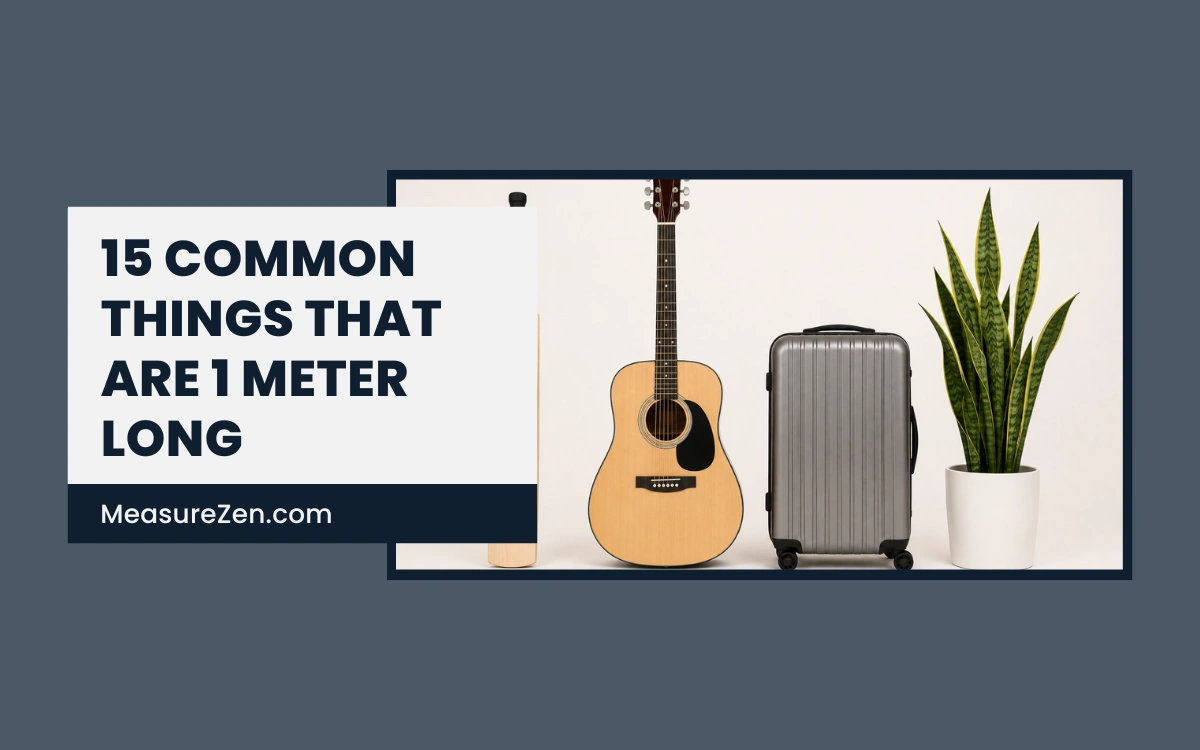
Most full-size acoustic guitars measure between 98 and 102 centimeters, making them one of the closest everyday comparisons. While electric guitars vary slightly by model, their overall length usually stays within the same general range. This makes guitars an excellent reference when trying to picture this measurement.
You’ll commonly see guitars in homes, classrooms, music stores, recording studios, and concert venues. Since many people are already familiar with their overall size, they provide a practical way to imagine a distance without needing any measuring tools.
If you picture a standard acoustic guitar standing upright against a wall, you’re visualizing almost exactly the target measurement. It’s one of the most accurate real-world comparisons available.
2. Kitchen Counter Height
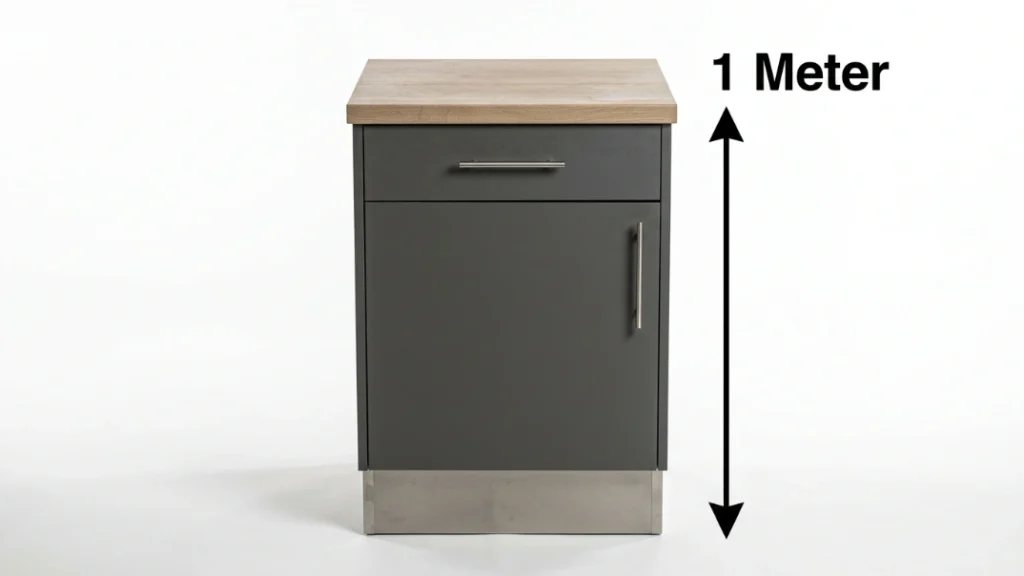
Standard kitchen countertops are generally built between 90 and 95 centimeters high. While slightly shorter than the target measurement, they provide an excellent approximation because the difference is only a few centimeters.
Whether you’re preparing meals, washing dishes, or cooking, you interact with countertops every day. Their consistent design standards make them one of the easiest household references for estimating vertical height.
Imagine extending the countertop upward by only a few centimeters, and you’ll have a very close representation of this distance. This comparison is especially useful when planning kitchens or measuring furniture.
3. Door Width
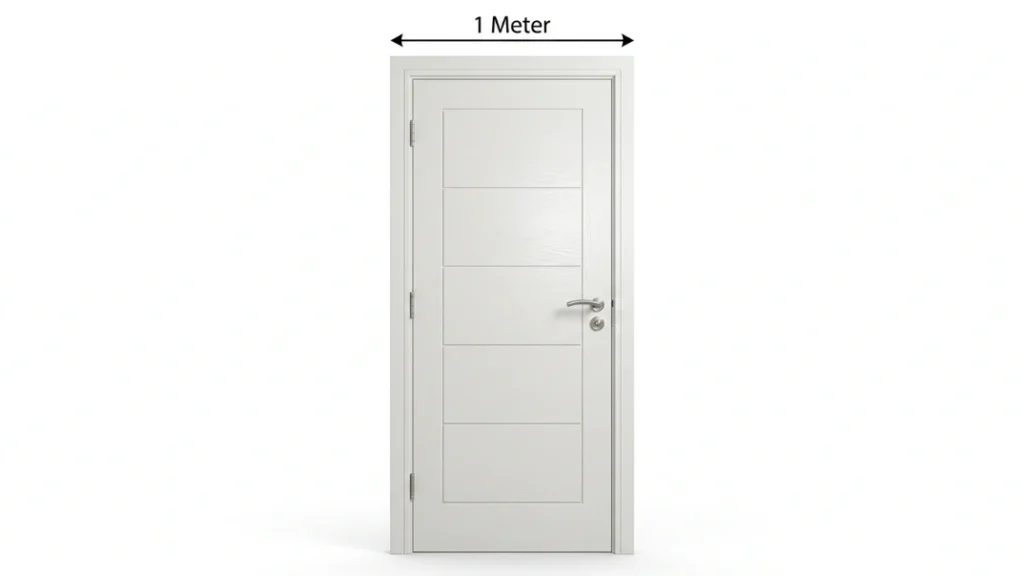
Many interior doors measure approximately 80 to 90 centimeters wide, while wider residential doors approach 100 centimeters. Double doors and accessible entryways often come even closer to this measurement.
Doors are among the most recognizable architectural features in every home, office, and school. Because we pass through them countless times each day, their dimensions become easy mental references without much effort.
Visualizing the width of a large interior door gives you a reliable estimate of this distance. It’s particularly useful when planning room layouts, moving furniture, or estimating available space.
4. Child’s Height (3–4 Years Old)
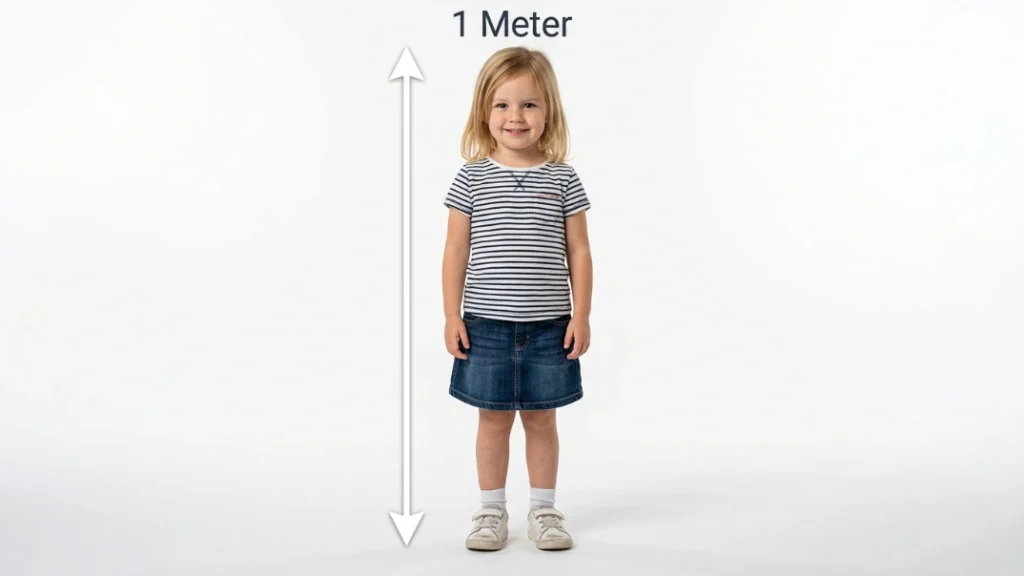
Children between three and four years old typically stand between 95 and 105 centimeters tall, depending on their growth and development. This makes their height remarkably close to the target measurement.
Parents, teachers, pediatricians, and caregivers frequently observe children’s growth, making this comparison easy to understand. While every child grows differently, this age group consistently falls near this range.
If you imagine a healthy preschool-aged child standing upright, you’re picturing a height that’s extremely close to one meter. It’s a natural comparison that many people immediately recognize.
5. Coffee Table Length
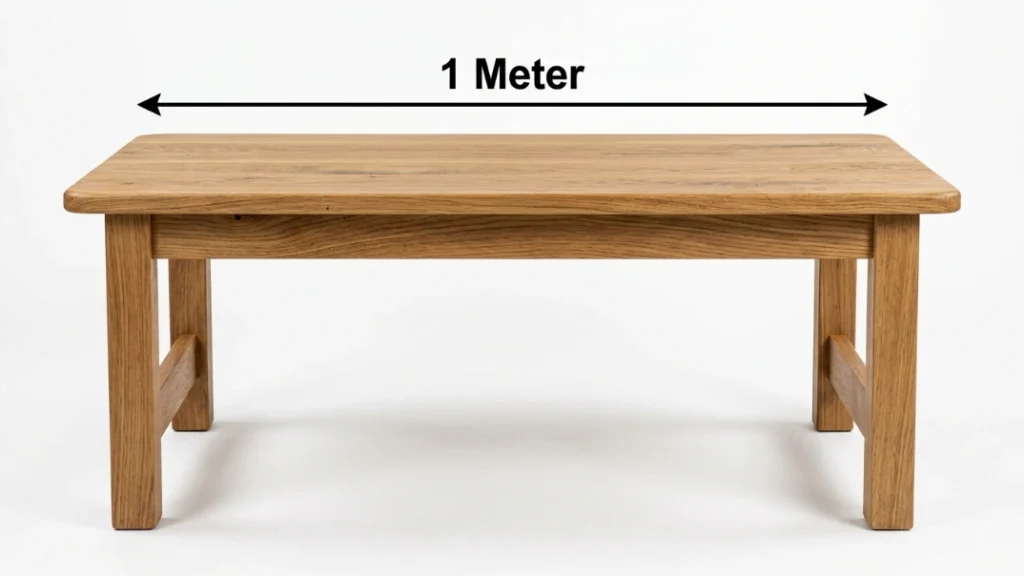
Many rectangular coffee tables measure between 90 and 110 centimeters long. This range places a large number of modern coffee tables very close to the target measurement used in homes around the world.
Coffee tables are central pieces of living room furniture, making them familiar to nearly everyone. Their standardized dimensions are designed to fit comfortably in front of sofas while providing enough surface space for books, drinks, or decorative items.
Picture the full length of a medium-sized coffee table, and you’ll have a realistic visual estimate. It’s an excellent household comparison that helps make this measurement feel much more intuitive.
6. Floor Lamp (Short Design)

Many short floor lamps stand between 95 and 105 centimeters tall. While taller models are common, compact designs used beside sofas, reading chairs, or bedroom furniture are often very close to this measurement.
You’ll find these lamps in living rooms, apartments, hotel rooms, and offices. Their height is designed to provide comfortable lighting without overpowering the surrounding furniture, making them easy to recognize in everyday settings.
Imagine a compact floor lamp standing next to a couch. From the floor to the top of the lampshade, you’re looking at a height that closely represents one meter, making it a practical visual reference.
7. Broom or Mop Handle

Most household broom and mop handles measure approximately 100 to 120 centimeters long. Many standard models are manufactured almost exactly one meter before the cleaning head is attached.
Because nearly every home has a broom or mop, this is one of the easiest objects to use when estimating length. Cleaning tools are designed to provide a comfortable reach while remaining lightweight and easy to store.
Visualizing the handle portion alone gives you an excellent idea of this distance. It’s one of the most familiar comparisons available for quick measurements around the house.
8. Desk Width (Compact)
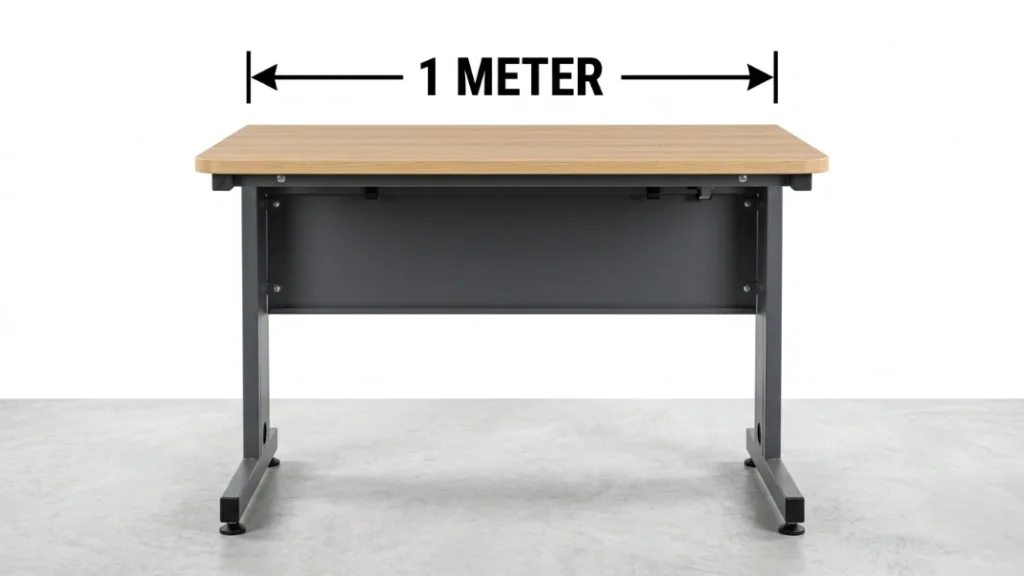
Compact office desks and study tables commonly measure around 100 centimeters wide. This size offers enough workspace for a laptop, books, and office supplies while fitting comfortably into smaller rooms.
Students, remote workers, and office employees use desks every day, making their dimensions easy to remember. Manufacturers frequently produce desks in this size because it balances functionality with efficient use of space.
Imagine the width of a small home office desk from one side to the other. That span closely matches one meter and provides a reliable way to picture the measurement.
9. TV Width (40-Inch Screen)
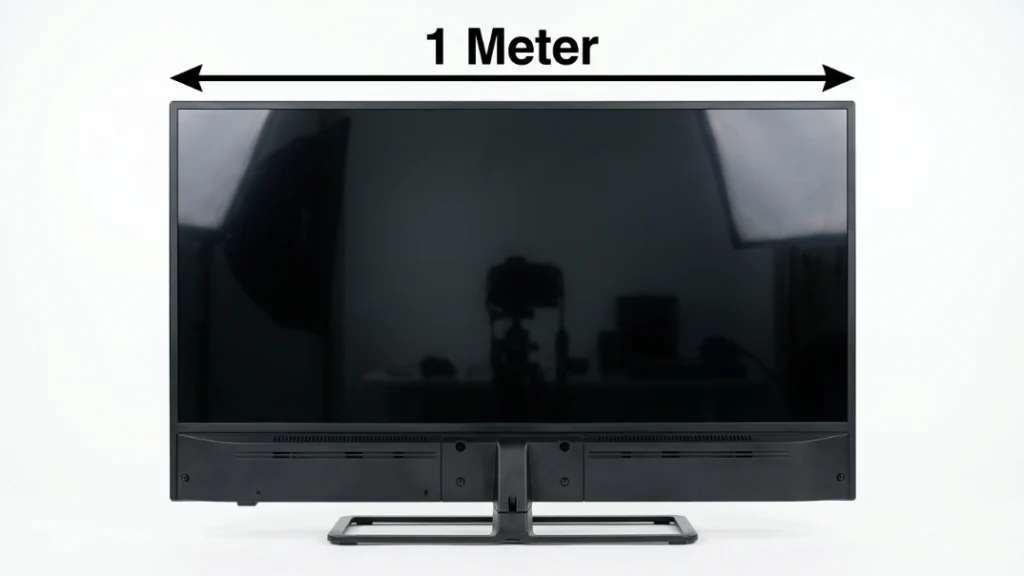
A typical 40-inch television has an overall width of approximately 89 to 92 centimeters, depending on the bezel thickness. With its frame included, it comes quite close to one meter across.
Televisions are common in living rooms, bedrooms, waiting areas, and offices. Since many households own screens within this size range, they provide a familiar visual comparison for estimating horizontal distance.
If you imagine a 40-inch TV mounted on a wall, adding just a few centimeters to each side brings you very close to one meter, making it an effective everyday reference.
10. Large Suitcase Height
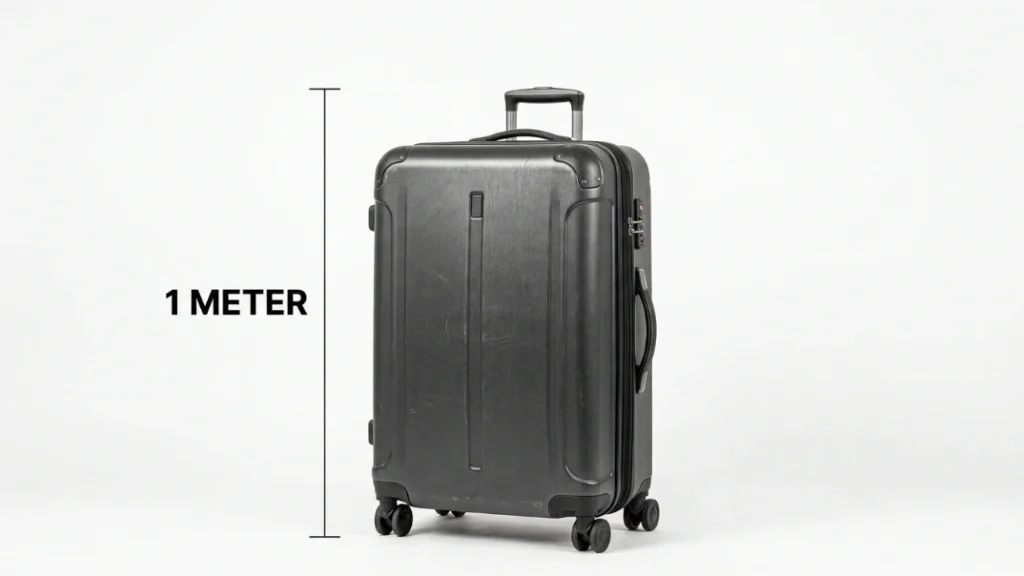
Large checked luggage usually measures between 75 and 85 centimeters in height. When the telescopic handle is extended, the total height often reaches close to one meter.
Suitcases are familiar travel essentials seen at airports, hotels, train stations, and homes. Their size is designed to maximize packing capacity while remaining manageable during transport.
Picture a large suitcase standing upright with its handle fully extended. The overall height provides a surprisingly accurate mental image of one meter, especially when comparing standing objects.
11. Standing Mirror Height
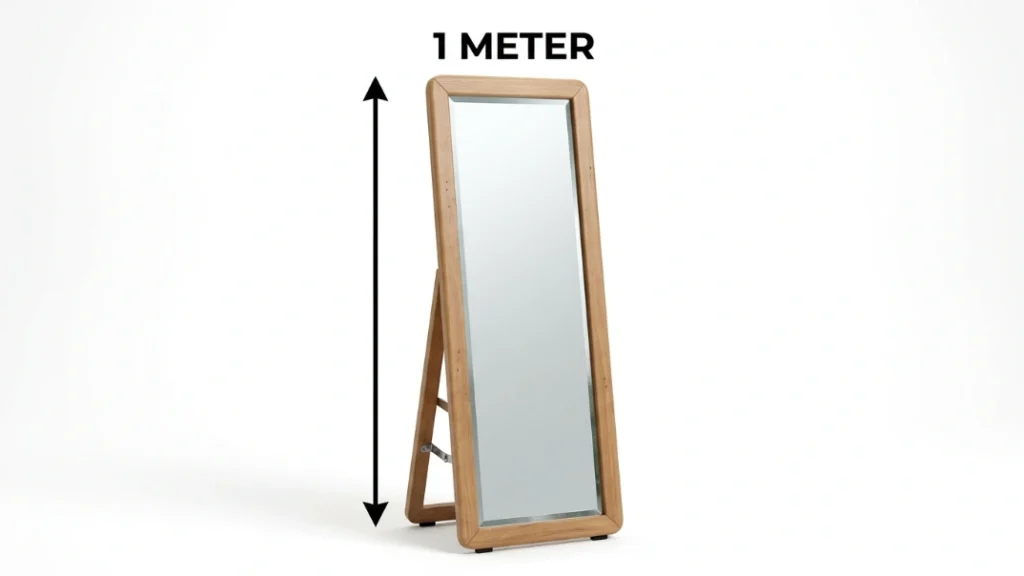
Many compact standing mirrors measure between 95 and 110 centimeters tall. Decorative mirrors for bedrooms, dressing areas, and entryways often fall within this range.
These mirrors are commonly used for checking outfits or enhancing room décor. Their proportions are designed to reflect the upper body while fitting comfortably into smaller spaces.
Visualizing one of these mirrors leaning against a wall creates a clear representation of one meter. Since mirrors have straight edges and noticeable height, they’re particularly useful as a reference.
12. Standard Baseball Bat
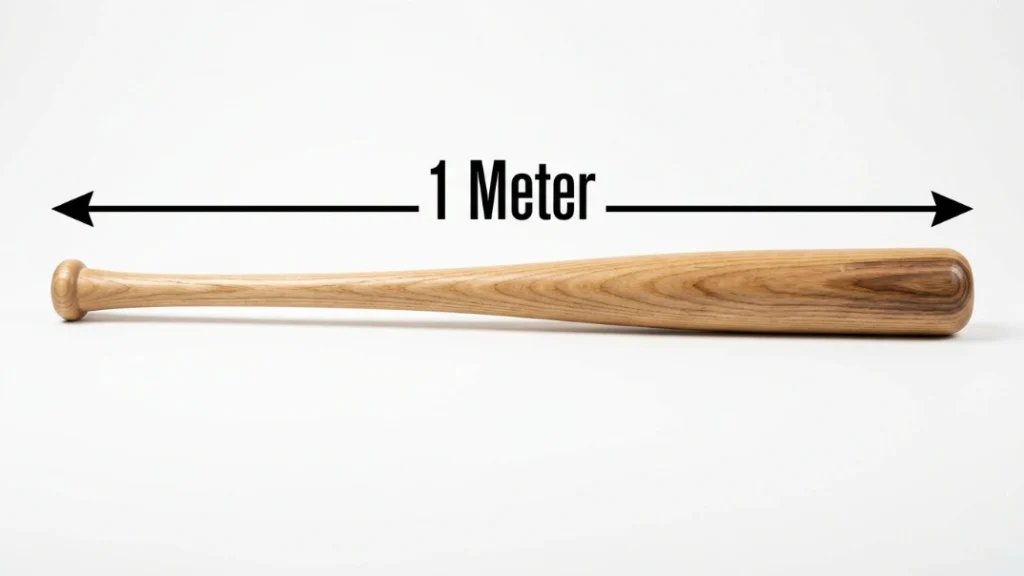
Adult baseball bats generally range from 84 to 86 centimeters, while some training and specialty bats extend closer to 100 centimeters. Longer practice bats provide one of the nearest sports equipment comparisons.
You’ll commonly see baseball bats in sporting goods stores, schools, training facilities, and recreational leagues. Their long, straight shape makes them easy to compare against walls, furniture, or other objects.
Imagine holding a long practice bat vertically. Its overall length helps you estimate one meter with reasonable accuracy, especially when comparing sporting equipment.
13. Acoustic Guitar Case

A standard acoustic guitar case usually measures between 102 and 108 centimeters long. Although slightly longer than one meter, the difference is small enough that it remains an excellent visual comparison.
Guitar cases are designed to protect instruments during storage and transport. Their slim rectangular shape makes their length easy to judge, especially when placed upright against a wall.
If you’ve ever carried or seen an acoustic guitar case, you’re already familiar with an object that’s only a few centimeters longer than one meter, making it a dependable reference.
14. Medium Bookshelf Width
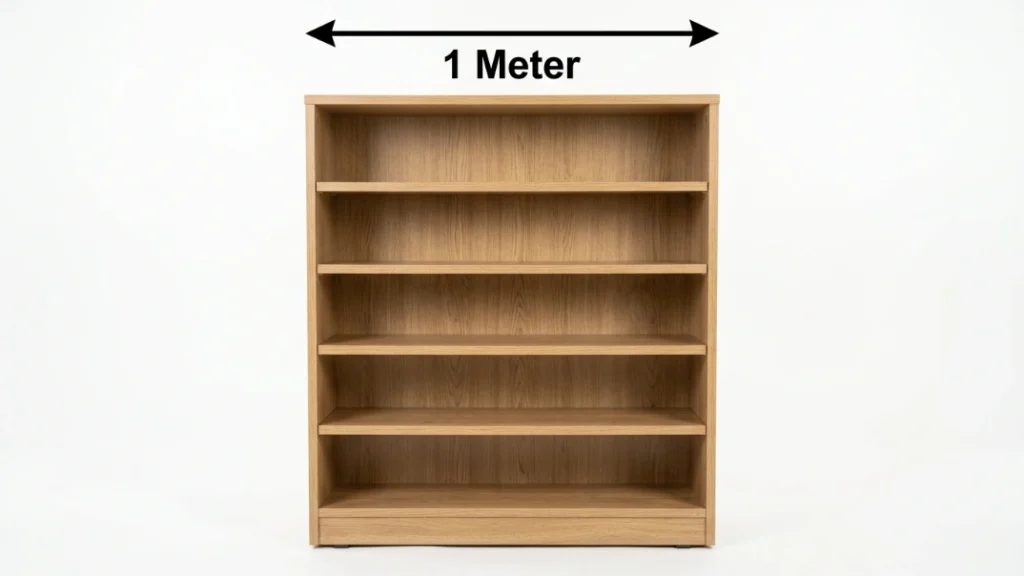
Many medium-sized bookshelves measure approximately 90 to 100 centimeters wide. This width provides enough storage for books, decorations, and storage baskets without taking up excessive wall space.
You’ll find bookshelves in homes, classrooms, offices, and libraries. Their standardized dimensions make them consistent references when estimating room layouts or planning furniture placement.
Picture the full width of a compact bookshelf. From one side panel to the other, the distance closely matches one meter and is easy to visualize in most indoor spaces.
15. Folding Table Width
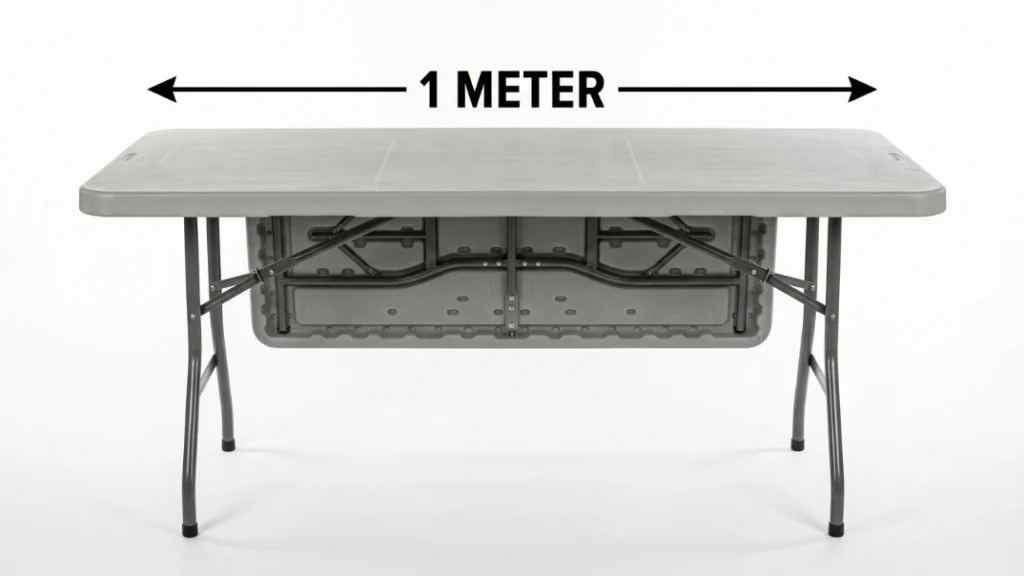
Many folding tables are manufactured with a width of approximately 90 to 100 centimeters. Whether used indoors or outdoors, this size provides enough working space while remaining portable and easy to store.
Folding tables are common at family gatherings, trade shows, classrooms, camping trips, and events. Because they’re designed with standardized dimensions, they serve as dependable size references.
Imagine looking across the shorter side of a folding table. That width is remarkably close to one meter, making it one of the most accurate everyday objects for visualizing this measurement.
Where Is 1 Meter Commonly Used in Everyday Life?
Although many people think of this measurement only in school or mathematics, it appears constantly in daily life. Architects, furniture makers, retailers, athletes, and homeowners regularly use meters to describe dimensions, spacing, and product sizes. Once you recognize familiar examples, estimating distances becomes much easier without relying on measuring tools.
Some of the most common uses include:
- Measuring furniture such as desks, tables, and bookshelves.
- Planning room layouts and interior design.
- Checking luggage and package dimensions.
- Estimating children’s height as they grow.
- Comparing sports equipment like bats and guitars.
- Measuring garden paths, shelving, and storage spaces.
Learning to recognize these everyday references helps you make faster and more confident estimates, whether you’re shopping online, rearranging furniture, or working on a DIY project.
Read: How Big Is 11 Inches?
Read: How Long Is 14 Inches?
Read: How Long Is a Foot?
Read: How Long Is 2 Meters?
Read: What is 30 cm in Inches?
Read: How Long Is 5 Meters?
Read: How Long Is 3 Meters?
Read: How Big Is 20cm?
Frequently Asked Questions
Is 1 meter exactly 100 centimeters?
Yes. One meter is defined as exactly 100 centimeters or 1,000 millimeters. This standard metric conversion is used worldwide in science, engineering, education, construction, and everyday measurements.
How many feet are in 1 meter?
One meter equals approximately 3.28 feet (3 feet and 3.37 inches). This conversion is useful when comparing metric and imperial measurements, especially for home improvement and international products.
What household item is closest to 1 meter?
A full-size acoustic guitar is one of the closest everyday objects. Other good comparisons include a compact desk, a folding table, a broom handle, or the height of a short floor lamp.
How can I estimate 1 meter without measuring tools?
Compare the distance with familiar objects such as a guitar, a compact coffee table, a large standing mirror, or a folding table. These everyday references provide a quick visual estimate when a tape measure isn’t available.
Why do people search for How Long Is 1 Meter?
People often want an easy way to visualize measurements before buying furniture, decorating a room, packing luggage, or completing DIY projects. Understanding How Long Is 1 Meter through familiar objects makes estimating sizes much simpler.
Conclusion
Understanding How Long Is 1 Meter becomes much easier when you relate it to objects you already see every day. While the exact conversion is 100 centimeters, 1,000 millimeters, 39.37 inches, or 3.28 feet, visual comparisons make the measurement far more meaningful than numbers alone.
Whether you picture a guitar, a compact desk, a folding table, a broom handle, or a standing mirror, these real-world examples provide reliable ways to estimate this distance. The more familiar you become with these references, the quicker and more accurately you’ll be able to judge one meter in everyday situations without reaching for a ruler or measuring tape.