

Quick Answer: 100 kilograms equals 220.46 pounds, 100,000 grams, 3,527.4 ounces, or about 15 stone 10.5 pounds. Picture two 50 kg cement bags together.
Trying to picture a heavy weight from a number alone is surprisingly difficult. You may know that 100 kg is substantial, but that still does not tell you what it would feel like to lift, move, or see that amount of mass in everyday life.
100 Kilograms is well beyond what most people can safely lift without equipment or assistance. Comparing it with animals, construction materials, gym equipment, and large household or commercial objects makes the figure much easier to understand.
Below, we will look at familiar examples that are exactly, close to, or sometimes around this weight. You will also find conversions to pounds, stones, grams, and ounces, along with practical ways to estimate this amount without using a scale.
100 Kilograms Conversion Chart
Quick and accurate weight conversions
| Unit | Converted Value |
|---|---|
| Kilograms | 100 kg |
| Pounds | 220.46 lb |
| Stones | 15.75 st |
| Stones + Pounds | 15 st 10.46 lb |
| Grams | 100,000 g |
| Ounces | 3,527.40 oz |
| Metric Tons | 0.1 metric ton |
Why Does Visualizing 100 Kilograms Matter?
Weight figures become more useful when you can connect them to something familiar. A person arranging freight, buying building materials, loading a vehicle, or setting up gym equipment may need to understand whether a stated mass is manageable. Knowing that the figure equals roughly 220 pounds immediately puts it into a more practical context.
Real-world comparisons also help because weight is harder to judge visually than length. Two objects with similar dimensions can have completely different masses depending on whether they contain steel, wood, plastic, water, or other materials. A compact metal component, for example, may outweigh a much larger piece of furniture.
For that reason, the examples below should be treated as visual reference points rather than universal specifications. Some are close to the target only at particular sizes, ages, configurations, or loading levels, while a few can be assembled to reach the amount almost exactly.
Things That Weigh 100 Kilograms
There is no single type of object that represents this weight perfectly. You can encounter something near this range in a gym, warehouse, construction site, farm, commercial building, or even in the animal world. The physical dimensions can differ dramatically while the mass remains similar.
Some particularly useful comparisons are two 50 kg cement bags, a barbell loaded to a 100 kg total, a heavyweight athlete, or a pallet carrying a calculated quantity of construction material. Large animals can provide another visual reference, although biological weights naturally vary according to age, sex, health, and species.
The following examples therefore include both close comparisons and objects that can reach this range under specific conditions. Where an item commonly weighs significantly more or less, that limitation is explained rather than treating the comparison as exact.
1. Piano Cast-Iron Plate
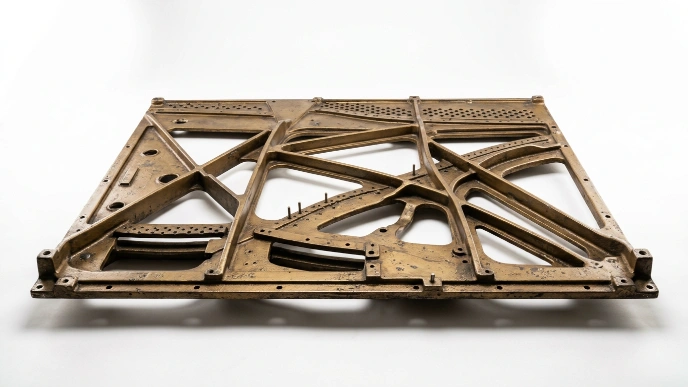
The cast-iron plate inside a piano is the heavy structural frame designed to withstand the enormous tension produced by its strings. Depending on the size and design of the instrument, this plate can weigh many tens of kilograms and, in substantial pianos, can approach or exceed the 100 kg range.
You normally do not see the plate separately because it sits inside the piano case behind the strings. Its dense iron construction helps explain why upright and grand pianos are so difficult to move. The complete instrument also contains a wooden case, soundboard, keyboard, action, strings, and numerous other components.
A sufficiently large cast-iron piano frame can therefore provide a useful reference for this amount of mass, although not every piano plate weighs exactly the same. Imagine a dense, rigid piece of cast iron occupying much of the interior of a piano rather than a compact household object.
2. A Full-Grown Male Ostrich
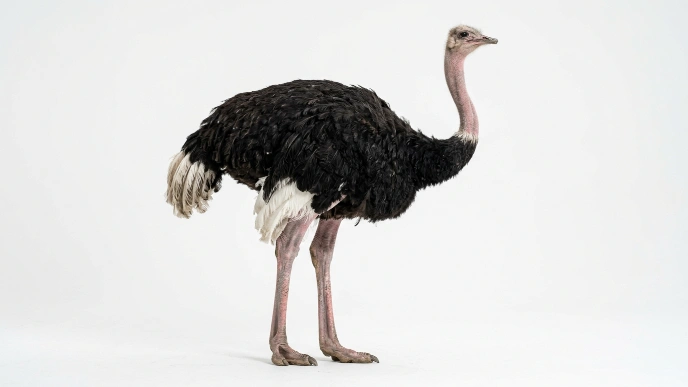
An adult male ostrich is a remarkably large bird, commonly standing well over 2 meters tall. Mature males can weigh roughly 100 kg or considerably more, depending on the individual and subspecies. Their tall legs and long necks make that mass appear much less compact than an equally heavy piece of machinery.
Ostriches are native to Africa and are also raised commercially in various countries. Although their bodies appear relatively narrow, their muscular legs, large torso, and overall height contribute to a surprisingly substantial body mass. Adult males are generally heavier than females.
Thinking of a male ostrich provides an effective biological comparison because an individual near the lower-to-middle adult male range can be around the target weight. Unlike a cement bag or barbell, however, an animal’s weight cannot be treated as a fixed specification.
3. A Vending Machine

Vending machines vary enormously in weight. Compact or lightly built machines may be near 100 kg when empty, while full-size beverage and snack machines can weigh substantially more—sometimes several hundred kilograms depending on their construction and contents.
You typically encounter these machines in schools, offices, hospitals, stations, shopping centers, and other public areas. Their steel cabinets, refrigeration equipment, motors, shelves, payment systems, glass panels, and inventory combine to create a heavy structure that normally requires specialized equipment to relocate safely.
A smaller vending machine can help visualize the target mass, but a large full-size machine should not be assumed to weigh only this much. The comparison works best when imagining a compact commercial unit rather than a large refrigerated drink machine packed with bottles or cans.
4. An Industrial CO₂ Fire Suppression Cylinder
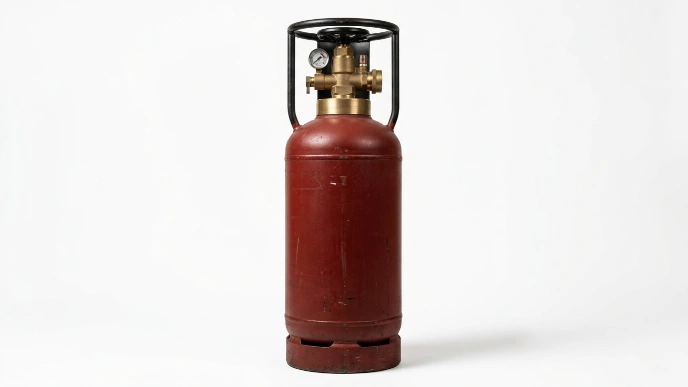
Large carbon-dioxide fire suppression cylinders are built from thick, high-strength metal because they must safely contain pressurized CO₂. Depending on cylinder capacity, construction, and how much extinguishing agent it contains, the combined filled weight can enter or exceed the neighborhood of 100 kg.
These cylinders are used in industrial fire-protection systems for locations such as machinery rooms, electrical installations, generators, and other environments where specialized suppression systems are required. Their tall, narrow shape can make their mass visually deceptive because much of the weight comes from dense steel and the extinguishing agent inside.
A cylinder with an appropriate capacity and fill level can therefore serve as a useful reference. Exact weights should always be taken from the manufacturer’s specifications because different suppression cylinders can differ considerably in empty weight, CO₂ capacity, and total filled mass.
5. A Mature Male Reindeer
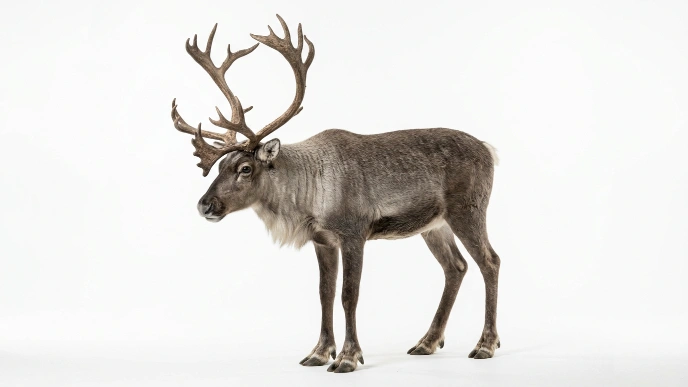
Mature male reindeer, also called bulls, are substantially heavier than females and can fall within a broad weight range. Depending on population, age, nutrition, and season, a male can weigh around 100 kg, while particularly large individuals may be considerably heavier.
Reindeer are adapted to cold northern environments and have strong bodies, powerful shoulders, broad hooves, and large antlers. They can be found across Arctic and sub-Arctic regions, with both wild and domesticated populations. Their seasonal condition can also influence body weight.
A moderately sized adult male provides a reasonable visual comparison for this mass. Picture the entire body weight of a solidly built reindeer concentrated into one load. It also demonstrates why kilograms alone do not tell you how large something will look.
6. A Loaded Pallet of Ceramic Floor Tiles
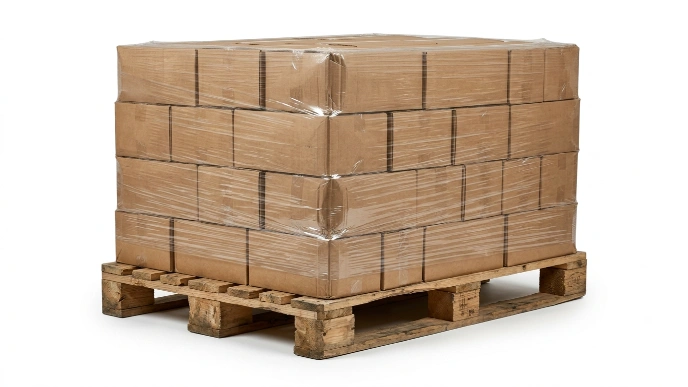
Ceramic floor tiles are dense, and even a relatively small stack can become heavy quickly. A pallet or partial pallet loaded with approximately 100 kg of packaged tiles provides one of the more practical commercial examples, although fully loaded shipping pallets frequently weigh several times this amount.
Tile pallets are common at building-material suppliers, warehouses, renovation sites, and home-improvement stores. Individual cartons may contain several tiles and can weigh roughly 15–30 kg or more depending on tile dimensions, thickness, material, and package quantity.
For visualization, imagine enough cartons placed together on a pallet so that their contents total approximately this weight. Four 25 kg cartons, for example, would equal 100 kg before accounting for the pallet itself, making the comparison particularly easy to calculate.
7. A Loaded Olympic Barbell

An Olympic barbell can provide an exact comparison because its total weight can be deliberately adjusted. A standard men’s Olympic bar typically weighs 20 kg, so adding 80 kg of weight plates produces a total barbell mass of exactly 100 kg.
Loaded Olympic barbells are common in commercial gyms, weightlifting clubs, strength-training facilities, and competitions. One simple setup is a 20 kg bar with 40 kg of plates on each side. Plate combinations vary, so lifters can reach the same total using several configurations.
This is one of the strongest examples because there is little guesswork involved when calibrated equipment is used. If you have ever seen someone squat, bench-press, or deadlift a bar loaded to 100 kg, you have seen precisely how much this amount of mass represents.
8. A Large Adult Male Lion
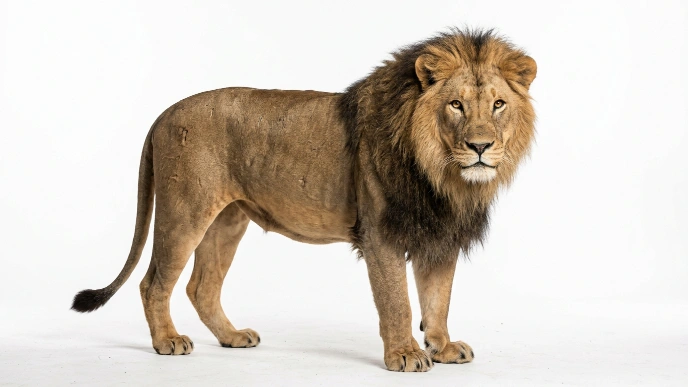
A large adult male lion generally does not weigh only 100 kg. Mature males commonly exceed this figure substantially, with many falling well above 150 kg. Females are lighter, but even their weights can vary widely according to population, age, and physical condition.
Male lions develop powerful muscular bodies, large heads, heavy shoulders, and distinctive manes. Their substantial build becomes particularly obvious when they stand beside humans or other animals. This makes them useful for understanding how dramatically body size and weight can scale among large mammals.
Therefore, a large adult male lion is better viewed as something heavier than the target rather than an exact example. Around 100 kg would represent only part of the body mass of a typical mature male, making this comparison useful primarily as an upper-scale reference.
9. A Heavyweight Boxer

A heavyweight boxer can provide a particularly relatable human comparison. Professional heavyweight competitors frequently weigh around or above 200 pounds, meaning an athlete weighing approximately 220.5 pounds would be almost exactly 100 kg.
Heavyweight boxers carry this mass very differently from an inanimate object because much of their body weight is distributed through muscle, bone, organs, and body fat across a tall human frame. Consequently, the same mass looks completely different from two compact cement bags or a stack of metal plates.
Picture a well-built heavyweight athlete weighing about 220 pounds. Their entire body mass gives you a straightforward human-scale visualization. Individual competitors can be lighter or substantially heavier, so the example refers specifically to a boxer whose recorded weight is near the 100 kg mark.
10. Two Fully Packed Checked Suitcases

Two ordinary checked suitcases usually do not total 100 kg under standard airline baggage allowances. A common checked-bag allowance is around 23 kg per suitcase, meaning two bags at that limit total only about 46 kg. Even two 32 kg bags would total 64 kg.
Suitcases nevertheless provide a familiar way to appreciate how heavy 100 kg actually is. At a 23 kg allowance, you would need the equivalent mass of more than four fully packed checked bags to reach the target. The exact number depends on the baggage limit being used.
So rather than treating two standard suitcases as an exact comparison, imagine approximately four 25 kg suitcases. That gives a far more accurate visualization and highlights why transporting this much luggage manually would be cumbersome even if the total weight were divided among several bags.
11. An Adult Pig

The body weight of an adult pig depends heavily on breed, sex, age, and whether the animal is raised for commercial production or breeding. Some pigs can reach roughly 100 kg, while mature animals of larger breeds may weigh several hundred kilograms.
Pigs have compact, dense bodies with relatively short legs, so a 100 kg animal can appear considerably smaller than a tall animal of the same mass. They are commonly seen on farms and agricultural holdings, where body weight is important for feeding, health monitoring, transport, and livestock management.
A pig weighing around 100 kg is therefore a useful example of how much mass can fit into a comparatively compact biological form. It is not accurate to assume that every adult pig weighs this amount, but appropriately sized individuals can provide a close visual reference.
12. Two Bags of Cement

Two cement bags provide one of the simplest exact comparisons—if each bag contains 50 kg. Two such bags contain 100 kg of cement in total, excluding any negligible difference associated with packaging.
Large cement bags are familiar on construction sites, at building-supply stores, and during home renovation projects. Package sizes differ by country and manufacturer, so cement is also sold in smaller bags. Always check the printed net weight rather than assuming that every sack contains 50 kg.
If you have handled a 50 kg bag, imagine placing another identical bag beside it. Together, their combined mass represents the target extremely well. This comparison is particularly intuitive because the weight is clearly printed and can be multiplied without relying on an estimate.
13. A Newborn Elephant Calf
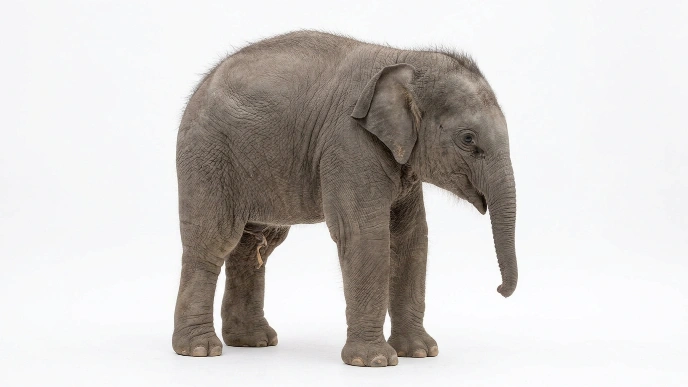
Newborn elephant calves can weigh around 90–120 kg or more depending on species, sex, and individual development. This places some newborn calves remarkably close to the target despite being at the very beginning of their lives.
Elephant calves are born with sturdy legs and comparatively compact bodies, yet their starting mass can already rival that of a large adult human. Within hours of birth, healthy calves generally begin standing and moving with their mothers, making their substantial birth weight even more impressive.
A newborn calf near 100 kg is one of the most memorable natural comparisons in this list. Instead of imagining an enormous adult elephant, picture a newly born calf whose entire body can already weigh approximately as much as two 50 kg cement bags.
14. A Juvenile Polar Bear

Polar bear weight changes dramatically with age, sex, nutritional condition, and season. A growing juvenile may pass through the neighborhood of 100 kg, but there is no single juvenile weight that applies universally. Mature animals, particularly adult males, become several times heavier.
Polar bears develop rapidly and accumulate the body mass and fat necessary to survive Arctic conditions. Their dense bodies, powerful limbs, and insulating fat mean that an individual can carry considerable mass without looking proportionally as bulky as an equivalent stack of packaged materials.
A young polar bear at the appropriate growth stage can therefore provide an approximate visual reference. The key word is approximate: age alone cannot be used to predict an exact weight, and wildlife measurements naturally show considerable variation between individual animals.
15. A 75-Inch Commercial Flat-Screen Television
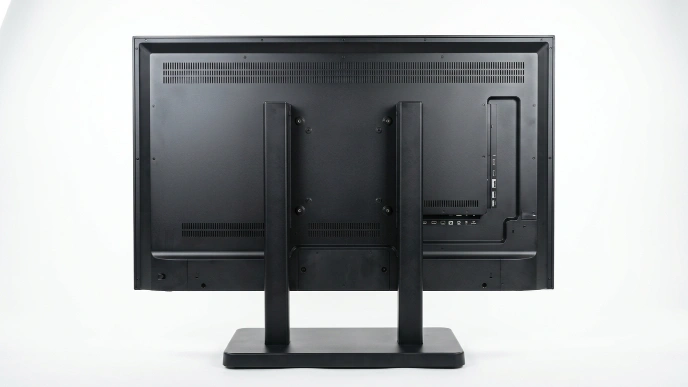
A modern 75-inch commercial flat-screen display usually weighs less than 100 kg on its own. Many current large-format displays weigh only several tens of kilograms, although exceptionally heavy professional units, specialized enclosures, stands, protective hardware, or older display technologies can increase the installed weight considerably.
Commercial screens are commonly installed in conference rooms, airports, hotels, retail stores, educational buildings, restaurants, and digital-signage systems. Despite their large diagonal dimensions, modern flat panels use relatively lightweight display technology compared with older televisions and bulky projection systems.
For that reason, a typical modern 75-inch television should not be considered an exact 100 kg object. Instead, imagine the screen combined with substantial mounting, protective, or installation equipment—or use the comparison to recognize that 100 kg can actually be considerably heavier than a modern large television.
How to Estimate 100 Kilograms Without a Scale
Estimating such a substantial mass without weighing equipment is easiest when you combine objects with known labeled weights. Construction materials, gym plates, packaged foods, and other standardized products are far more reliable than trying to judge an unfamiliar object’s weight by sight.
For example, two clearly marked 50 kg cement bags equal the amount directly. Four 25 kg packages work equally well, as do five 20 kg loads. In a gym, a 20 kg Olympic bar plus 80 kg of calibrated plates provides another convenient reference.
Visual estimation alone becomes unreliable with heavy objects because material density matters so much. A steel object can be much smaller than a similarly heavy wooden object. When accuracy matters for shipping, lifting, structural loads, or safety, use a properly rated scale rather than relying on appearance.
100 Kilograms to Pounds
The exact conversion uses the relationship 1 kilogram = 2.2046226218 pounds. Multiplying by 100 gives approximately 220.462 pounds, normally rounded to 220.46 lb. This is the most useful conversion for readers accustomed to the U.S. customary system.
In practical terms, 220 pounds is roughly the body weight of a large adult person or heavyweight athlete. It is also more than most people should attempt to lift or carry casually, particularly when the load is awkwardly shaped or lacks proper handles.
For quick mental conversion, multiplying kilograms by 2.2 gives a close estimate. That produces 220 pounds, only about 0.46 pound below the more precise converted value.
100 Kilograms in Pounds and Stones
In imperial units, the weight equals approximately 220.46 pounds. Since one stone contains 14 pounds, this converts to approximately 15.747 stones, which is normally expressed as about 15 stone 10.46 pounds.
Stones are still commonly encountered when discussing human body weight in the United Kingdom and Ireland. Someone familiar with stones may therefore find 15 st 10.5 lb much easier to picture than a three-digit kilogram figure.
The conversions describe exactly the same mass; only the units change. Whether you write 100 kg, 220.46 lb, or approximately 15 st 10.5 lb, you are referring to essentially the same physical weight.
100 Kilograms to Grams
Because one kilogram contains exactly 1,000 grams, converting kilograms to grams simply requires multiplying by 1,000. The result is 100,000 grams. Unlike many imperial conversions, no rounding is needed.
Grams are generally more useful for lightweight items such as ingredients, small packages, jewelry, or laboratory materials. Expressing such a heavy load in grams creates a large number, which is why kilograms are normally the more practical unit at this scale.
To visualize the relationship mathematically, 100 packages containing 1,000 grams each would total the same amount. Likewise, 1,000 individual 100-gram portions together would reach 100,000 grams.
100 Kilograms to Ounces
Using the standard mass conversion, one kilogram equals approximately 35.274 ounces. Multiplying that figure by 100 gives approximately 3,527.4 ounces.
Ounces are convenient for relatively small weights, particularly in the United States, but thousands of ounces become cumbersome to work with. Pounds or kilograms therefore communicate this amount much more clearly in everyday situations.
Since there are 16 ounces in a pound, dividing 3,527.4 by 16 gives approximately 220.46 pounds. This provides a useful cross-check and shows how kilograms, pounds, and ounces relate to the same mass.
100 Kilograms to Stone
One stone equals exactly 14 pounds, or approximately 6.35029 kilograms. Dividing 100 by 6.35029 gives approximately 15.747 stones, usually rounded to 15.75 stone when expressed as a decimal.
Decimal stones are useful for mathematical conversion, but everyday body-weight measurements are often written using stones plus remaining pounds. In that format, the value becomes approximately 15 stone 10.46 pounds, or about 15 st 10.5 lb.
Remember that 15.75 stone does not mean 15 stone and 75 pounds. The decimal portion represents a fraction of one 14-pound stone, which is why converting the remainder separately is necessary.
Which Comparisons Are the Most Accurate?
Not every real-world object has a fixed weight, so the strongest comparisons are objects whose mass is standardized or clearly labeled. Gym equipment and packaged construction materials are particularly useful because their stated weights can be added together precisely.
For an easy reference, these combinations are especially practical:
- Two 50 kg cement bags = 100 kg
- Four 25 kg packages = 100 kg
- Five 20 kg loads = 100 kg
- Ten 10 kg items = 100 kg
- A 20 kg Olympic bar + 80 kg of plates = 100 kg
Animals, appliances, and industrial equipment should be treated as approximate comparisons because their weights vary. When you need an exact answer for transport, shipping, lifting capacity, or equipment installation, manufacturer specifications or an appropriately rated weighing system are more reliable than visual estimates.
Read: How Long Is 21 Inches?
Read: How Long Is 2 Feet?
Read: How Long Is 3 Feet?
Read: How Tall Is 70 Inches?
Read: How Long Is 200 Feet?
Read: How Long Is 40 Inches?
Read: How Long Is 40 Feet?
Read: How big is 9mm?
Read: How Long Is 50 Inches?
Read: How Long Is 23 Inches?
Frequently Asked Questions
Is 100 kg considered heavy?
Yes. For ordinary manual handling, it is a very heavy load. It equals about 220.46 pounds, so moving it generally requires suitable equipment, multiple people, or professional handling methods depending on the object’s shape and circumstances.
Can one person lift this much weight?
Some trained strength athletes can lift this amount during controlled exercises such as deadlifts or squats. That does not mean it is safe to manually carry an awkward 100 kg object. Grip, dimensions, balance, lifting technique, and environment significantly affect handling difficulty.
What is the easiest object comparison to remember?
Two 50 kg cement bags are probably the simplest comparison because the arithmetic is exact. In a gym, another easy reference is a standard 20 kg Olympic bar loaded with another 80 kg of plates.
How many 20 kg items equal this weight?
Five items weighing 20 kg each have a combined mass of exactly 100 kg. This is useful when estimating packaged materials, gym plates, bags, or other products with clearly marked net weights.
Is 220 pounds the same as 100 kg?
Not exactly. A mass of 220 pounds equals about 99.79 kg. 100 Kilograms converts more precisely to about 220.46 pounds, although 220 pounds is close enough for casual visualization.
How many people would weigh this much?
It depends entirely on individual body weight. One large adult may weigh around this amount, while two 50 kg adults would also total the same mass. Human body weights vary too widely for a fixed number of people to serve as an exact comparison.
Final Thoughts
100 Kilograms equals approximately 220.46 pounds, 15.75 stone, 100,000 grams, or 3,527.4 ounces. Among the easiest ways to picture it are two 50 kg cement bags, five 20 kg loads, or an Olympic barbell deliberately loaded to a 100 kg total.
For everyday visualization, standardized objects are more dependable than animals, televisions, or machinery because those examples can vary substantially in weight. When precision matters, rely on labeled weights, manufacturer specifications, or a suitable scale; when you simply need a mental picture, the cement-bag and loaded-barbell comparisons provide the clearest reference.